

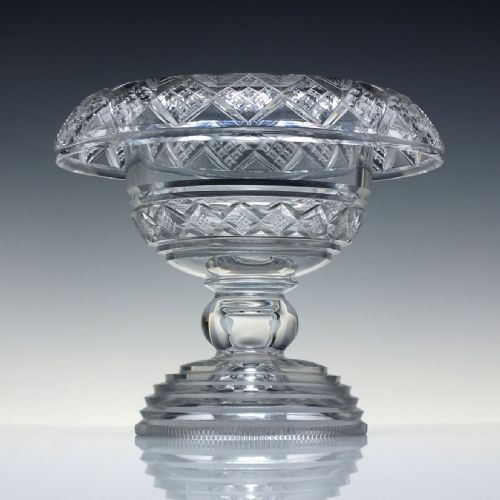


Cut Crystal Compote
A cut crystal compote brings substance and sparkle to a dining surface, combining heavy lead glass with decorative mounts.
Cut Crystal Compote
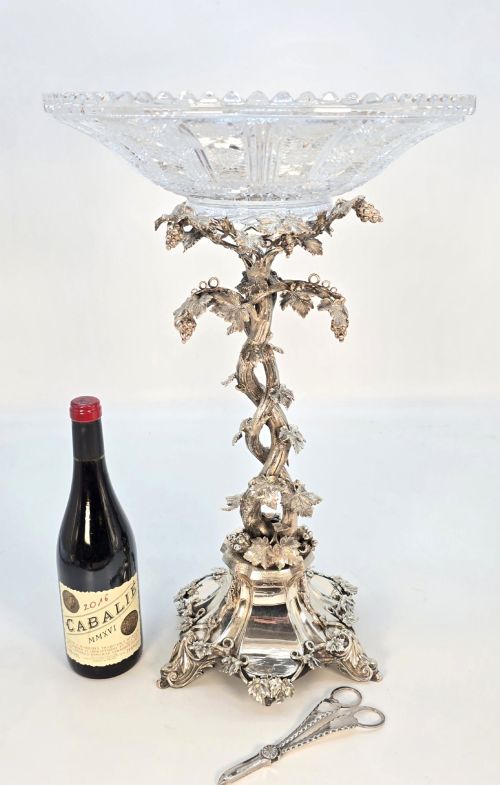
A cut crystal compote serves as a raised centrepiece or fruit bowl, elevated on a pedestal foot for display upon a table. The pieces found here span from the Georgian period through the Victorian and Edwardian eras, encompassing both pedestal bowls and tazzas.
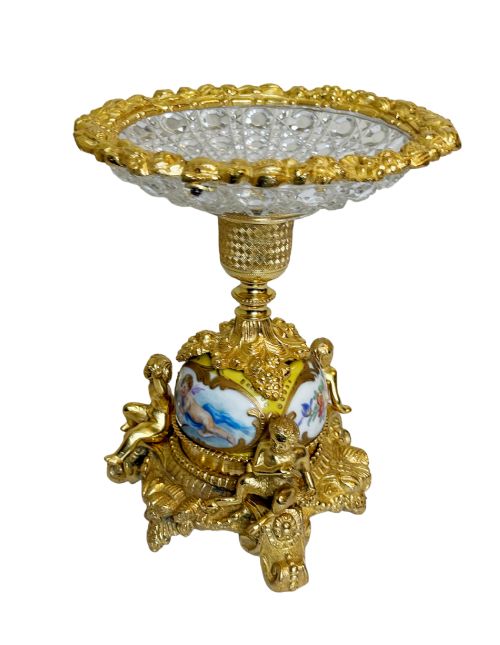
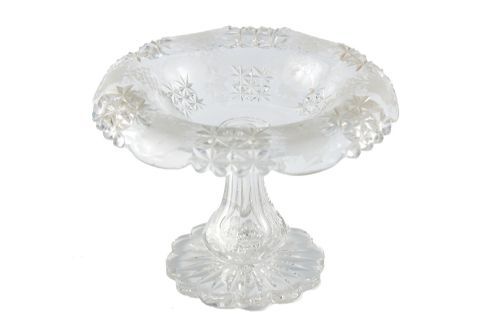
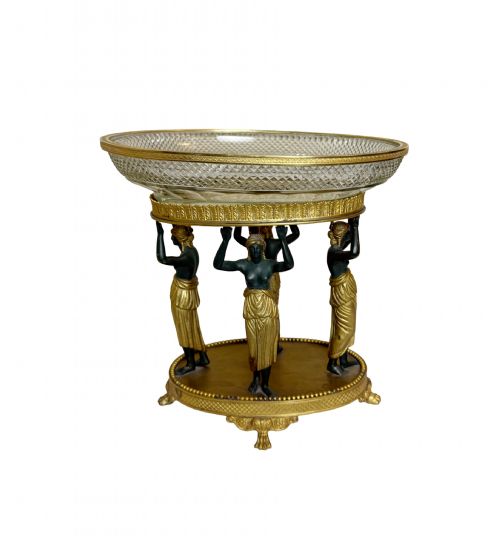
Most examples combine heavy lead glass or cut crystal with metal mounts, notably silver plate and gilt bronze. Forms range from simple hobnail pattern bowls to elaborate centrepieces featuring cherubs or nautical motifs.
How they were made
The fabrication relies on hand-blown crystal shaped into pedestals and bowls, then cold-worked by wheel-cutting to create geometric facets and linear patterns. This traditional glassmaking produces heavy, light-refracting walls with crisp rims and deep flutes.
Many compotes integrate metalwork, uniting glass bodies with cast bases in silver plate, gilt bronze, or patinated bronze. These mounts are secured via central pins or collars, combining glass-cutting expertise with metal founding.
Several Victorian centrepieces feature playful figural details, including cast bronze cherubs and nautical sailor motifs supporting the heavy crystal bowls.
What varies in quality
Quality rests in the depth and clarity of the wheel-cutting, alongside the crispness of the hobnails, flutes, and star-cut bases. Superior glass shows high refractive brilliance without surface ripples, while finer metal mounts exhibit sharp chasing and heavy casting.
The integration between the glass bowl and its metal base distinguishes standard output from exceptional work. Secure fittings, balanced proportions, and substantial weight signal superior construction.
Christofle et Cie·Waterford
The Cut Crystal Compote Glossary
- Compote
- A raised bowl on a pedestal foot used for serving fruit or sweets at table. It is synonymous with the term comport.
- Tazza
- A shallow saucer-like dish mounted on a stem and foot. This form often appears in coloured or over-layer crystal.
- Hobnail
- A raised, faceted pattern cut into glass resembling the head of a hobnail boot. It creates a tactile, highly reflective surface texture.
- Lead crystal
- Glass containing lead oxide which increases weight, clarity, and light dispersion. This material allows for deeper, sharper facet cutting.
Cut Crystal Compote: Frequently Asked Questions
How were compotes used?
These elevated vessels held fruit, sweetmeats, or floral displays at the centre of dining tables. Their raised profile kept provisions visible and accessible during formal meals.
Over time, many transitioned from active dining service to decorative display pieces on sideboards and mantels.
How do I clean cut crystal?
Wash the glass by hand in lukewarm water using a mild detergent, placing a towel in the bottom of the sink to prevent chipping. Avoid extreme temperature changes to protect the material.
Dry the piece immediately with a lint-free cloth to maintain the refractive sparkle of the cut facets.
How do I date a compote?
Examine the weight, cutting style, and any metal mounts for period characteristics. Georgian and early Victorian pieces often feature hand-blown pontil marks and deeper, irregular cutting.
Later Victorian and Edwardian examples tend towards standardised machine polishing and distinct silver plate hallmarks or maker stamps.
What is the difference between a bowl and a compote?
A standard bowl rests directly on a flat surface, whereas a compote or comport stands upon an integrated pedestal or stem. This elevation draws the eye upward and distinguishes the piece as a centrepiece.
Both forms utilise heavy cut glass or crystal across the nineteenth and early twentieth centuries.