



Curved Pedestal Dressing Table
A curved pedestal dressing table offers striking form and practical surface space, spanning periods from Victorian to Art Deco.
Curved Pedestal Dressing Table
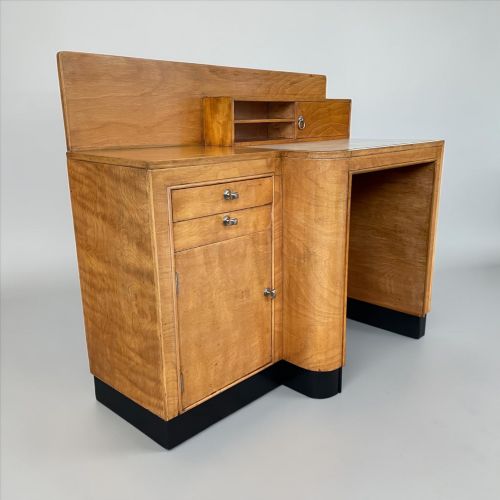
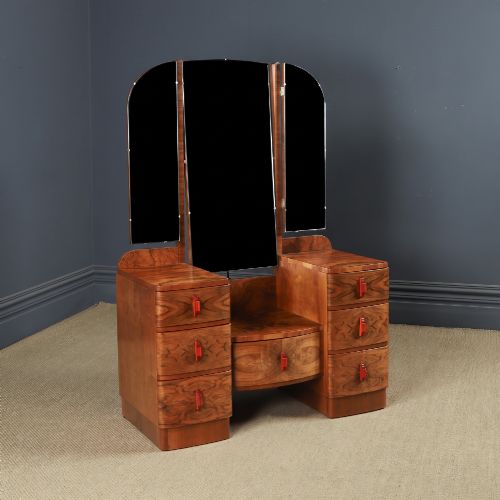
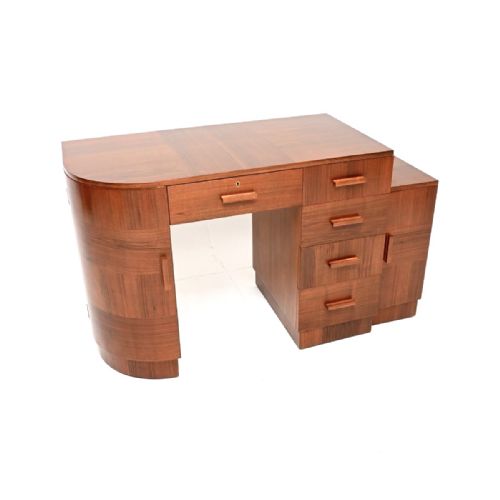
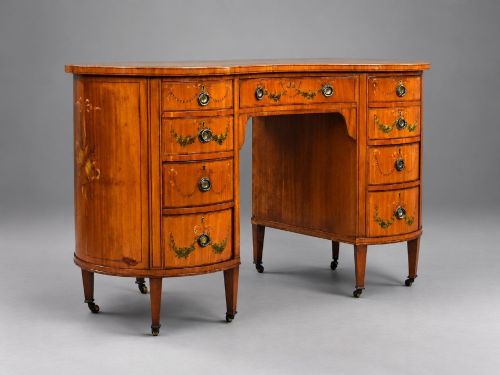
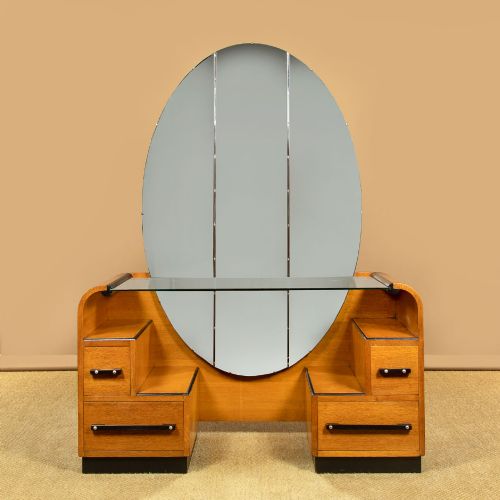
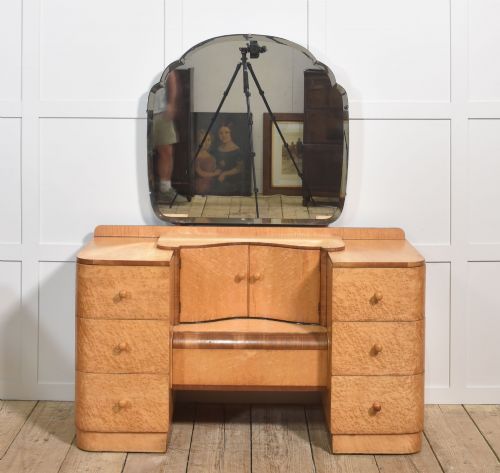
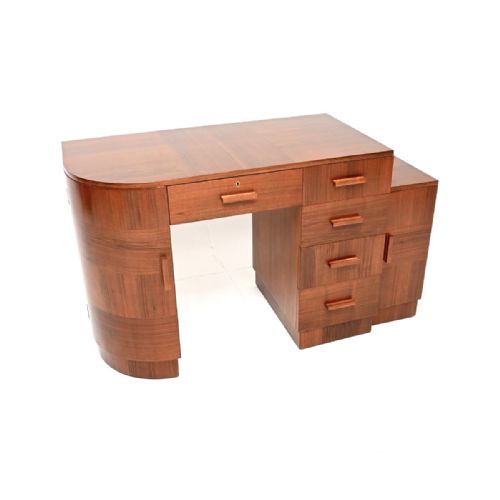
A curved pedestal dressing table brings together elegant lines and functional storage, appearing frequently in Art Deco and Victorian styles. When you search for a curved pedestal dressing table, you encounter forms that serve as both vanity units and sophisticated desks. These pieces range from Edwardian inlaid mahogany models to bold 1930s designs with integrated mirrors.
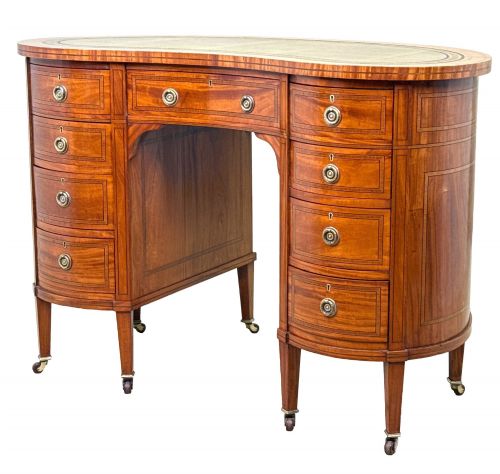
The selection here draws heavily on the Art Deco period alongside 19th Century and Edwardian examples. You find kidney shapes alongside twin pedestal layouts, often complete with original mirror glass and brass fittings. Makers such as Harry and Lou Epstein and Maurice Adams contributed significant works to this category.
How they were made
Cabinet makers utilised choice timbers including walnut, mahogany, satinwood, maple and oak to construct these dressing tables. Surfaces often display careful inlay work or figured veneer grains that follow the sweeping curves of the pedestal frames.
Fitted elements incorporate polished mirror glass, leather writing inserts and cast brass handles or mounts. The structural integrity relies on traditional joinery methods suited to the complex curved silhouettes of the Edwardian and Art Deco eras.
Curved Pedestal Dressing Table Retail Price Guide 2026
Typical asking prices for curved pedestal dressing table among the pieces listed under this phrase on Sellingantiques today, from the lower quarter to the upper quarter. They describe what is for sale here now, not the wider market.
Listings feature pieces in walnut, mahogany, satinwood, oak and maple, alongside brass and leather details.
What varies in quality
The distinction between standard examples and top tier pieces rests on the choice of timber and the ambition of the design. Figured walnut and satinwood veneers matched symmetrically across curved surfaces signal superior craftsmanship.
Attribution to notable workshops or designers like Harry and Lou Epstein, Betty Joel or Maurice Adams elevates a piece. The survival of original glass mirrors and the precision of inlaid details further separate exceptional items from ordinary production.
Harry and Lou Epstein·Maurice Adams·Betty Joel
The Curved Pedestal Dressing Table Glossary
- Kidney shaped
- A curved furniture top resembling the outline of a kidney bean, frequently seen on 19th Century and Edwardian desks and dressing tables.
- Pedestal
- A structural support column or set of drawers positioned beneath the main surface of a desk or dressing table.
- Veneer
- A thin layer of choice wood applied over a secondary timber base to create decorative grain patterns across curved surfaces.
- Inlay
- A technique of embedding contrasting woods or materials into the surface timber to form decorative patterns or borders.
- Art Deco
- A design style emerging in the 1920s and 1930s characterised by sleek geometric forms, modern materials and streamlined curves.
Curved Pedestal Dressing Table: Frequently Asked Questions
How do I date a curved pedestal dressing table?
Dating relies on identifying stylistic markers such as Victorian mahogany framing, Edwardian inlay work, or 1930s Art Deco veneers. Examining the construction methods and materials provides further clues to the decade of manufacture.
Makers' marks or attributions recorded in specific pieces help narrow the timeline. Comparing the hardware, such as brass pulls and mirror fixings, against known period standards confirms the age.
Were these tables used for writing or dressing?
Many pieces serve a dual purpose, functioning as both dressing tables with mirrors and writing desks. The inclusion of pedestals and drawers accommodates daily correspondence as well as cosmetics.
Earlier Victorian and Edwardian examples often lean towards writing desks, while 1930s Art Deco versions frequently incorporate large adjustable mirror glass panels designed specifically for vanity use.
How do I care for walnut and mahogany surfaces?
Maintaining these timber surfaces involves dusting with a soft cloth and avoiding direct sunlight or excessive heat. Natural oils and waxes preserve the sheen of walnut and mahogany without damaging the grain.
Leather inserts require specific gentle cleaners to prevent cracking, while glass mirrors need standard non-abrasive glass cleaner applied sparingly near the wood frame.
What rooms suit a kidney shaped dressing table?
The curved footprint of a kidney shaped table allows it to sit comfortably in bedrooms as a vanity or in studies as a compact desk. The rounded edges soften the geometry of a room.
Placing the piece where natural light illuminates the mirror enhances its utility as a dressing table, while positioning it away from damp walls protects the antique timber.