
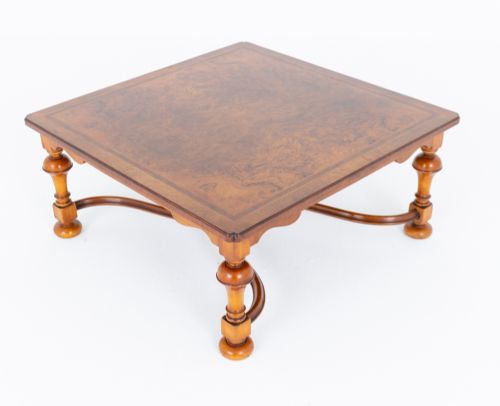
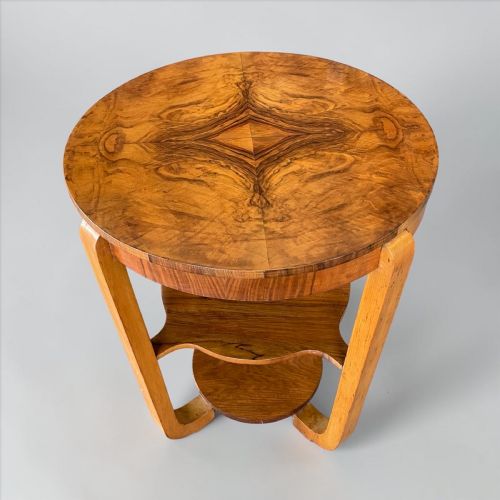
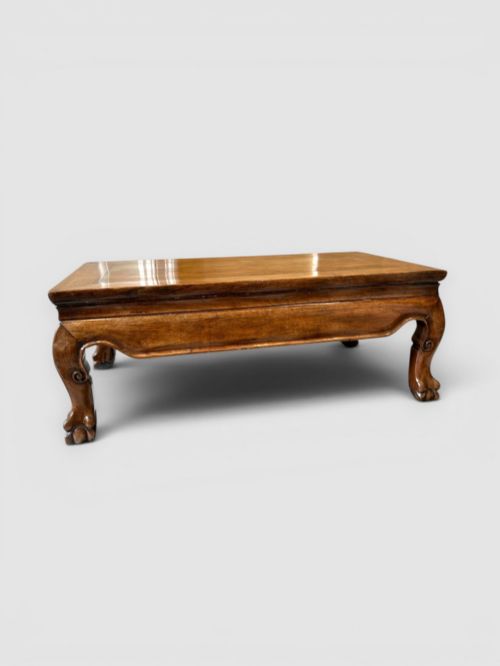


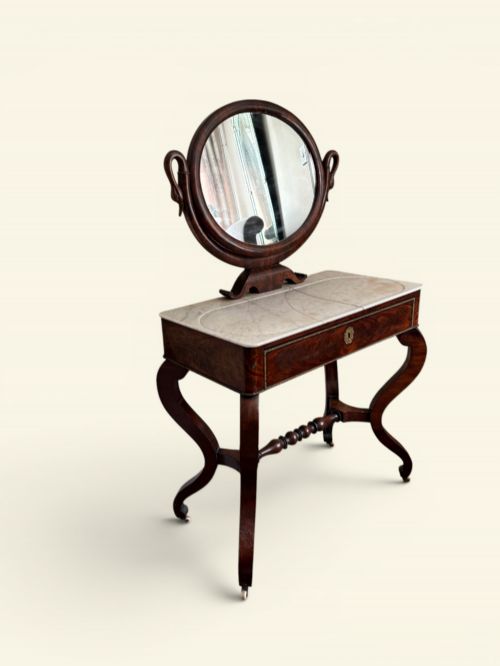
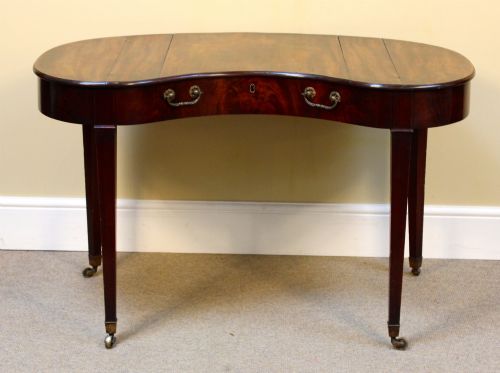

Curved Leg Table
A curved leg table brings fluid movement and structural grace to a room, ranging from restrained Georgian forms to expressive Art Deco designs.

Curved Leg Table
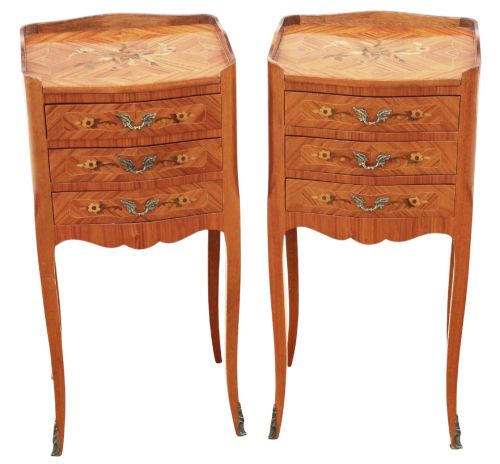
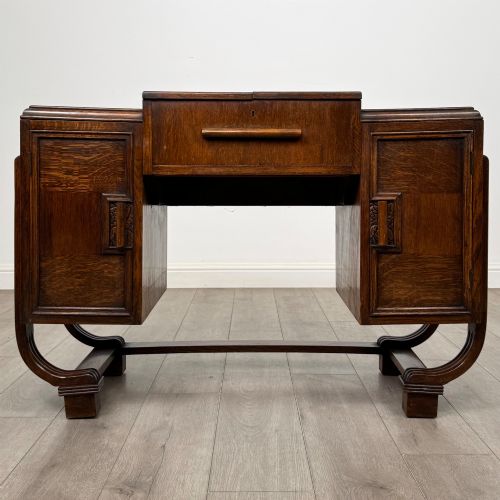
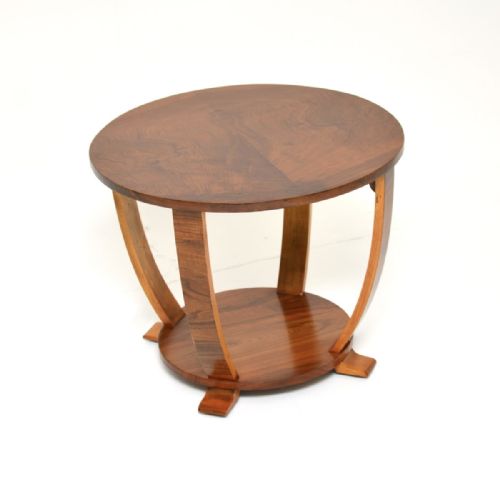
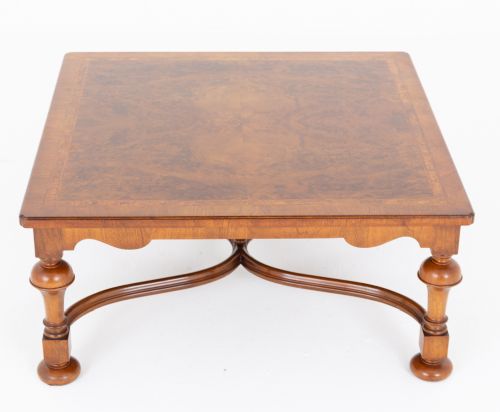
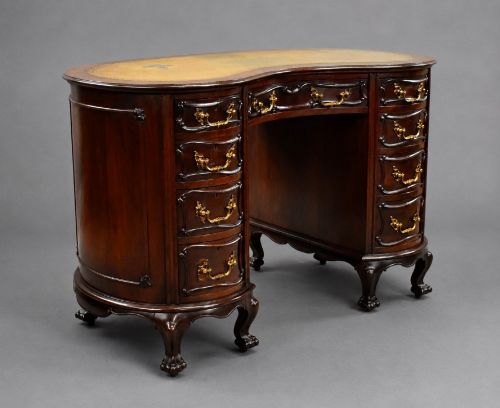
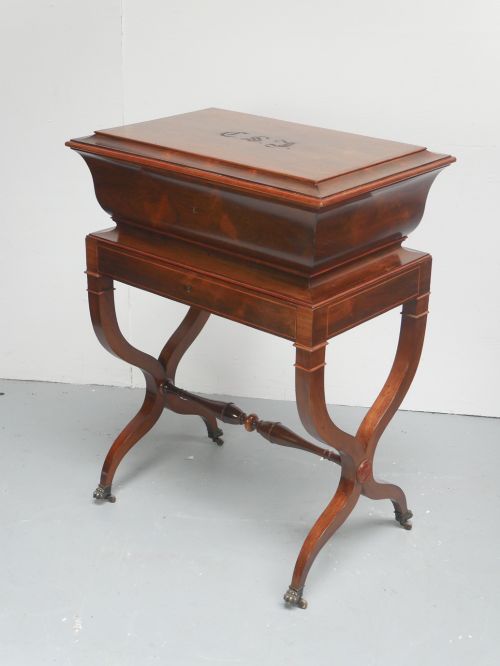
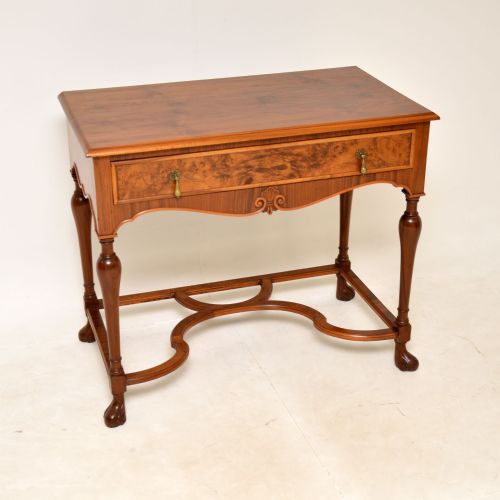
A curved leg table encompasses a diverse group of domestic furniture designed with cabriole, concave, or swept supports. When searching for a curved leg table, buyers encounter console tables, occasional pieces, desks, and sideboards originating from various periods.
The selection spans from 18th-century French and Italian examples to Edwardian, Art Deco, and 1930s creations. Walnut, mahogany, and burr walnut appear frequently alongside specialised forms like demi-lune consoles and kidney-shaped desks.
Revival styles heavily influence the inventory, featuring Queen Anne and Louis XV design elements translated through 19th and 20th-century craftsmanship. These pieces function practically as writing surfaces, lamp tables, or decorative consoles within modern interiors.
Materials and Construction
Cabinet makers utilised dense hardwoods including mahogany, walnut, and rosewood, often applying burr walnut or satinwood veneers to create decorative surface patterns. Marquetry inlay, brass mounts, and ormolu details accent many of the primary timber structures.
Support elements require specialised joinery to achieve stability despite flowing profiles, particularly when shaping cabriole or concave legs. Marble tops feature on specific continental examples, requiring precise stone-cutting and fitted wooden chassis support.
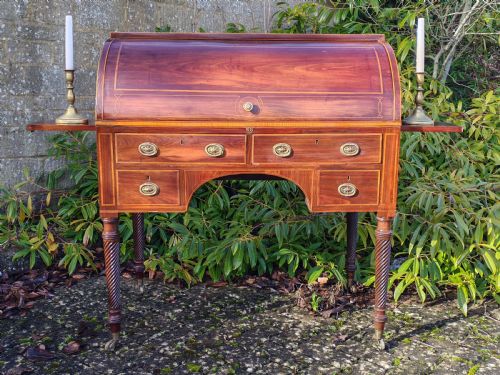
Keep an eye out for 19th-century opium tables alongside traditional British writing desks.
Assessing Quality
The distinction between standard and exceptional pieces rests in the fluidity of the timber grain, the precision of the veneer matching, and the crispness of carved or cast ornamentation. Finer examples display meticulous attention to secondary timbers and interior drawer construction.
Proportion and balance dictate the overall success of the design, ensuring that the curvature of the supports harmonises with the top. Maker attribution and exhibition provenance further elevate the standing of specific desks and console tables.
François Linke·Hille·Lesage·Harry and Lou Epstein
The Curved Leg Table Glossary
- Cabriole leg
- A furniture leg that bends outward and then tapers inward, mimicking an animal's curving limb. This form typically terminates in a pad, claw and ball, or scroll foot.
- Demi-lune
- A half-moon shape used in the design of console and hall tables. Such pieces fit flush against a wall while offering a curved front profile.
- Ormolu
- Gilded bronze mounts applied to furniture for decorative effect. It gained widespread use on 19th-century French and continental pieces.
- Marquetry
- Decorative patterns formed by inserting thin pieces of wood, veneer, or shell into a solid wooden surface. The technique creates complex pictorial or geometric designs.
- Escritoire
- A small writing desk fitted with drawers or compartments behind a sloping or drop-front lid. These tables combine compact storage with a dedicated writing surface.
Curved Leg Table: Frequently Asked Questions
Where should I place a console table?
A console table works well in hallways, living rooms, or dining areas where floor space is limited. Its shallow depth allows it to sit flat against a wall while displaying lamps, mirrors, or decorative objects.
Pairs of demi-lune console tables can also be arranged together or separated across a room to create a balanced interior layout.
How do I care for wood veneer surfaces?
Keep antique veneer surfaces away from direct sunlight and sudden temperature changes to prevent timber movement or lifting. Dust regularly with a dry cloth and avoid applying modern silicone-based polishes.
Waxing occasionally helps nourish the wood and maintain a soft sheen without building up heavy residue.
What is the difference between an occasional table and a side table?
An occasional table is typically light and portable, designed to be moved around a room as needed for holding drinks, books, or lamps. A side table often has a slightly more permanent placement against a wall or beside seating furniture.
Both forms utilise curved legs across various periods to soften the geometry of a room.
How do I identify Art Deco furniture?
Art Deco furniture from the 1920s and 1930s relies on geometric symmetry, streamlined silhouettes, and striking figured timbers like burr walnut. These pieces often feature simplified forms without traditional historical revival ornamentation.
Makers of this era embraced modern materials and innovative finishes while maintaining high standards of cabinet making.