



Curved Leg Occasional Table
A curved leg occasional table brings genuine utility and period grace to a corner, moving easily between rooms as living needs shift.
Curved Leg Occasional Table
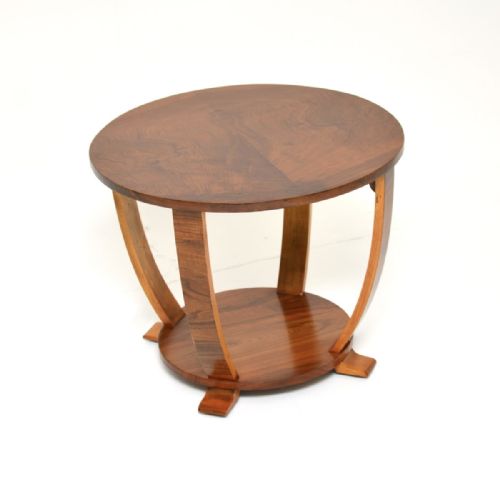
A curved leg occasional table encompasses versatile side, coffee, and centre tables designed for specific domestic tasks rather than formal dining. The selection spans distinct periods including Regency, Edwardian, and Art Deco, reflecting shifting tastes in domestic interiors.
The physical forms vary from kidney-shaped and three-tier examples to octagonal and tripod designs. Walnut veneer, solid oak, and flamed mahogany appear frequently across these pieces, demonstrating the breadth of materials utilised by makers.
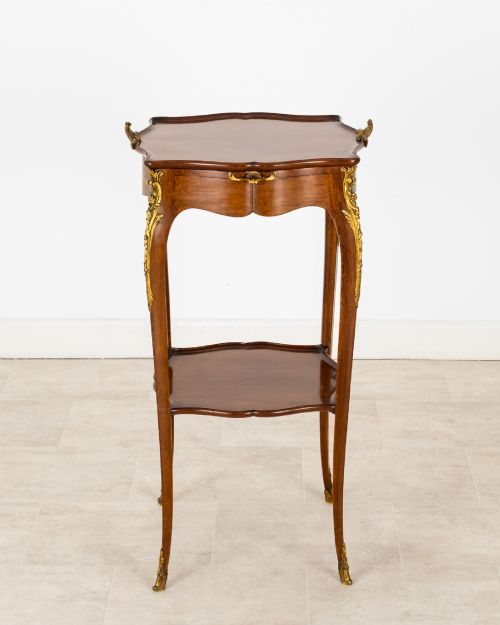
Origin points range from English workshops to French ateliers, with revival styles such as Louis XV and Sheraton Revival appearing alongside modernist Art Deco interpretations. Each piece serves as a compact surface for lamps, books, or decorative objects.
Materials and construction methods
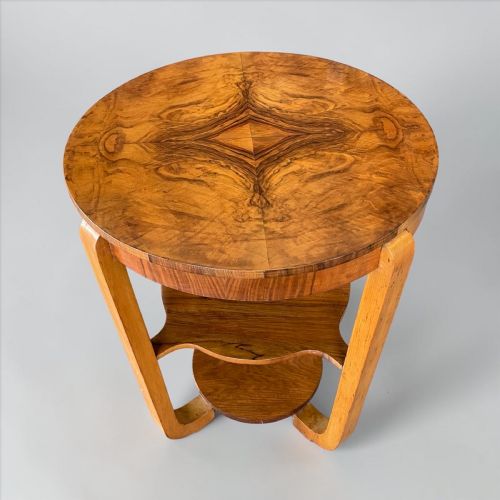
Cabinet makers relied on timber frames of mahogany, oak, and walnut, often applying burr walnut or birds eye maple veneers to create decorative surface patterns. Ebony stringing and satinwood banding provided crisp linear contrast on tabletops and borders.
Metal elements such as brass and ormolu mounts reinforced structural joints while adding decorative lustre to French and English designs. Ebonised wood details and inset ceramic tiles further defined the visual character of specific pieces.
Several tables include hidden tiers and clever kidney shapes designed specifically to squeeze beside Edwardian armchairs.
Distinctions in quality and execution
Superior examples demonstrate meticulous selection of timber veneers, where grain patterns mirror symmetrically across the surface of the table. The crispness of inlaid stringing and the integration of cast bronze or ormolu mounts signal a higher level of workshop skill.
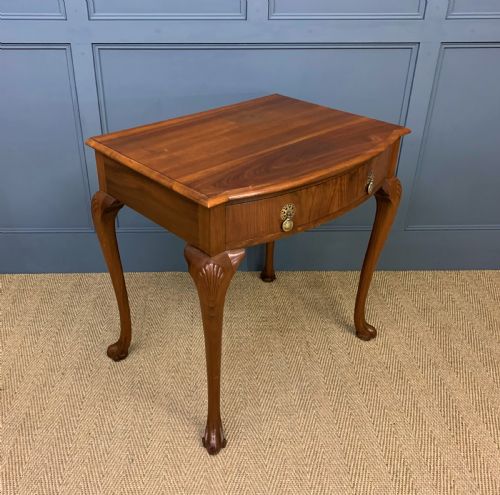
Structural integrity reveals itself in the seamless curvature of cabriole or swept legs and the stability of tiered joins. Finer pieces balance decorative ambition with durable construction, ensuring the timber adapts successfully over decades of use.
François Linke·Thonet
The Curved Leg Occasional Table Glossary
- Ormolu
- Gilded bronze ornamentation applied to furniture mounts and feet. This technique was favoured by French cabinet makers to highlight structural curves.
- Stringing
- Thin inlaid lines of contrasting timber set into the surface of furniture. It creates geometric borders and frames the central wood grain.
- Cabriole leg
- A furniture leg that curves outward and then tapers inward with a pad or scroll foot. It draws inspiration from animal limbs and defines many classical revival styles.
- Veneer
- A thin layer of figured wood applied to a secondary timber base. This method allows makers to display decorative grains while maintaining structural stability.
- Tripod table
- A small freestanding table supported by three legs radiating from a central pillar. Such designs offered flexibility in domestic spaces.
Curved Leg Occasional Table: Frequently Asked Questions
How do I style a curved leg occasional table?
These versatile pieces work well beside armchairs or sofas to hold reading lamps and small objects. Their compact footprints allow them to anchor empty corners without crowding the room.
Allow the timber grain and leg profile to remain visible by keeping tabletop displays minimal. Pairing a walnut or mahogany table with complementary seating creates a cohesive period feel.
What is the difference between an occasional table and a centre table?
An occasional table is typically smaller and designed to be moved easily around a room as needed. A centre table is generally larger and intended to stand freestanding in the middle of a space.
Centre tables often feature detailed ornamentation on all sides because they are viewed from every angle. Occasional tables focus more on compact utility and convenient surface space.
How do I identify an Art Deco occasional table?
Art Deco pieces from the 1920s and 1930s often showcase blonde oak, birds eye maple, or burr walnut with geometric silhouettes. They discard historic revival motifs in favour of streamlined, modern elegance.
Look for clean architectural lines, contrasting ebonised details, and practical tier arrangements. These tables reflect the shifting industrial design priorities of the interwar period.
Are these tables suitable for daily use?
Solid construction and durable timber veneers make these pieces well-suited for everyday domestic tasks. Using coasters and mats protects the polished surfaces from moisture and heat.
Routine dusting and occasional wax application maintain the condition of the timber. Their enduring build quality ensures they remain functional surfaces in modern homes.