
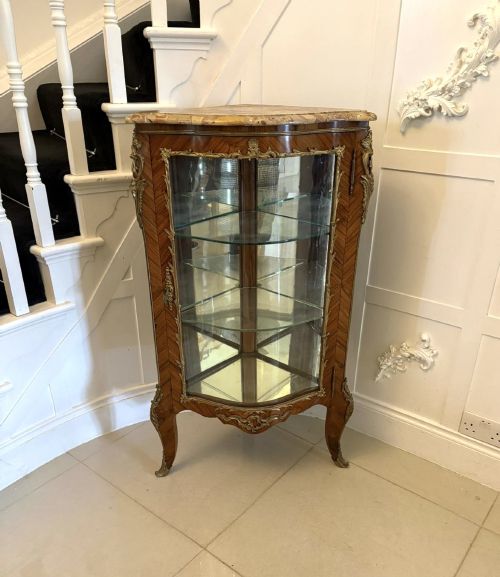


Curved Glass Corner Cabinet
A curved glass corner cabinet neatly fits awkward junctions in a room while showing off cherished china behind polished panes.
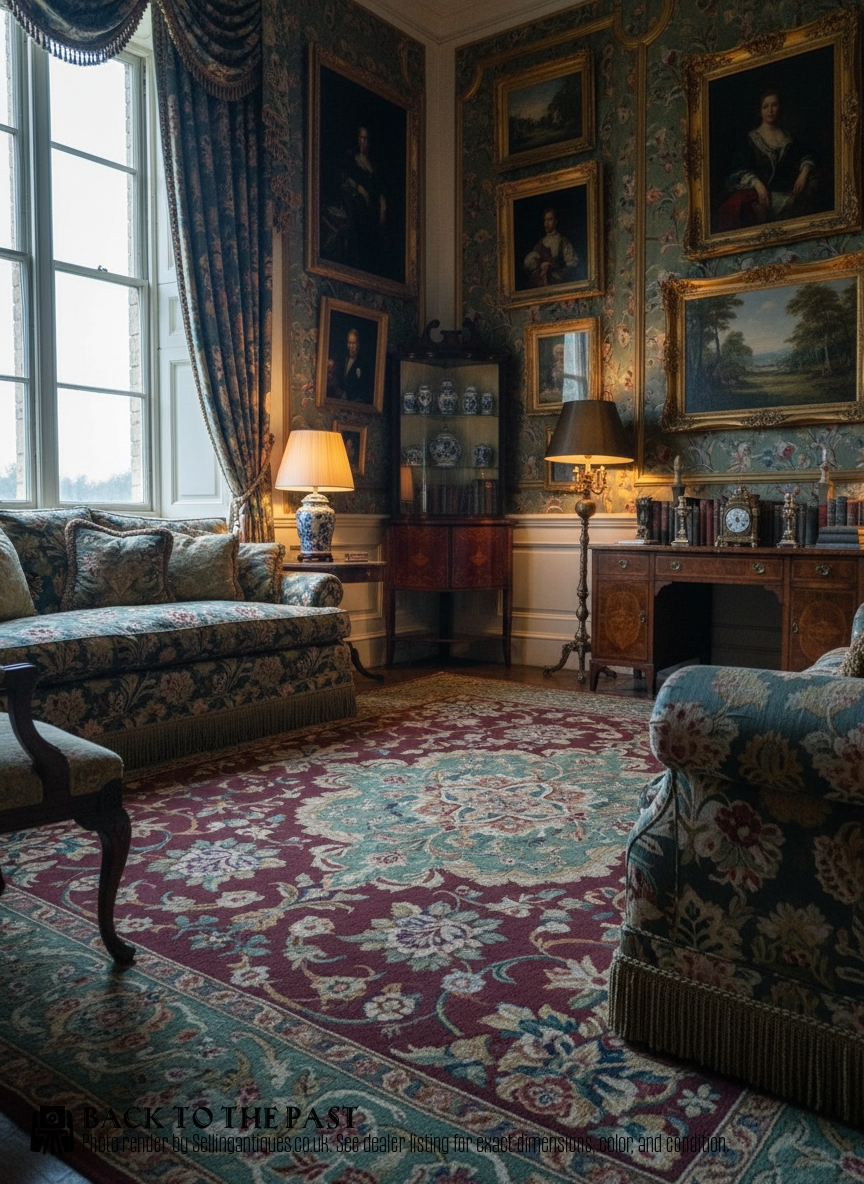
Curved Glass Corner Cabinet
A curved glass corner cabinet provides a clever method for utilising dead space where two walls meet, turning a plain corner into a focal point. These fixtures combine storage with display, offering shelved interiors behind glazed doors shaped in bow, serpentine, or rounded profiles.
The selections available here span several distinct eras, drawing upon Georgian, Victorian, Edwardian, and Art Deco sensibilities. Pieces range from modest domestic cupboards in satinwood or walnut to elaborate French revival designs featuring marble tops.
Buyers will encounter single standing cupboards alongside double-height formats and specialised retail counters. Makers such as Edwards and Roberts and Maurice Adams represent the finer end of cabinet-making traditions found in these corners.
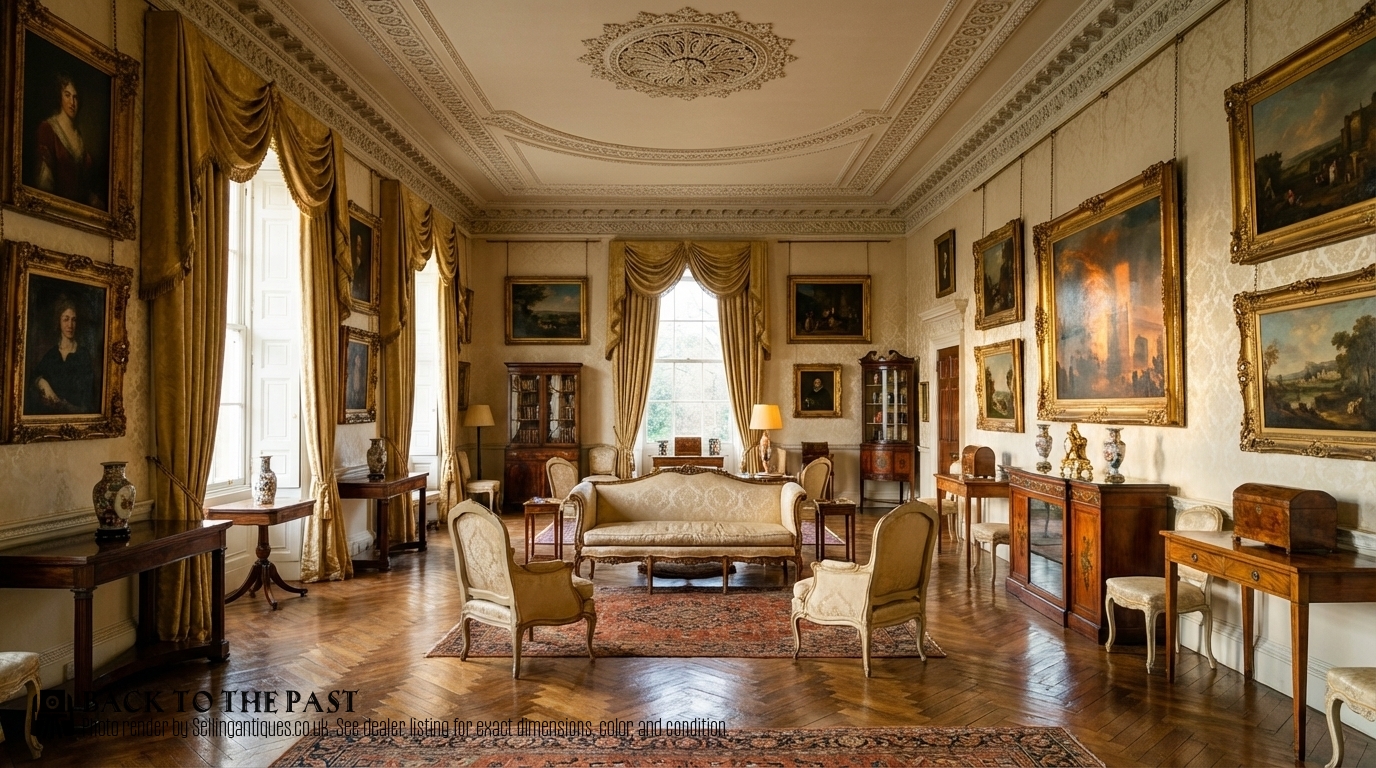
How they were made
Cabinet-makers built these structures using sturdy timbers like mahogany and walnut as foundational frames, often applying delicate veneers such as kingwood and satinwood to visible surfaces. Marquetry inlay and ebonised wood details frequently accent the primary woods.
Glass panels are shaped to fit bow or serpentine curves, secured alongside brass fixtures and occasionally mounted with cast ormolu decorative elements. Tops in marble provide durable, contrasting surfaces on specific revival pieces.
Design influences span Georgian proportions, Victorian revivalism, and Art Deco lines.
What varies in quality
The refinement of the curved glass and the precision of the timber shaping define the upper tiers of craftsmanship. Smooth operation of doors and crispness in marquetry inlay distinguish superior examples from standard workshop production.
Design ambition also separates ordinary utility cupboards from high-end display pieces. Elaborate mounts, serpentine fronts, and named makers elevate the architectural presence of a cabinet.
Edwards And Roberts·Maurice Adams
The Curved Glass Corner Cabinet Glossary
- Bow front
- A convex, outward-curving facade that softens the corner geometry. This shaping requires expert timber bending.
- Serpentine
- A wave-like profile curving inward at the centre and outward at the sides. It demands intricate carpentry.
- Ormolu
- Gilt bronze mounts applied for decorative effect on revival furniture. They add metallic contrast to wood surfaces.
- Marquetry
- Decorative patterns formed by fitting contrasting veneers into wood surfaces. It creates elaborate floral or geometric designs.
- Ebonised wood
- Timber treated to resemble dark ebony. It provides stark framing against lighter veneers.
Curved Glass Corner Cabinet: Frequently Asked Questions
How do I fit a corner cabinet into a small room?
These cabinets are specifically designed to tuck neatly into ninety-degree junctions, absorbing minimal floor space while utilising vertical room. Their curved glass doors project softly into the space without sharp corners.
Measure the wall depths carefully to ensure the chosen bow or serpentine front clears adjacent doorways or furniture. Their angular backs anchor securely into the wall meeting point.
How should I clean polished mahogany and walnut surfaces?
Dust timber surfaces regularly with a soft, dry cloth to prevent grit accumulation. Avoid silicone-based sprays that can build up a hazy residue over decades of polish.
Apply a traditional beeswax sparingly when the wood appears dry, buffing gently to maintain the natural sheen. Keep cabinets away from direct heat sources to prevent veneer lifting.
Can these cabinets support heavy porcelain collections?
Most historic corner cupboards feature fixed or adjustable wooden shelving designed for china and glassware. Assess the thickness of the timber shelves before loading substantial ceramic sets.
Distribute heavier plates toward the back and centre of the shelves. Lighter glassware and cups sit comfortably near the front glass panes.