


Cultured Pearl Strand
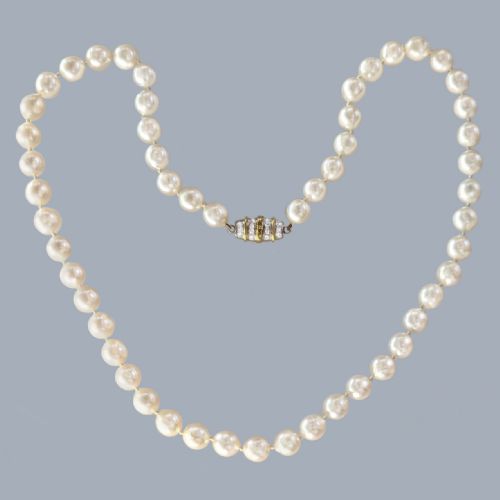
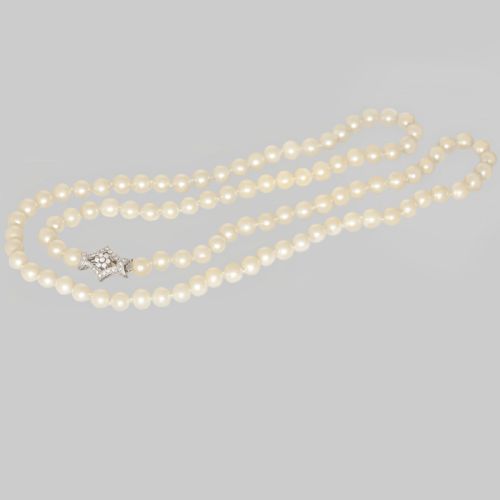
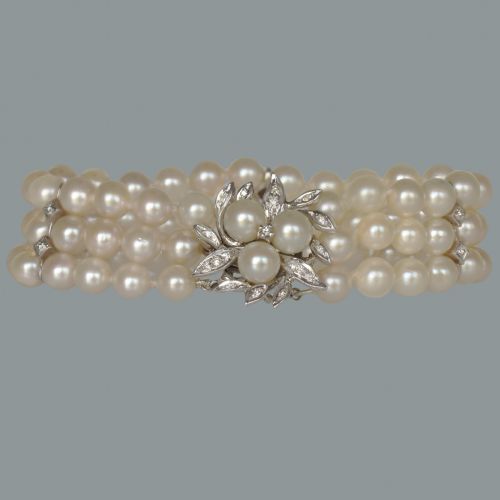
When you choose a cultured pearl strand, you select a classic necklace or bracelet formed of saltwater or freshwater cultured pearls fastened by a precious metal clasp.
Cultured Pearl Strand
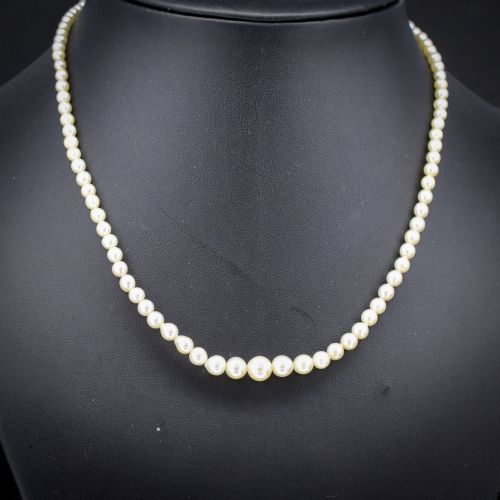
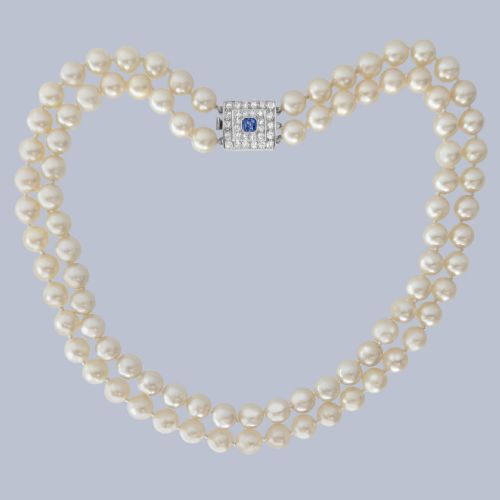
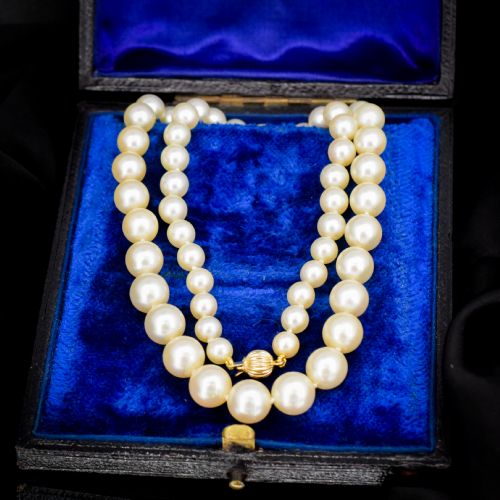
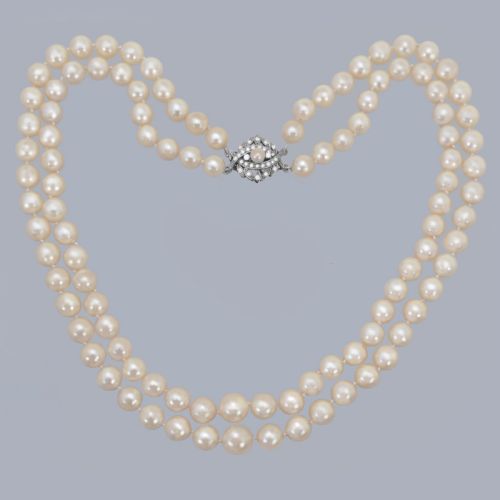
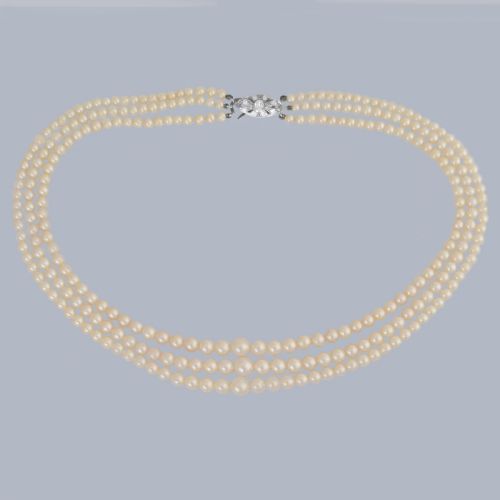
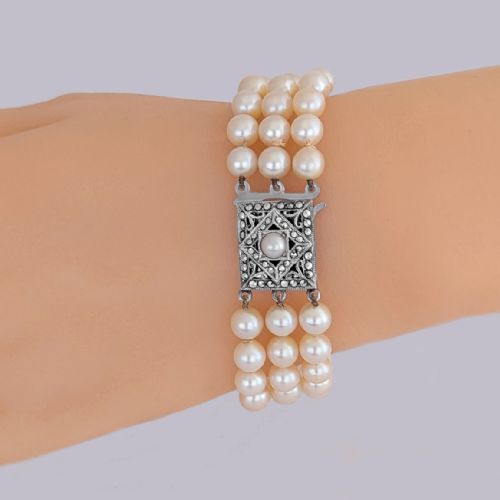
A cultured pearl strand brings together matched rows of pearls most commonly encountered from the Edwardian period through to the 1960s. Single, double, triple, and multi-strand configurations appear frequently in necklace and bracelet forms.
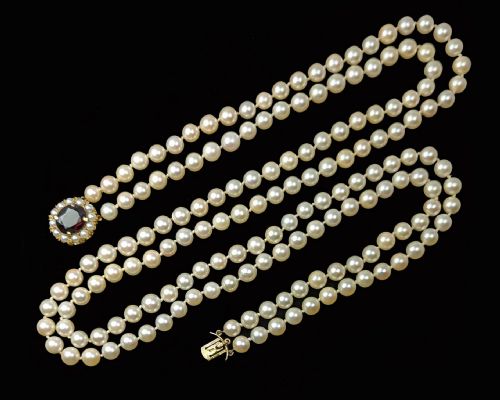
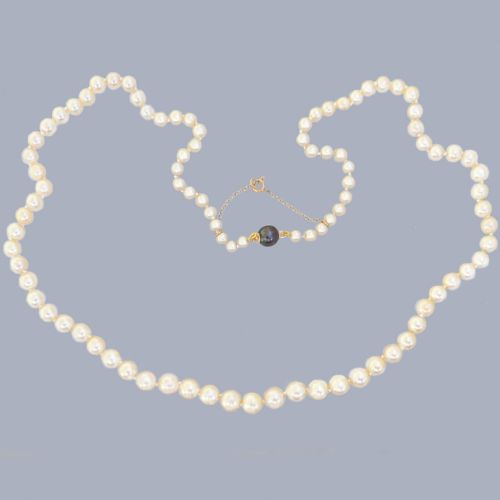
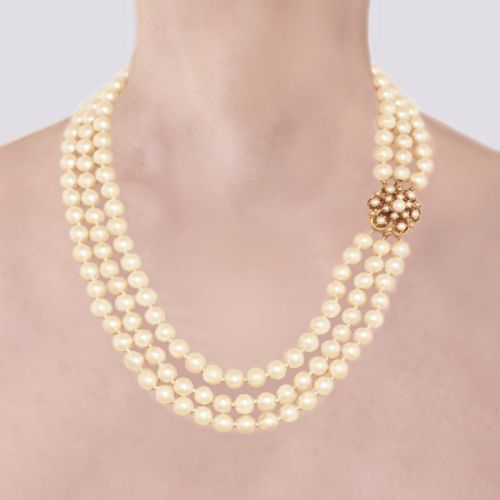
The material origins span classic cream cultured pearls alongside dark Tahitian saltwater examples. Clasps in these selections range from simple barrel designs to ornate floral formations set with garnets, sapphires, rubies, amethysts, turquoise, and diamonds.
Mid-century and Art Deco influences dominate the styling of the clasps and the arrangement of the beads. Buyers will discover both short choker lengths and much longer multi-strand iterations.
How they were made
Makers threaded cultured pearls onto silk thread, frequently employing hand knotting between individual beads to protect the pearls from friction and prevent total loss if the strand broke.
Clasps utilise 9ct gold, 14ct gold, 18ct white gold, and sterling silver, often securing gemstones such as diamonds, sapphires, and garnets in floral or geometric arrangements.
Cultured Pearl Strand Retail Price Guide 2026
Typical asking prices for cultured pearl strand among the pieces listed under this phrase on Sellingantiques today, from the lower quarter to the upper quarter. They describe what is for sale here now, not the wider market.
Listings span periods from the nineteenth century through the Edwardian era, Art Deco, and the nineteen-fifties and sixties.
What varies in quality
Quality rests upon the uniformity of the nacre, the matching of size and lustre across the pearls, and the complexity of the clasp metalwork. Saltwater pearls and certified stones set in higher carat gold or platinum-topped white gold sit at the upper end of the scale.
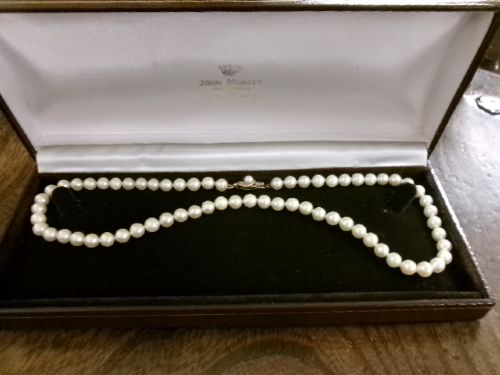
The integrity of the stringing and the presence of original boxes or certificates also differentiate standard commercial pieces from finer collector examples.
Cropp And Farr·Mikimoto
The Cultured Pearl Strand Glossary
- Cultured pearl
- A pearl created by the introduction of an irritant into an oyster or mollusc by human intervention, allowing the creature to coat the core in layers of nacre.
- Graduated
- Describing a strand where the pearls increase steadily in size from the ends toward the largest pearl positioned at the centre.
- Nacre
- The iridescent organic-inorganic composite material secreted by pearl oysters over the implanted nucleus.
- Hand knotted
- The traditional method of tying an individual knot in the silk thread between every pearl to secure the strand.
- Old cut diamond
- A diamond cut by hand before modern symmetrical facet standards were established, common in Edwardian and Art Deco clasps.
Cultured Pearl Strand: Frequently Asked Questions
What is the difference between single and multi-strands?
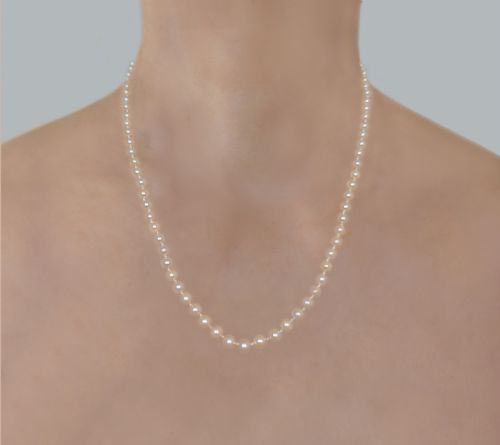
Single strands feature one continuous line of pearls resting flat against the collarbone, offering a traditional minimalist aesthetic. Multi-strands incorporate two, three, or more parallel rows that create a fuller, more substantial neckline.
Multi-strand variants often require specialised box clasps designed to keep the multiple rows aligned properly during wear.
How can I tell the era of a clasp?
Art Deco clasps display geometric motifs, rose cut diamonds, and white gold settings, while 1950s and 1960s versions frequently utilise floral cluster designs with coloured gemstones like sapphires, garnets, and amethysts set in 9ct yellow gold.
Hallmarks stamped on the metal components provide definitive assay office marks and date letters for the mounting.
Are all cultured pearls white?
While cream and white tones predominate across Edwardian and mid-century pieces, the selection also includes dark Tahitian saltwater pearls displaying natural deep body colours.
Coloured variations derive their hues from the specific species of oyster and the natural environment in which the nacre formed.