
Crystal Whisky Glasses
Crystal whisky glasses bring weight to the hand and brilliance to the sideboard, spanning heavy Georgian drams and cut Edwardian tumblers.
Crystal Whisky Glasses
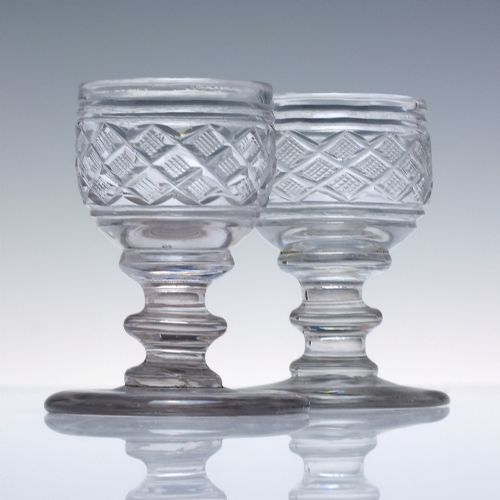
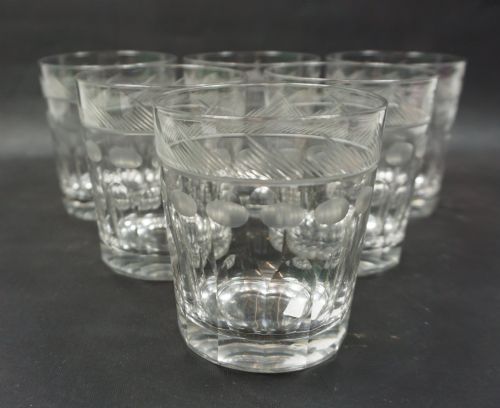
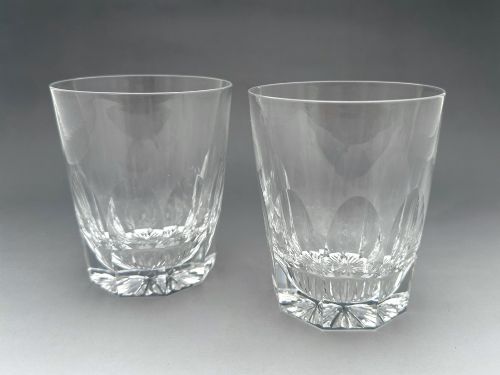
When you search for crystal whisky glasses, you enter a domain of heavy barware spanning the Georgian, Victorian, Edwardian, and Art Deco periods. The pieces available range from single dram glasses and pairs of early twentieth-century tumblers to sets of six drinking vessels.
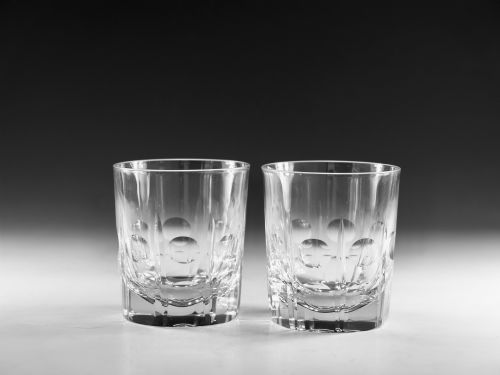
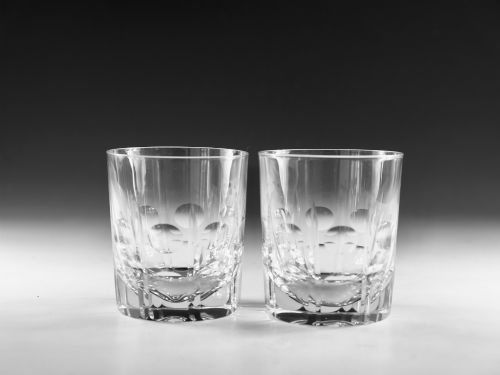
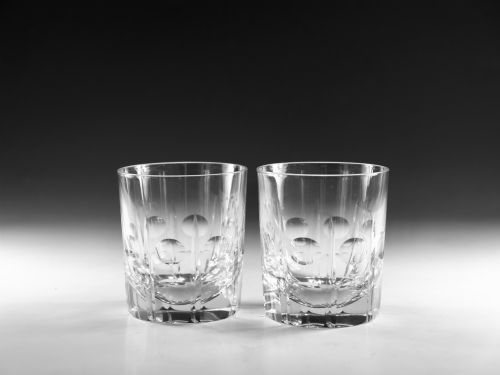
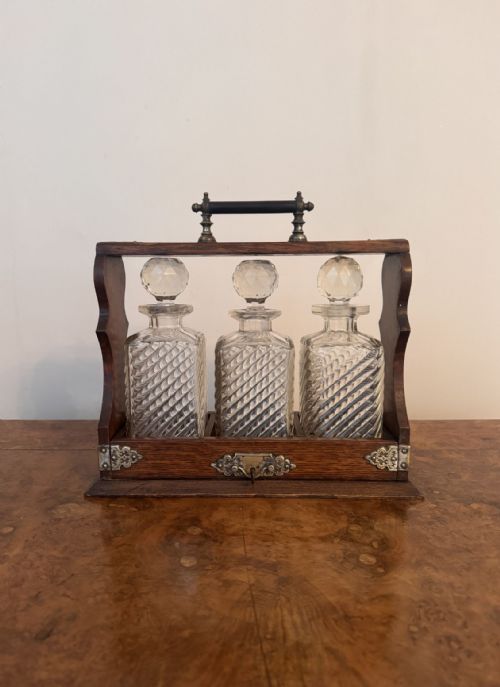
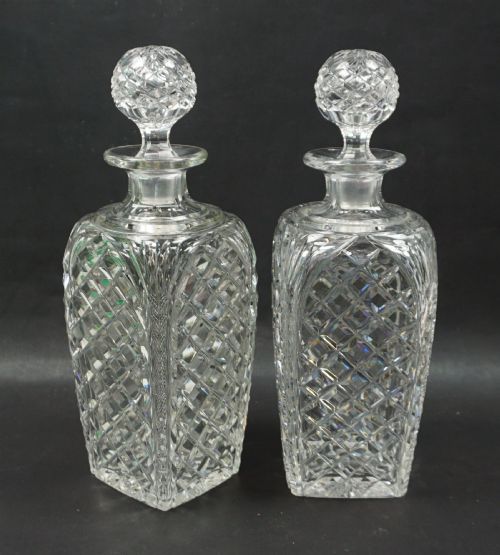
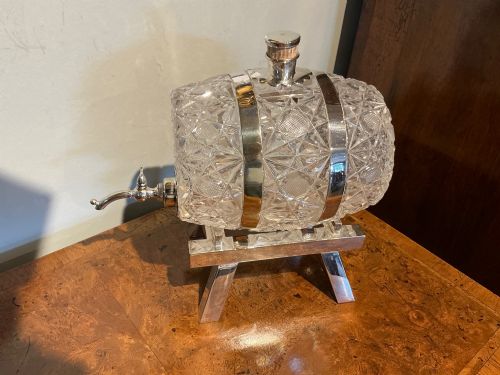
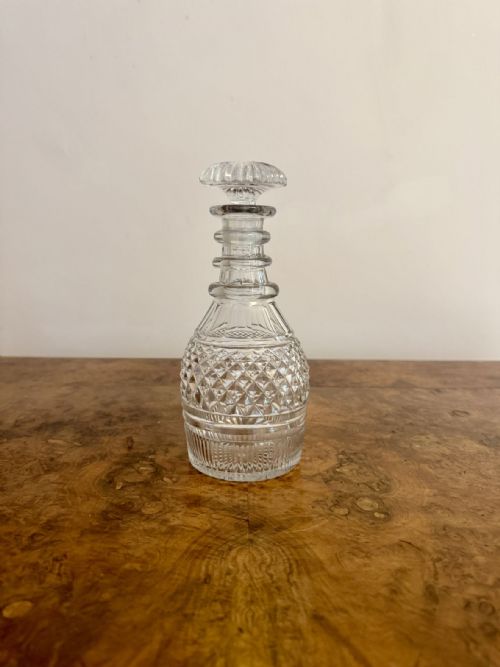
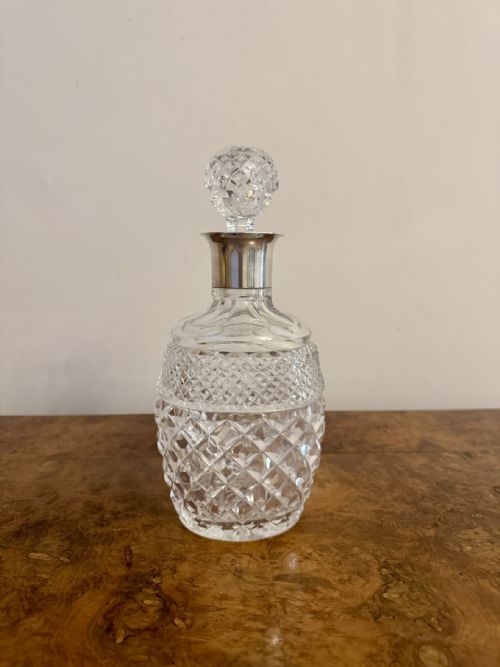
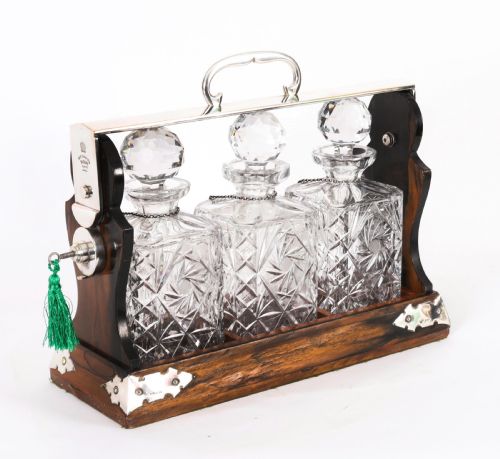
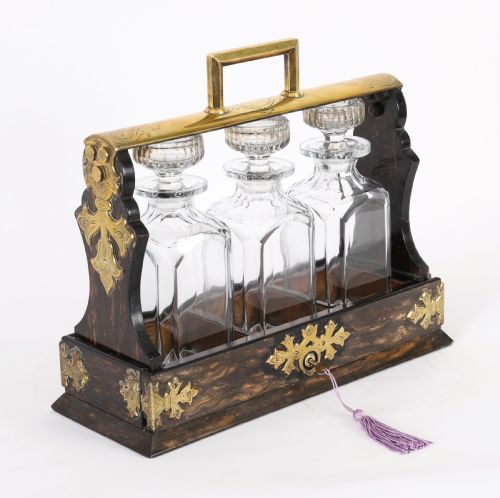
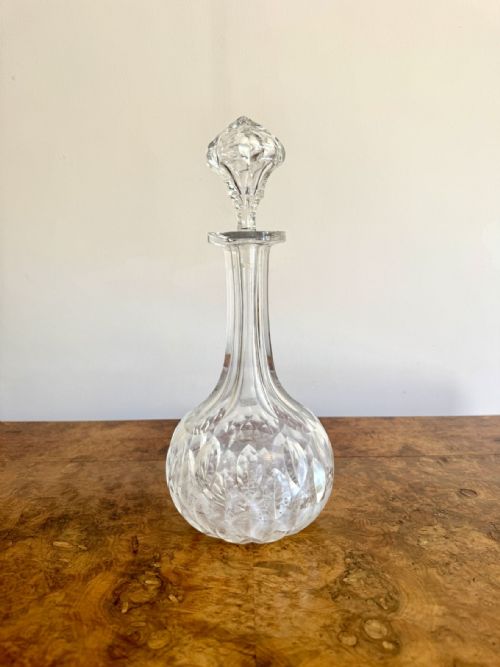
The form most frequently met on this page is the sturdy Victorian or Edwardian cut glass tumbler, often square-section or tapered, designed for daily service. Alongside these glasses, the listings encompass matching decanters, spirit barrels, and fitted tantalus sets that house the glassware securely.
Materials and construction
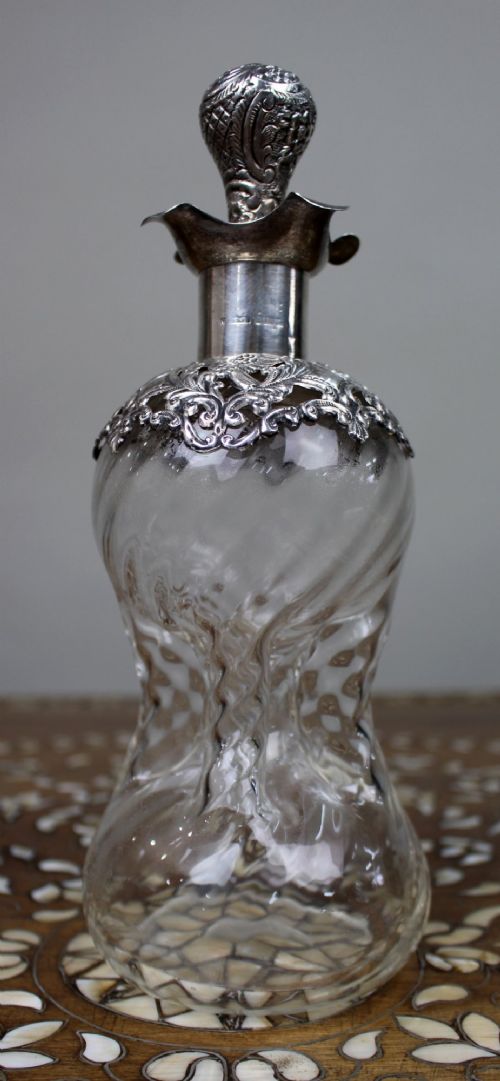
The primary material across these objects is lead crystal and cut glass, shaped by blowing and finished with deep wheel-cut facets or geometric patterns. These glass bodies combine with secondary materials such as sterling silver collars, brass mounts, and oak, coromandel, or satinwood cabinetry in the case of tantalus sets.
Makers utilised optical blowing and surface engraving to decorate the vessels, attaching silver hallmarks and plated mounts to secure the necks of decanters and hip flasks. The integration of metalwork with heavy glass demanded precise carpentry and metal-smithing to house the fragile drinkware.
Listings feature lead crystal, cut glass, oak, brass, and silver plate across periods spanning from Georgian dram glasses to Art Deco decanter sets.
Distinctions in quality
Quality rests upon the crispness of the cutting and the purity of the metal content within the lead crystal. Superior examples display sharp, deep facets that refract light cleanly without distortion, whereas lesser pieces show softer edges and minor bubbles in the glass.
The refinement of the supporting mounts further separates standard production from finer work. Hallmarked silver collars, well-fitted oak or coromandel frames, and balanced tumbler thickness denote superior craftsmanship commissioned by demanding households.
Betjemann·Karl Palda·James Powell
The Crystal Whisky Glasses Glossary
- Tantalus
- A locked cabinet holding decanters that displays the contents while preventing unauthorised pours. The frame secures the stoppers beneath a metal bar until unlocked with a key.
- Blaze cut
- A specific pattern of wide, flat facets that throw strong reflections across the glass. This technique appears frequently on Georgian and Regency dram glasses.
- Silver collar
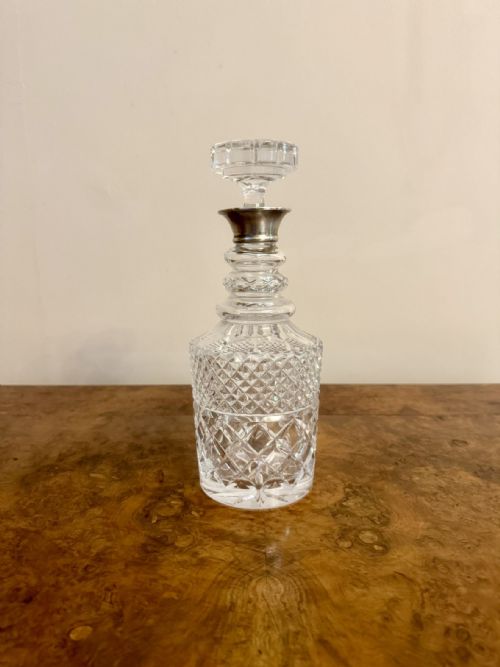
- A protective and decorative band fitted around the neck of a decanter. These collars often bear assay office hallmarks indicating the year and place of certification.
- Square section
- A bottle or tumbler profile with four flat sides meeting at distinct corners. This shape prevents the glassware from rolling on a moving sideboard or ship table.
Crystal Whisky Glasses: Frequently Asked Questions
How do I date antique crystal whisky glasses?
Dating relies on the weight of the metal, the depth of the cutting style, and any accompanying silver hallmarks. Earlier pieces from the Georgian era often feature thicker lead metal and broader facets, while Edwardian and Art Deco sets exhibit geometric precision.
Context also comes from fitted boxes or tantalus frames holding the set. Timber choices like coromandel or oak help narrow the manufacturing window alongside any stamped maker signatures on the glass.
What is a tantalus used for?
A tantalus serves as a secure drinking cabinet designed to display three or more decanters while restricting access to the contents. The locking mechanism traps the glass stoppers beneath a metal bar.
Invented in the Victorian period, these wooden frames made from oak, satinwood, or coromandel kept expensive spirits safe from domestic staff while remaining visible in the dining room.
Are cut glass tumblers safe for daily use?
Heavy lead crystal tumblers from the Victorian and Edwardian periods are robust enough for regular service with spirits. Their thick walls provide durability against chipping during normal handling.
Care must be taken to wash them by hand rather than placing them in modern dishwashing machines. This prevents thermal shock and protects the clarity of the lead crystal over time.