




Vintage Crystal Tumbler
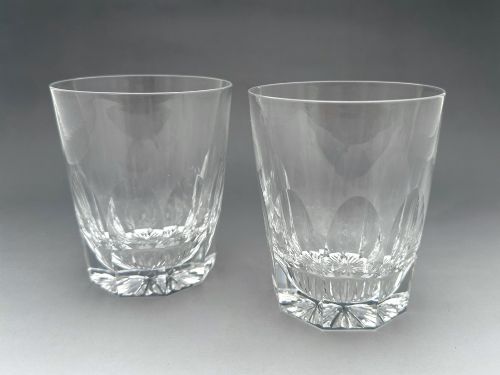
These vintage crystal tumbler examples range from Georgian blaze-cut drinking vessels to Art Deco Czech glassware, offering tactile weight and historic clarity for the table.
Vintage Crystal Tumbler
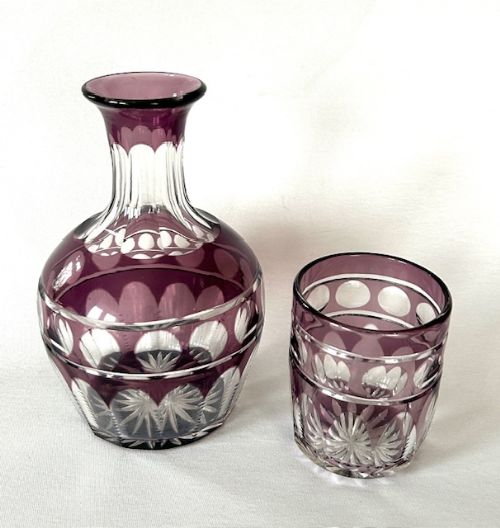
A vintage crystal tumbler search reveals a diverse collection of drinking vessels spanning the Georgian, Victorian, Edwardian, and Art Deco periods. Buyers encounter heavy whisky tumblers, tall cordial glasses, and complete decanter sets designed for spirits and wine.
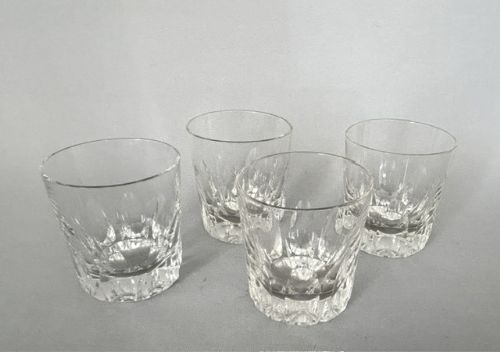
Most pieces date from the nineteenth and early twentieth centuries, providing functional glassware that carries authentic period character. Sets of matching pairs or larger multiples frequently appear alongside individual cabinet specimens.
Materials and construction methods
Glassmakers utilised lead crystal, clear glass, and lead glass to achieve the brilliant refraction and solid heft characteristic of these drinking vessels. Skilled artisans applied deep wheel cutting, geometric facets, and surface polishing to shape the heavy blanks.
Surface ornamentation relies on acid etching, intricate engraving, and hand enamelling, particularly on Bohemian and Art Deco pieces. These techniques require steady hands and specialised rotating wheels to carve motifs directly into the material.
Listings feature lead crystal, clear glass, and amethyst glass across Victorian, Edwardian, and Art Deco styles.
Assessing quality and craftsmanship
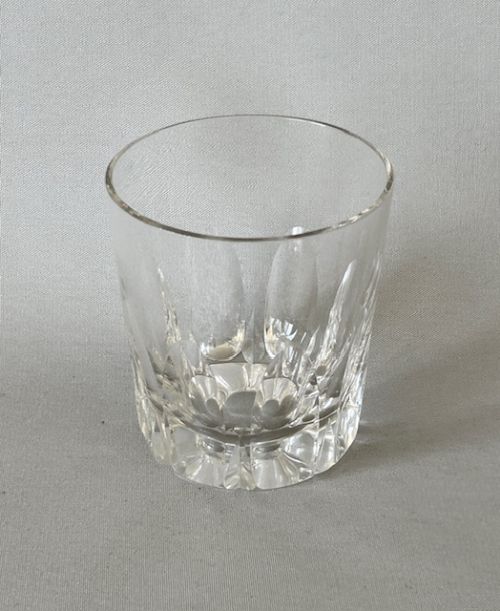
The clarity of the material and the crispness of the wheel-cut facets distinguish finer examples from standard production. Sharp, deep cutting catches the light directly, whereas worn or shallow incisions suggest less meticulous finishing.
Consistency across a matched set indicates higher workshop standards, particularly in the uniformity of wall thickness and rim smoothness. The precision of engraved details and the purity of the crystal establish the tier of the piece.
Karl Palda
The Vintage Crystal Tumbler Glossary
- Lead Crystal
- Glass containing a significant percentage of lead oxide, which increases the weight, brilliance, and workability for deep cutting. This material rings clearly when struck gently.
- Wheel Engraved
- A decoration technique where a rotating small wheel cuts designs into the glass surface. Artisans use copper or stone wheels of varying sizes to achieve fine pictorial details.
- Acid Etched
- A method of applying patterns to glass using acid to eat away exposed areas. This creates a frosted or textured background contrast against polished clear panels.
- Blaze Cut
- A historic geometric cutting style featuring broad, flat facets that create dramatic flashes of light. It appears frequently on Georgian drinking vessels.
- Bohemian Glass
- Glassware originating from the regions of Bohemia and Silesia, celebrated for coloured overlays, deep engraving, and enamelling traditions. These items often showcase rich ruby or amethyst hues.
Vintage Crystal Tumbler: Frequently Asked Questions
How do I clean vintage crystal tumblers?
Wash these glasses by hand in warm water using a mild liquid detergent. Avoid sudden temperature changes to prevent thermal shock.
Dry them immediately with a lint-free linen cloth to maintain the brilliant shine of the cut facets.
Can I use these glasses for daily drinks?
Many people enjoy using heavy Victorian and Edwardian whisky tumblers for everyday dining. Their thick walls provide robust durability for regular handling.
Hand-washing remains essential to protect delicate rims and acid-etched decorations from dishwasher damage.
How do I distinguish Victorian from Art Deco pieces?
Victorian tumblers typically feature heavy hand-cut geometric facets, intricate floral engravings, or deep fluting. They display the traditional heft associated with nineteenth-century English and Bohemian production.
Art Deco items, by contrast, embrace modernist symmetry, geometric enamelling, and streamlined silhouettes characteristic of the 1930s.
What is the difference between glass and lead crystal?
Lead crystal contains metallic lead oxide, which lowers the melting point and makes the material softer for intricate wheel cutting. This composition yields higher density and superior light refraction compared to standard soda-lime glass.
Standard glass feels lighter in the hand and lacks the distinctive musical ring produced when tapping crystal.