


Antique Rocks Glasses
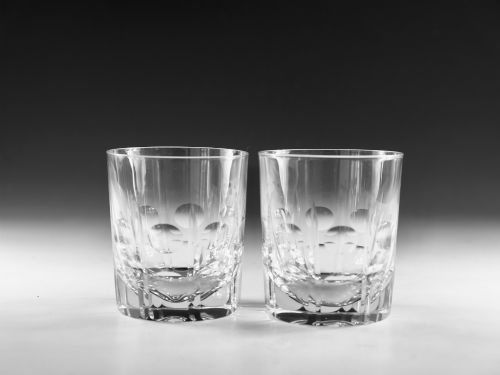
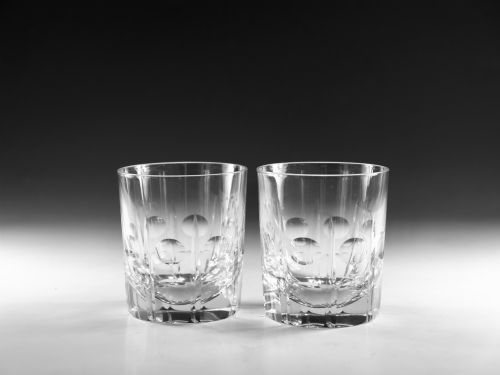
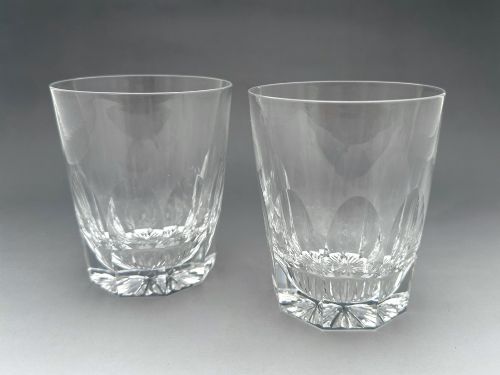
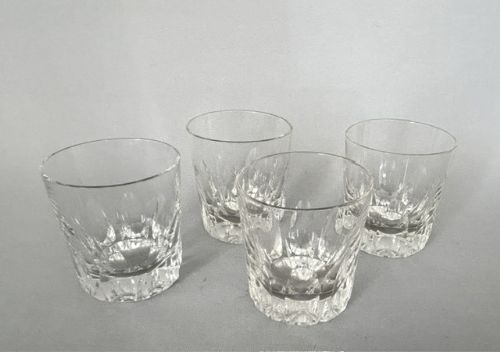
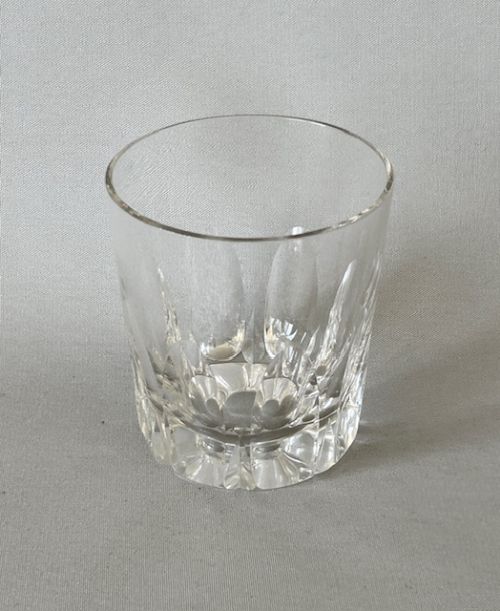
Antique rocks glasses are sturdy everyday drinking vessels and heavy crystal tumblers meant for spirits, combining heft with fine cutting.
Antique Rocks Glasses
When you search for antique rocks glasses, you encounter heavy whisky tumblers, cut glass drinking vessels, and related crystal drinking service pieces spanning the Victorian, Edwardian, and Art Deco periods. The most common examples meeting this description are English cut crystal and lead crystal whisky tumblers made around the late nineteenth and early twentieth centuries.
These pieces encompass both matched sets and pairs of drinking glasses designed for spirits, alongside occasional related forms like rock crystal snuff bottles and intaglio engraved goblets. Their origins stretch from Victorian England to French workshops, reflecting the diverse domestic table tastes of the nineteenth and twentieth centuries.
Buyers look for these items to use for serving spirits or to collect specific period glassmaking styles, such as heavy cut crystal and intaglio engraving. The selection mirrors the broader evolution of domestic glassware from simple nineteenth-century forms to geometric Edwardian and Art Deco designs.
What varies in quality
The distinction between ordinary production and superior quality lies in the depth and crispness of the cutting, as well as the purity and weight of the crystal. Superior pieces display sharp, clean facets without softness in the engraved edges, showing the hand of a master carver rather than mass output.
The weight and balance of the glass also determine quality, with finer pieces offering a substantial feel in the hand combined with brilliant optical clarity. Consistency across a matched set or pair indicates careful workshop production during periods like the Edwardian era or late Victorian decades.
The listings show pieces spanning the Victorian, Edwardian, and Art Deco periods, utilising glass, lead crystal, cut glass, and rock crystal.
Maison Baguès·Webb Corbett·William Comyns
The Antique Rocks Glasses Glossary
- Lead crystal
- Glass containing a proportion of lead oxide that increases weight, brilliance, and softness for easier cutting. This material allows for the deep, sparkling facets seen on Victorian and Edwardian whisky tumblers.
- Intaglio
- A technique where a design is incised or engraved into the surface of the glass rather than raised above it. Master carvers utilised this method to create detailed floral and geometric motifs.
- Rock crystal
- Naturally occurring quartz carved into decorative objects and vessels. It differs from manufactured lead glass through its natural crystalline structure.
- Stourbridge
- An English town renowned for its glassmaking industry and skilled intaglio engraving during the nineteenth century. Pieces originating from this centre often exhibit exceptional clarity and wheel-engraved detail.
- Tumbler
- A flat-bottomed drinking glass without a stem or handle. These vessels served spirits such as whisky during the Victorian and Edwardian periods.
Antique Rocks Glasses: Frequently Asked Questions
Were these heavy glasses meant for daily use?
Victorian and Edwardian whisky tumblers were produced for regular domestic hospitality and dining. Their thick walls and heavy bases provided durability for frequent handling during evening drinks.
While robustly made, their age means modern owners often reserve them for special occasions or careful use during social gatherings.
How can I tell a Victorian tumbler from an Edwardian one?
Victorian examples often feature charmingly heavy cutting and robust proportions typical of the nineteenth century. They reflect the heavier decorative tastes prevalent before the turn of the twentieth century.
Edwardian pieces tend to show sharper, more precise geometric cutting influenced by evolving tastes leading towards the Art Deco period.
What is the difference between glass and rock crystal?
Glass is a manufactured material produced by melting silica, soda, and other ingredients together. Rock crystal is a natural mineral quartz carved directly by lapidaries.
Items made from natural quartz possess a distinct cool density and internal characteristics different from man-made lead crystal.