
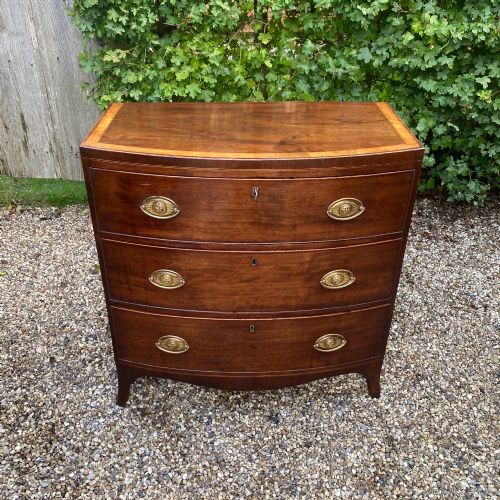
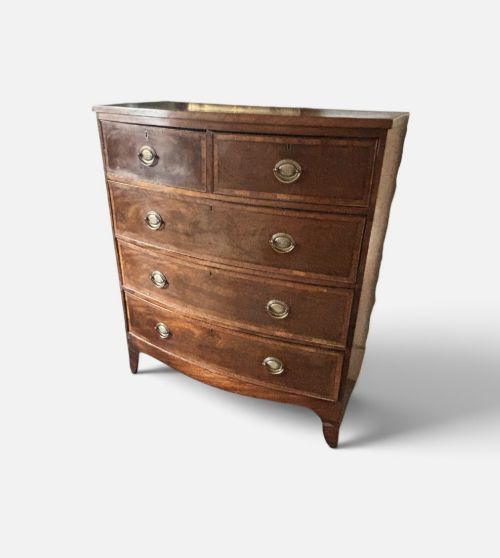
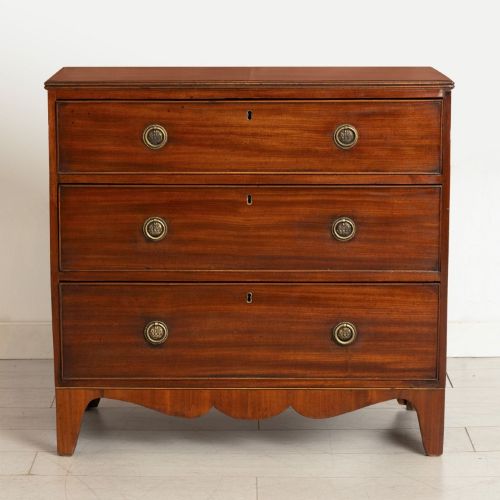
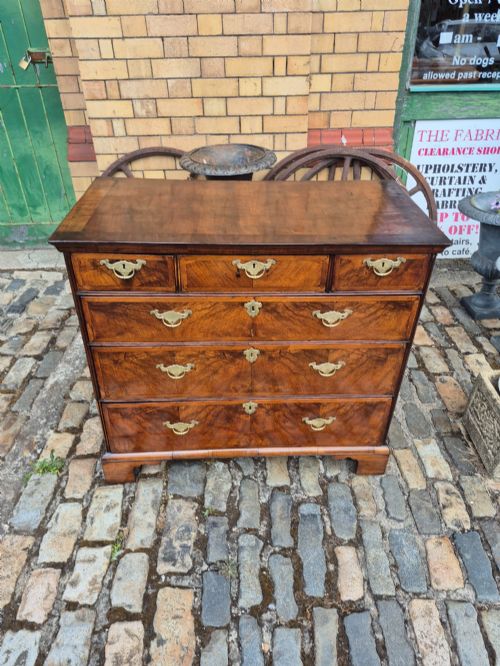


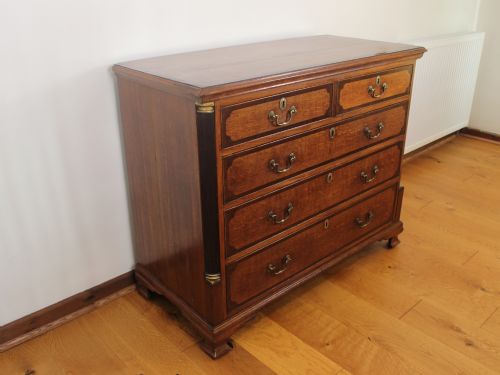
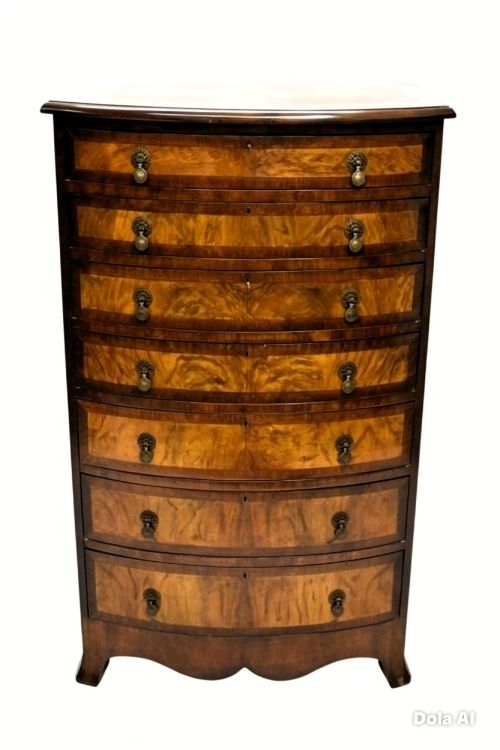
Crossbanded Commode Chest
A crossbanded commode chest brings together figured timber borders and sturdy drawer construction, offering storage with a refined silhouette.
Crossbanded Commode Chest
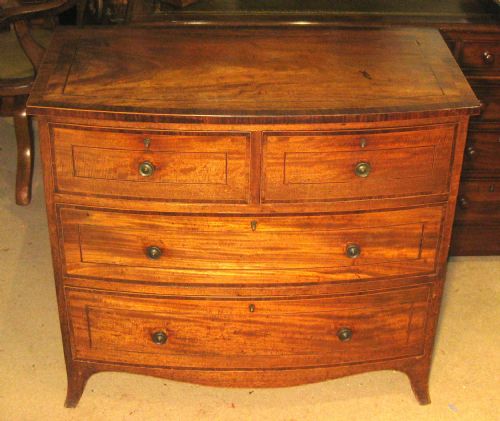
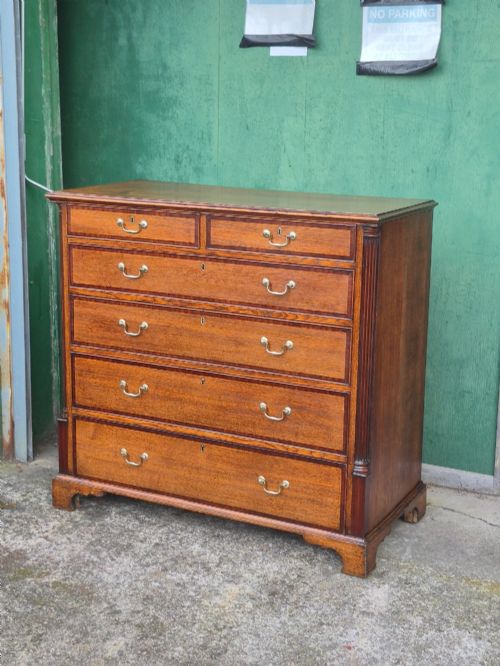
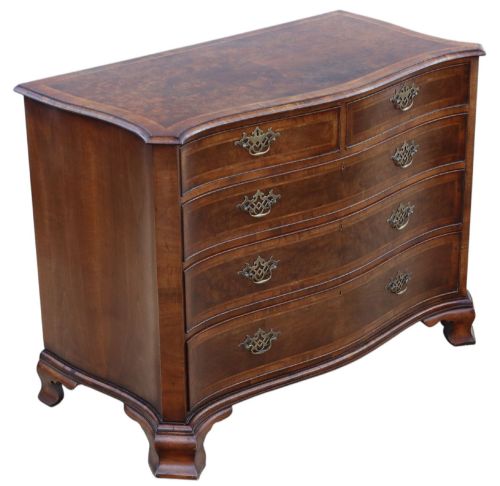
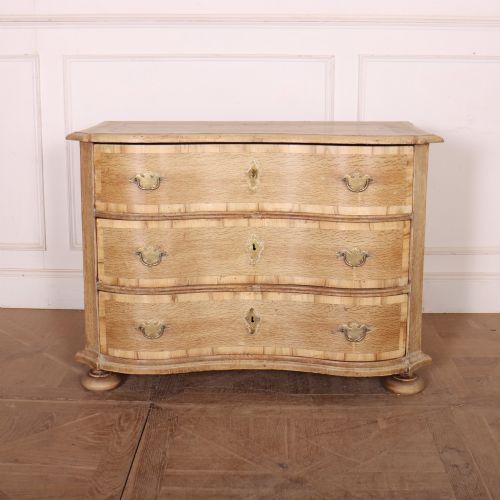
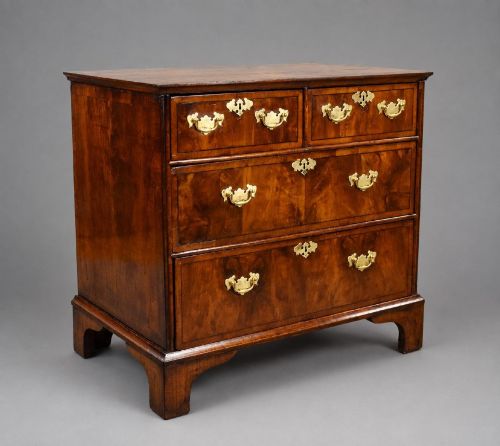
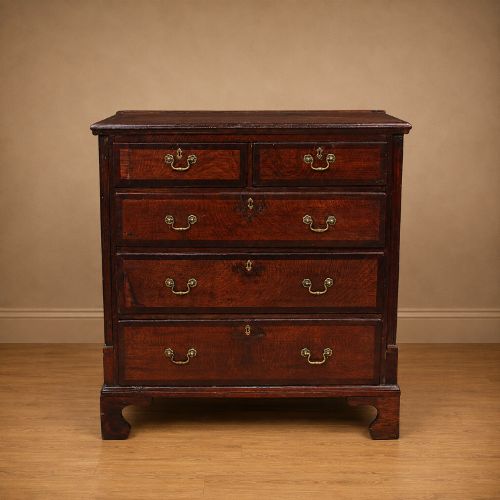
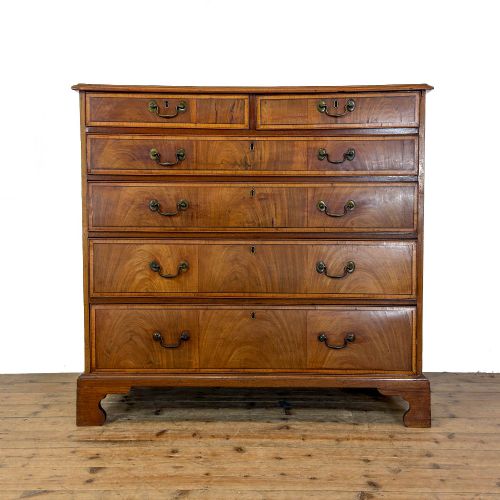
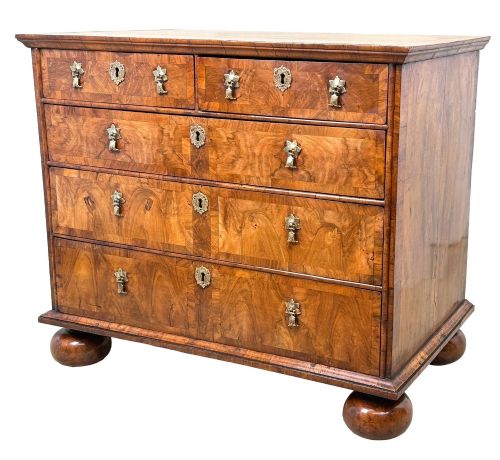
A crossbanded commode chest functions primarily as a set of drawers or a bedside commode, incorporating decorative timber borders along the top or drawer edges. Buyers searching for a crossbanded commode chest encounter pieces spanning the seventeenth century through to the twentieth century, with strong representation from Georgian and Victorian periods. The selection includes substantial serpentine shapes alongside compact bow fronts and miniature furniture forms.
Origin points vary across British and Continental workshops, taking in English oak and mahogany as well as Austrian, Bavarian, French, and South German walnut and cherrywood. Makers often utilised contrasting veneers such as satinwood and burr walnut to frame the primary drawer faces. These storage pieces range from tall vertical chests to low gentleman's dressing chests and small bedside commodes.
Materials and Construction
Cabinet makers built these pieces using solid timbers like oak, mahogany, and walnut for the primary carcase, complemented by decorative secondary veneers. Crossbanding involves laying strips of veneer so the grain runs perpendicular to the main panel, creating a contrasting border around the drawer fronts or top surface. Satinwood, burr walnut, and fruitwood frequently provide these lighter or highly figured borders.
Brass hardware such as drop handles and backplates secure the drawer fronts on many examples, particularly from the Georgian and Regency eras. Carcase construction relies on traditional joinery methods suited to the period, housing multiple graduated drawers within straight, serpentine, or bow front frameworks.
Listings span several centuries, combining 18th-century Georgian walnut with later Regency, Victorian, and 1920s burr walnut interpretations.
Execution and Detail
Quality rests in the precision of the crossbanding veneer work and the choice of primary timber figures. Burr walnut, amboyna, and finely figured mahogany demand greater skill from the cabinet maker when applied in narrow borders around drawer perimeters. The crispness of the serpentine curves or the gentle sweep of a bow front separates standard utility furniture from finer decorative examples.
The integration of secondary timbers like oak for drawer linings and the retention of original brass handles contribute to a more complete piece. Finer examples display meticulous attention to grain direction where the border meets the central panel, ensuring a balanced aesthetic across the entire chest.
The Crossbanded Commode Chest Glossary
- Crossbanding
- A border of veneer laid with the grain running across the width of the band rather than along its length. This technique frames the drawer fronts and top surfaces of the chest.
- Commode
- A low cabinet or chest of drawers, often incorporating doors or multiple tiers of storage. Continental examples frequently feature serpentine fronts.
- Bow front
- A convex curved front on a chest of drawers, popular during the Regency and Georgian periods. It softens the linear profile of the furniture.
- Serpentine
- A furniture front shaped with a central convex curve flanked by two concave curves. This undulating outline requires advanced woodworking skill.
- Veneer
- A thin slice of figured wood applied over a sturdier secondary timber base. Burr walnut and satinwood serve this decorative purpose.
Crossbanded Commode Chest: Frequently Asked Questions
Where should I place a commode chest?
These chests suit hallways, living rooms, and bedrooms where surface space and drawer storage are both required. Their decorative tops and veneered borders allow them to function well as focal points against plain walls.
Compact bow front and serpentine versions fit smaller alcoves while maintaining substantial internal storage capacity for daily use.
How do I identify a Georgian chest?
Georgian examples often feature solid mahogany or oak carcases with hand-cut dovetails on the drawer sides. Look for period brass drop handles and characteristic proportions that prioritise functional elegance.
Many pieces from this era incorporate subtle crossbanding around the drawer edges rather than heavy applied ornamentation.
What is the difference between a chest and a commode?
While both provide drawer storage, commode typically denotes a lower, more decorative Continental or serpentine form. Standard chests of drawers tend to be taller and more rectilinear in their proportions.
Both types utilise crossbanding techniques to highlight their primary timber surfaces.
How do I care for veneered surfaces?
Keep veneered furniture away from direct sunlight and steady heat sources to prevent the wood from drying out. Dust regularly with a soft, dry cloth without applying modern silicone polishes.
Occasional application of appropriate wax maintains the lustre of walnut and mahogany without building up residue.