



Crested Floor Mirror
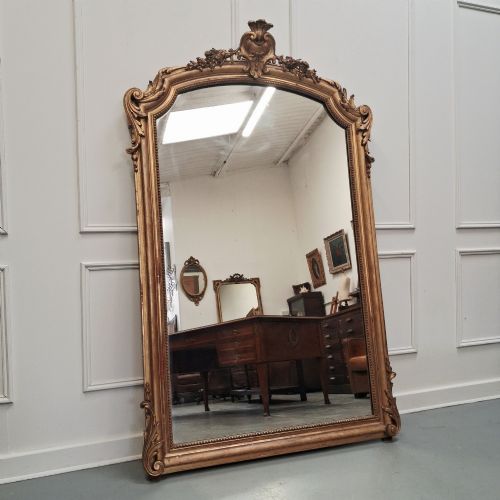
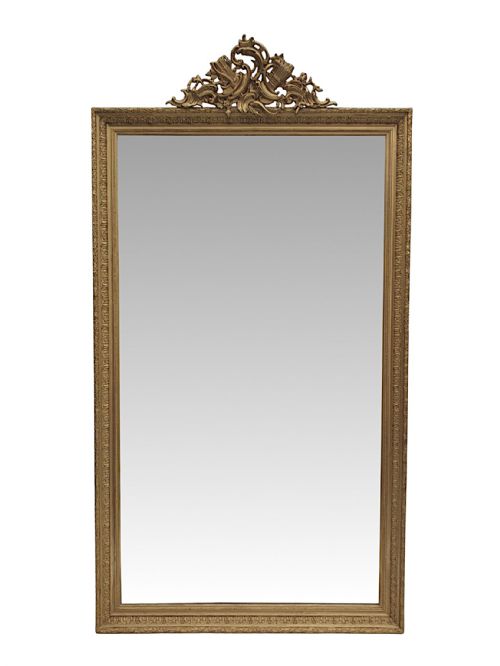
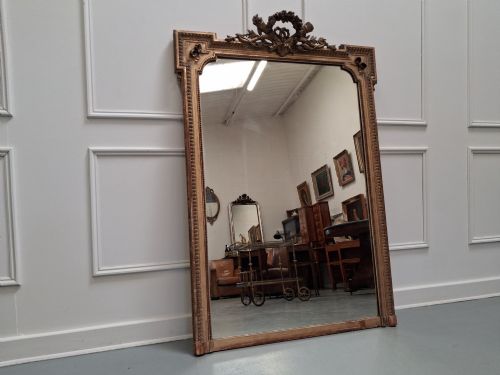
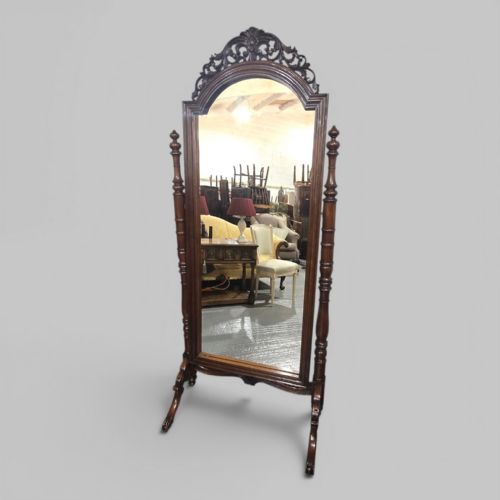
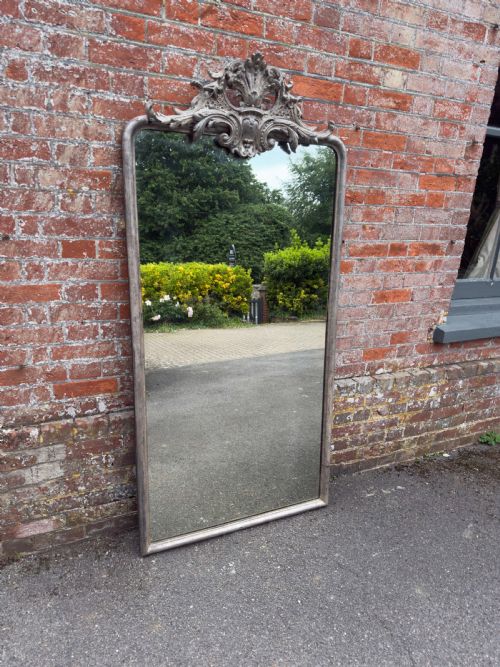
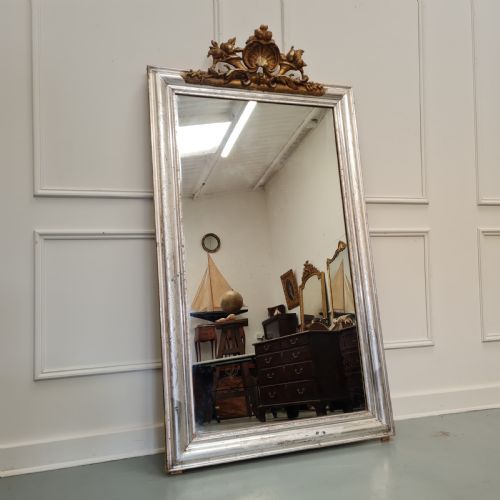
These crested antique floor mirrors are tall looking glasses designed for dressing rooms and principal chambers, offering full-length reflections framed in carved and gilded timber.
Crested Floor Mirror
A crested antique floor mirror combines a tall upright glass with an ornamental pediment at the summit, often taking the form of a cheval frame supported on pivots or a substantial leaner plate designed to stand against a wall. The examples found here span from the eighteenth century through the Edwardian period, with nineteenth-century French output strongly represented.
Buyers encounter substantial vertical formats including overmantel, pier, and full-height dressing variants constructed to command a room. The stylistic lineage encompasses French Rococo Revival, Neoclassical, and Queen Anne influences executed in walnut, mahogany, and softwood carcasses.
Materials and construction
Carved timber frames form the structural core, utilising dense hardwoods such as mahogany and walnut alongside softer timbers built to receive thick layers of gesso. This plaster mixture provides the smooth ground necessary for intricate surface decoration and relief work.
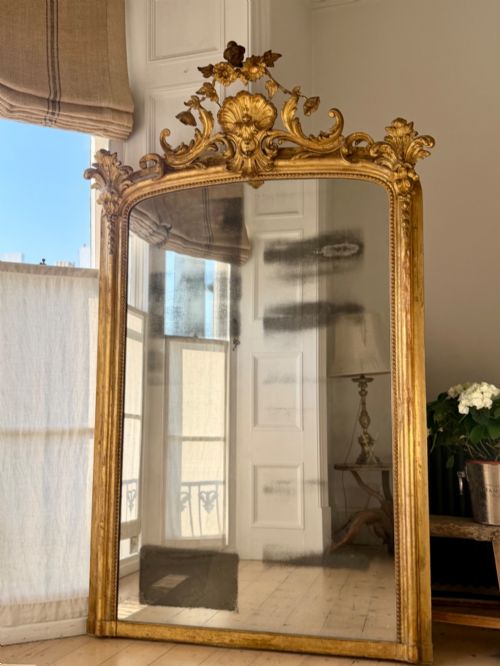
Gilding techniques involve the application of gold leaf or silver leaf directly onto the prepared gesso, frequently complemented by painted finishes and original mercury glass plates possessing foxed characteristics.
Mirrors featuring foxed mercury glass offer centuries of gentle blemishes that reflect interiors through a hazy, romantic nineteenth-century fog.
Assessing craftsmanship and execution
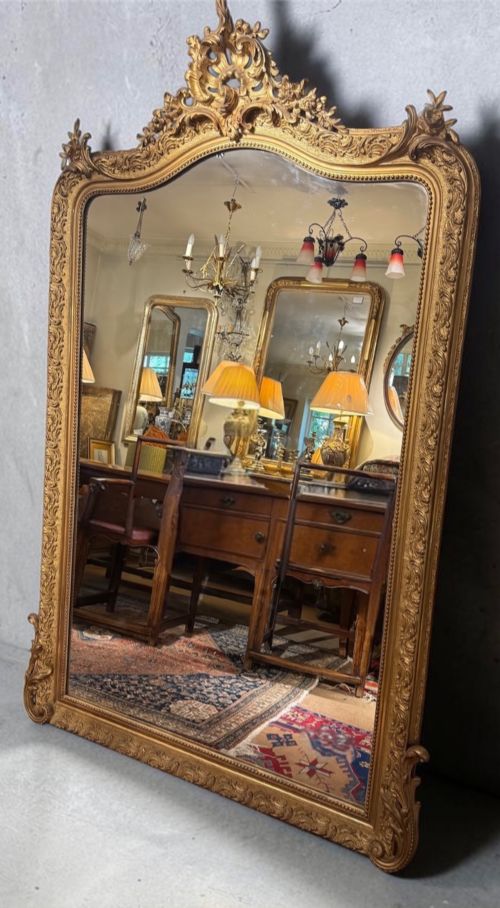
The distinction between tiers rests upon the depth and precision of the hand-carved ornamentation applied to the crest and frame. Superior pieces display crisp relief work in the gesso and timber, whereas lesser examples rely on simplified moulding profiles with minimal hand finishing.
Originality of surface finish and the integrity of the silvered or mercury glass plate dictate the standing of a piece. Retaining the original silvering and uncompromised carved cresting elevates the object above examples with later surface alterations.
The Crested Floor Mirror Glossary
- Cheval mirror
- A freestanding full-length mirror suspended on a frame with vertical pivots allowing the glass to tilt. This form emerged during the eighteenth century for dressing chambers.
- Gesso
- A plaster mixture applied to carved wooden frames to create a smooth surface for gilding or painting. It accepts deep relief carving before metal leaf is laid.
- Mercury glass
- A type of double-walled glass blown with a silvering mixture between the layers, creating a characteristic speckled reflection. It dates principally to the nineteenth century.
- Overmantel mirror
- A large horizontal or vertical glass designed to be positioned above a fireplace mantelpiece. Many double as leaner mirrors on the floor.
- Pier mirror
- A tall, narrow glass made to hang on the wall between two windows, often placed above a matching console table.
Crested Floor Mirror: Frequently Asked Questions
What is a crested antique floor mirror?
A crested antique floor mirror is a tall looking glass featuring an ornamental carved top or pediment designed for full-length viewing.
These pieces function as architectural focal points within dressing rooms, bedrooms, and principal reception spaces.
How do I date an antique floor mirror?
Dating relies on examining the timber species, the composition of the gesso, and the manufacturing method of the glass plate.
Eighty-year-old and nineteenth-century examples often display hand-carved wooden frames, mercury glass plates, and distinct stylistic revivals like French Rococo.
Can these mirrors stand without wall support?
Cheval mirror variants stand independently upon their own floor frames supported by four feet and pivoting mounts.
Leaner and overmantel styles rely on the wall for stability, resting securely upon the floorboards with proper anchor fixings.
What distinguishes French mirror styles?
French models from the nineteenth century frequently incorporate elaborate gesso crests, arched tops, and giltwood or painted finishes.
Design motifs draw from Louis Philippe, Rococo, and Neoclassical traditions, emphasising asymmetrical curves and naturalistic carved foliage.