
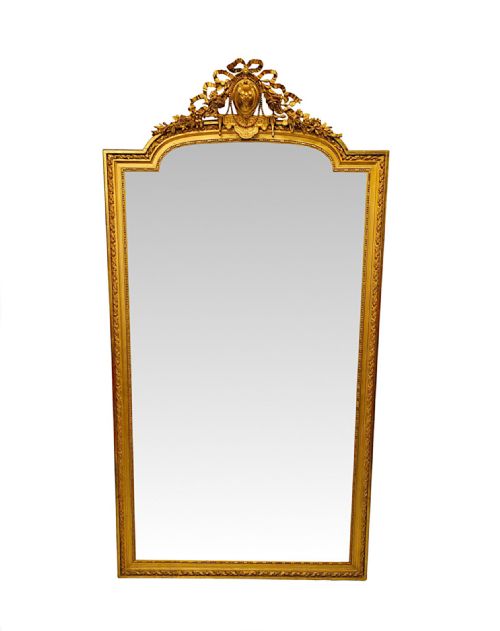
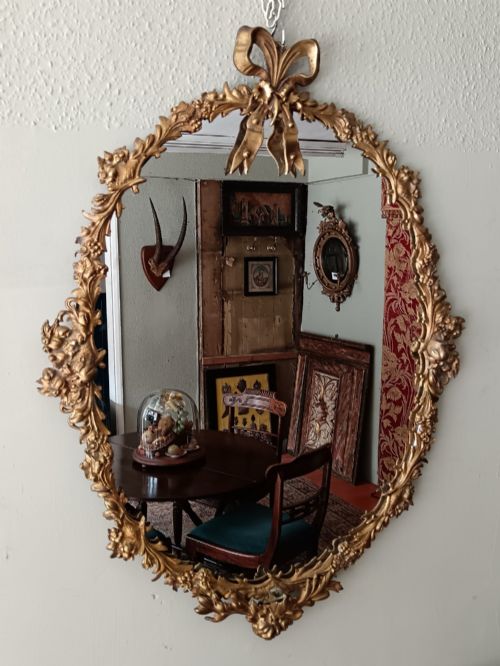
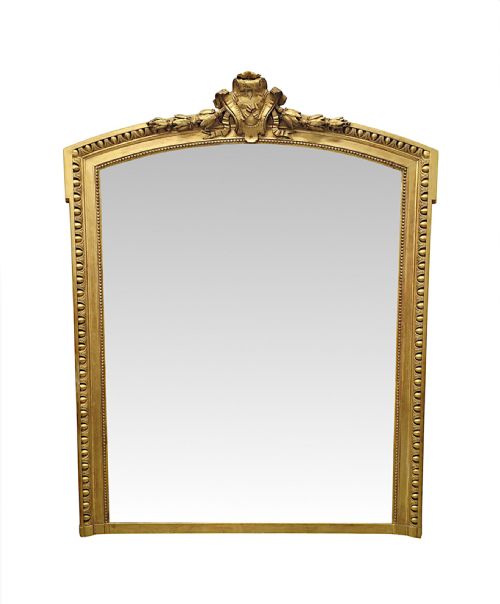


Carved Crest Hall Mirror
A carved crest hall mirror brings height and reflected light to an entrance, drawing the eye with sculptural woodwork or gilded detail.
Carved Crest Hall Mirror
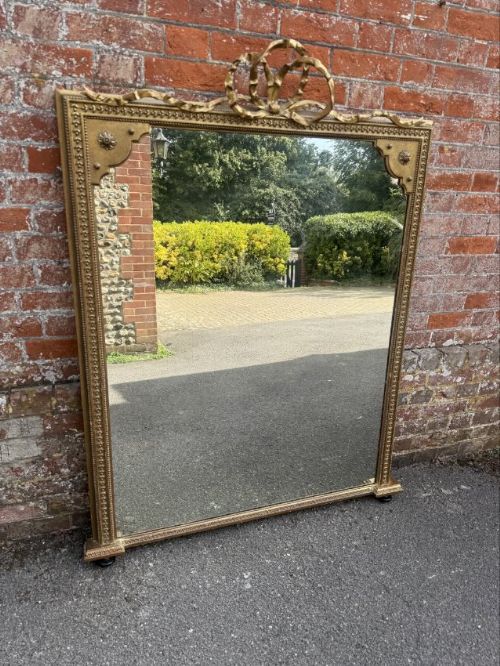
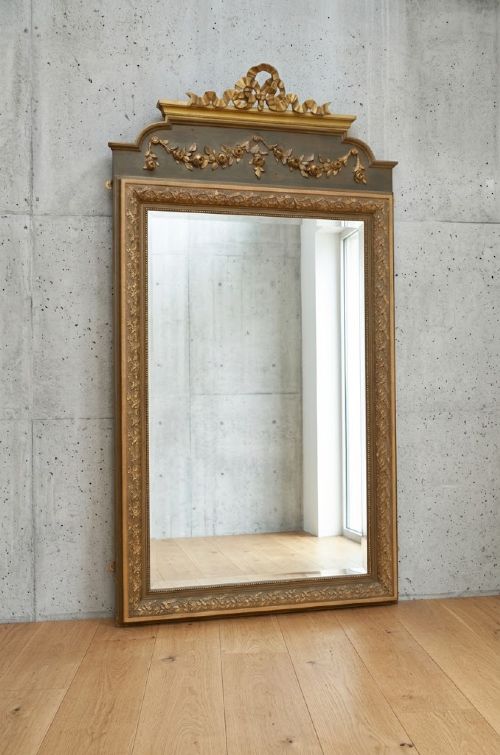
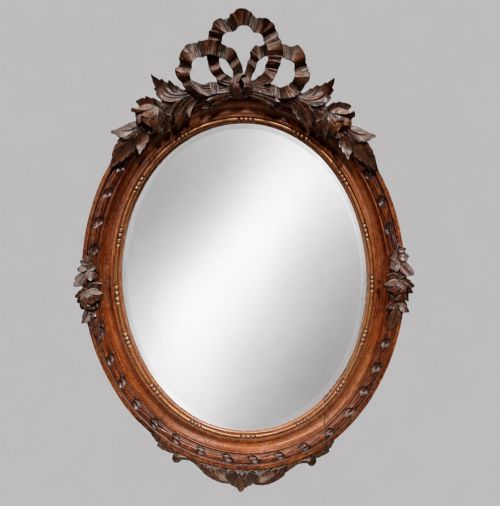
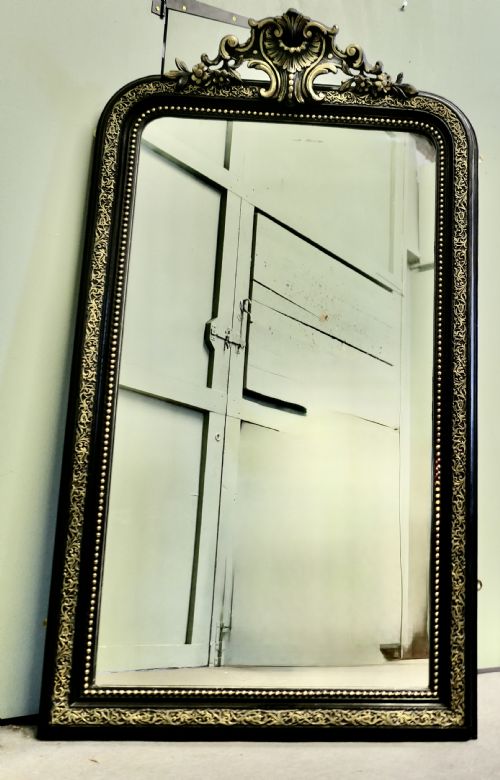
A carved crest hall mirror is a wall-hanging looking glass finished with an ornate upper flourish, designed principally for hallways, piers, and landings. These furnishings appear in styles ranging from Georgian and George III to Victorian, Belle Époque, and French Neoclassical, reflecting centuries of decorative ambition. The pieces available traverse the nineteenth century into the early twentieth century, spanning decades of revivalism and traditional joinery.
Buyers encounter formats such as tall pier mirrors, oval wall mirrors, and large overmantels, often shaped to maximise light in narrow spaces. Materials shift between giltwood, gesso, walnut, ebonised wood, and painted finishes, sometimes enhanced with ribbon crests or central cartouches. Surviving examples demonstrate how makers adapted classical idioms for domestic interiors across Britain and continental Europe.
How They Were Made
Makers shaped structural carcases from solid timbers such as walnut and softwood before applying surface layers of gesso to receive intricate carved detail. Giltwood and gold leaf finishes required meticulous laying of metallic leaf over prepared grounds, whilst ebonised wood achieved its dark tone through chemical staining or pigmented polishing. Frame construction relied on traditional joinery techniques to support heavy reflective plates without warping.
Reflecting plates themselves were hand-silvered and occasionally bevelled at the edges, a process requiring considerable skill to ensure optical clarity across large surfaces. Carved crests and decorative motifs like cartouches and ribbon ties were either worked directly into the timber or modelled in gesso and secured to the main frame.
Listings feature periods spanning the Georgian era through the nineteenth century to early nineteen-ten, utilising walnut, giltwood, and ebonised wood.
What Varies in Quality
Quality rests upon the crispness of the carving and the depth of the gilding, where hand-tooled gesso holds sharper definition than moulded composition. The integrity of the original glass plate and the presence of period bevels distinguish superior examples from later replacements.
Proportion and balance dictate the aesthetic success of the piece, particularly how harmoniously the carved crest integrates with the main frame. Joinery stability at the mitres and the preservation of original backboards further indicate the level of craftsmanship invested during manufacture.
The Carved Crest Hall Mirror Glossary
- Gesso
- A plaster-like mixture applied to wood frames as a base for gilding or painting. It allows craftsmen to model sharp relief details before applying gold leaf.
- Giltwood
- Timber that has been coated with gold leaf or metal leaf. This finish reflects interior candlelight and daylight.
- Cartouche
- An ornamental tablet or oval frame design resembling a scroll or rolled-up piece of paper. It frequently occupies the centre of a carved crest.
- Pier Mirror
- A tall, narrow looking glass designed to hang on the wall space between windows. These mirrors maximise available light in domestic rooms.
- Overmantel Mirror
- A large horizontal or vertical glass designed to sit above a fireplace mantelpiece. Scale and proportion match the architectural weight of the hearth.
Carved Crest Hall Mirror: Frequently Asked Questions
Where should I hang a hall mirror?
These mirrors suit narrow entranceways, landings, and hallways where reflected light opens up confined spaces. Positioning them opposite a light source or doorway creates an immediate sense of depth.
Ensure the wall construction supports the considerable weight of timber and glass frames by fixing directly into studs or using appropriate masonry anchors.
How do I identify a Victorian mirror?
Victorian examples often draw on earlier aesthetics like Chippendale revival or French Rococo, utilising heavy gesso and deep moulding profiles. Construction methods from this era typically employ machine-sawn timbers alongside hand-finished carving.
Examining the backboards, fixings, and silvering behind the glass helps confirm the nineteenth-century manufacture date.
What is a parcel gilt finish?
Parcel gilt describes an object where only specific raised details or carved elements are highlighted with gold leaf against a contrasting background colour. This technique accentuates particular decorative motifs without covering the entire surface in metal.
Ebonised wood frames frequently utilise parcel gilding on their crests to draw the eye upward.
Are the glass plates original?
Many surviving frames retain their original glass plates, which often display subtle foxing, minor oxidisation, or hand-bebevelled edges. These age marks confirm the period authenticity of the object.
Replacement glass tends to appear exceptionally clear and flat compared to nineteenth-century manufacturing methods.