


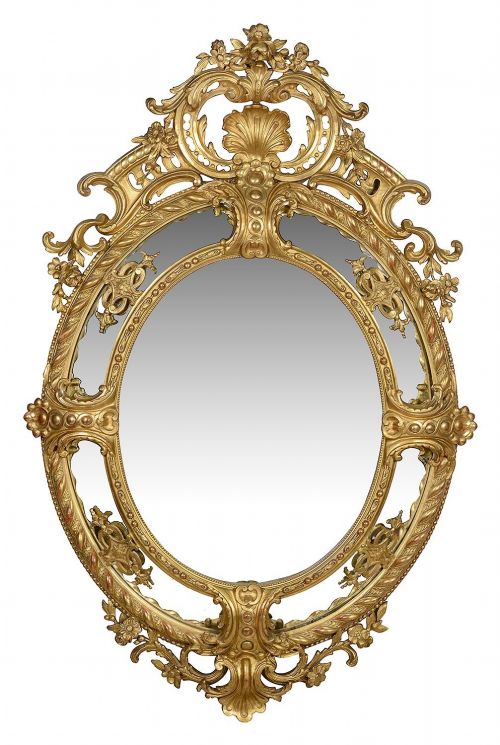
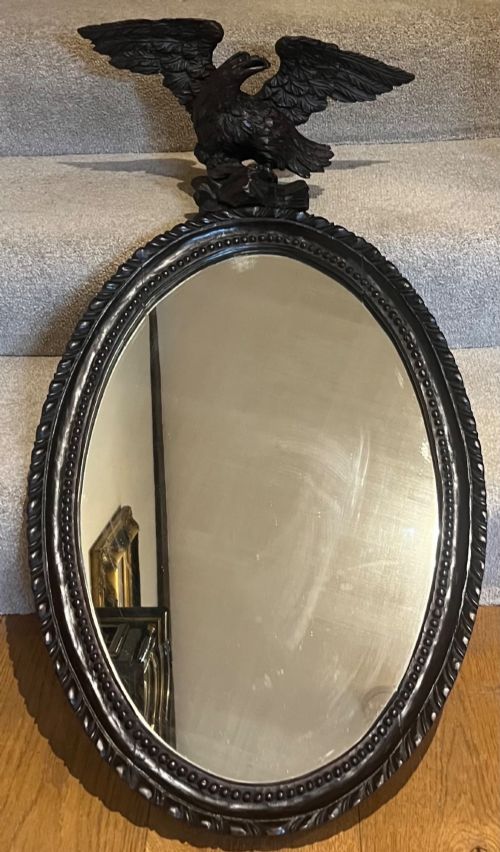
Crest Oval Wall Mirror
A crest oval wall mirror brings vertical light and classic proportion into a room, framed in gilded wood, gesso or bronze.
Crest Oval Wall Mirror
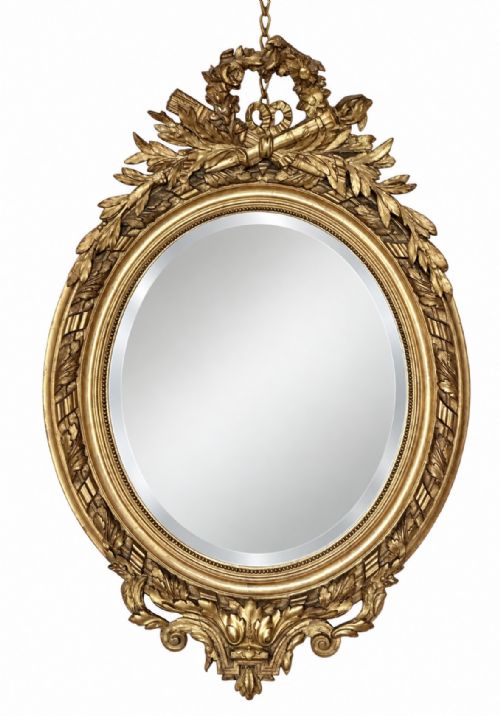
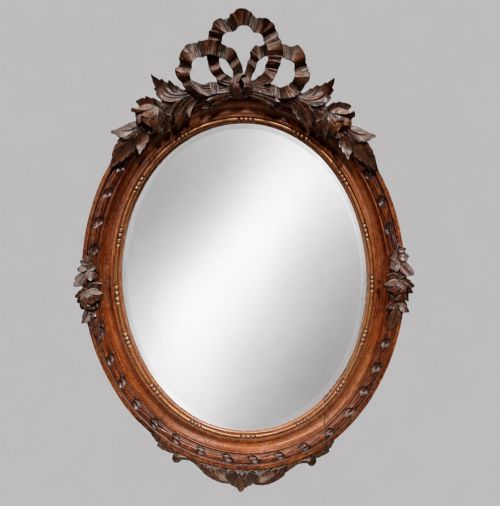
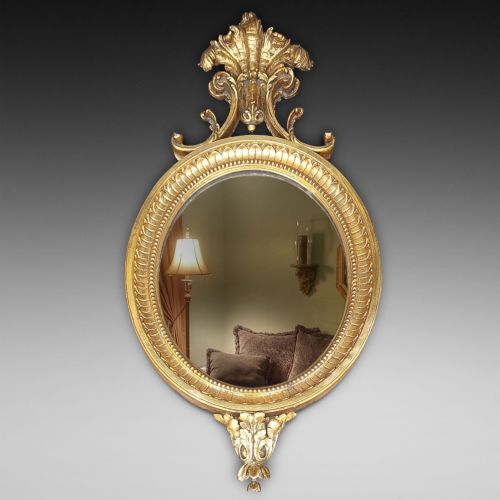
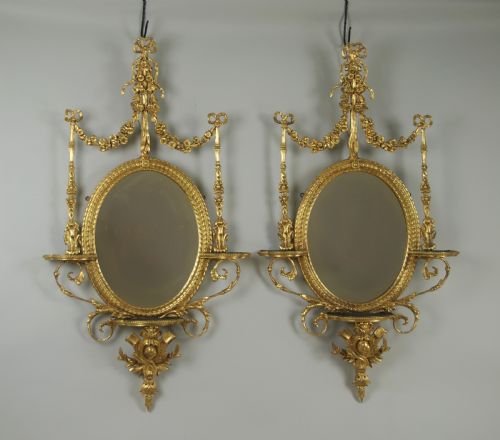
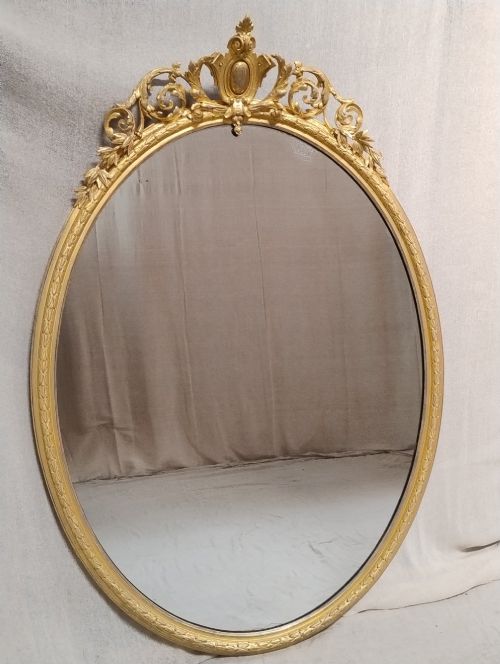
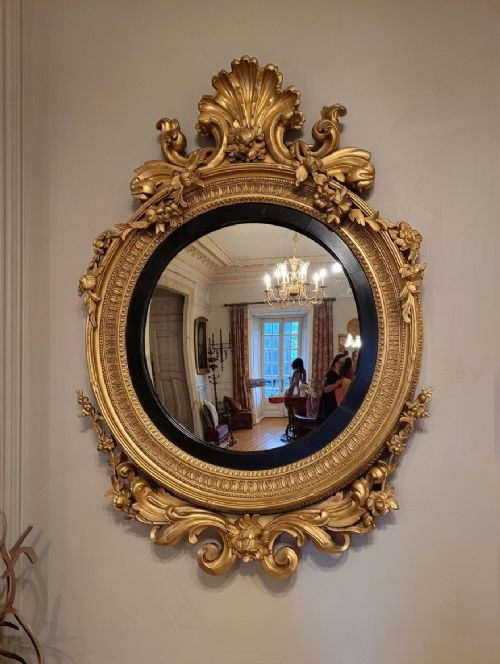
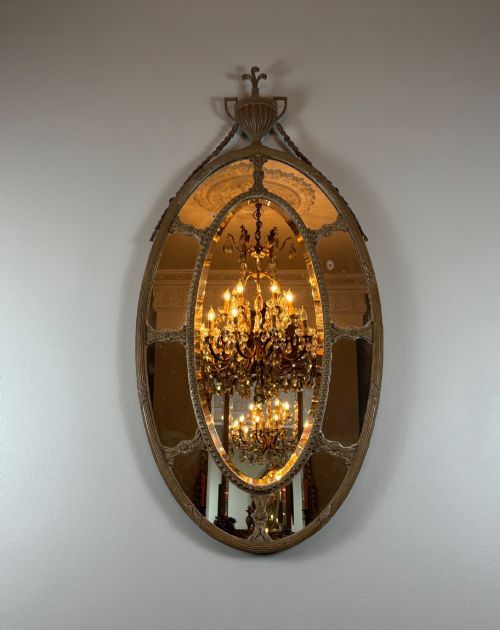
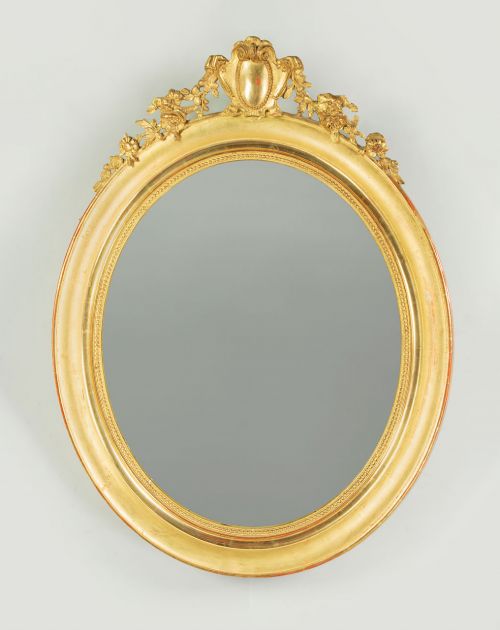
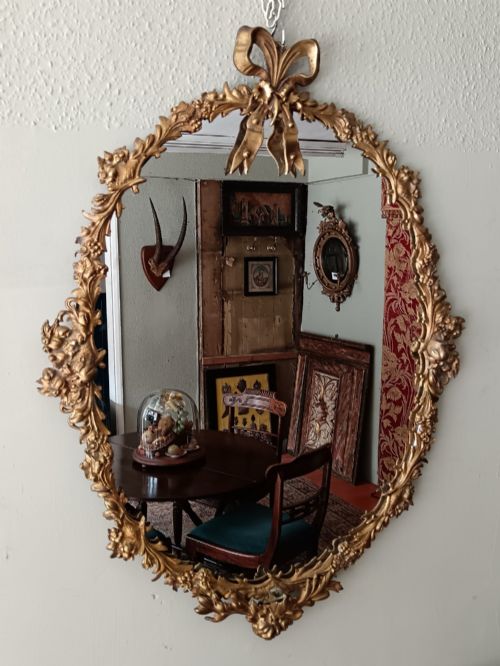
A crest oval wall mirror combines an upright curved glass plate with a decorative upper ornament, often taking the form of an urn, swags, ribbons or a carved cresting. When searching for a crest oval wall mirror, buyers encounter numerous examples originating from the nineteenth century alongside later revivals.
The form spans several distinct stylistic revivals, notably Victorian interpretations, French Louis XVI designs, and Adam style neoclassical pieces. These mirrors function primarily as wall-hanging pieces for halls, parlours and overmantels, offering an elongated reflective surface bounded by ornate frames.
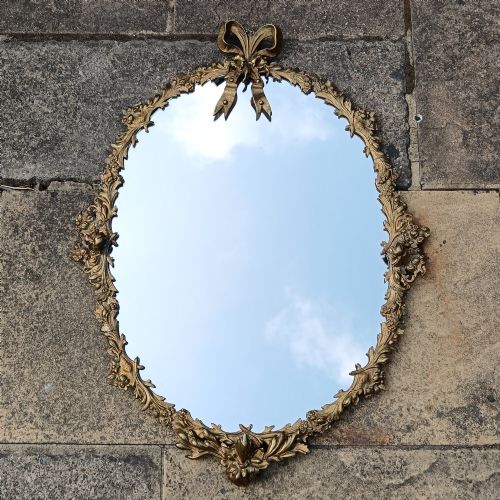
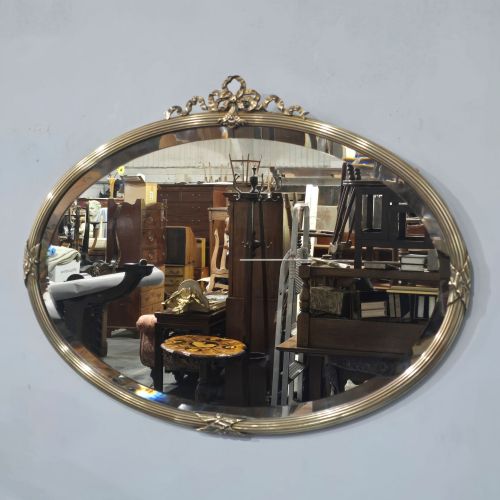
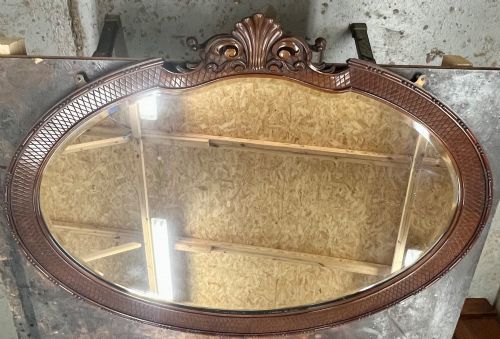
Most pieces seen on this page date from the Victorian era and the broader nineteenth century, constructed with wooden carcase foundations covered in gesso and gilt. Alongside gilded timber, variants appear in ebonised wood, parcel-gilt finishes, brass, gilt metal and carved oak.
How they were made
Makers constructed the primary frame using timber such as mahogany, oak or pine, which provided a stable structural base for the hanging glass plate. Over this wooden carcase, artisans applied layers of gesso - a mixture of chalk and binder - to build up intricate relief ornaments including ribbons, swags and crests.
Details were hand-carved into the wood or moulded in gesso before receiving finishes of gold leaf, paint, ebonising or gilt bronze mounts. Early examples frequently utilise mercury plates, while later pieces incorporate bevelled mirror glass held securely within the decorated rebate.
Listings feature eighteenth and nineteenth century revival styles, including Louis XV, Louis XVI, Rococo, Adam and Regency aesthetics.
What varies in quality
The crispness of the carved or moulded ornament defines the visual merit of the piece, distinguishing sharp, deep relief work from soft or worn surface detail. Superior examples display finely proportioned crests, such as detailed urns and swags, integrated harmoniously with the oval frame.
The integrity of the surface finish and the preservation of the original gilding or bronze mounts determine the authenticity and visual impact of the mirror. Original mercury plates or early glass add depth to the reflection, while the quality of the rear construction and joinery indicates the standard of workshop production.
The Crest Oval Wall Mirror Glossary
- Gesso
- A plaster-like preparation applied to wood frames to create a smooth surface for carving or gilding. This mixture allows intricate relief ornaments to be formed.
- Giltwood
- Timber covered with a thin layer of gold leaf. It forms the primary bright finish seen on nineteenth century frames.
- Mercury plate
- An early type of mirror glass backed with a tin-mercury amalgam. This creates a characteristic speckled reflection with deep tonal qualities.
- Girandole
- A wall mirror featuring attached candle sconces. The reflecting glass doubles the candlelight in the room.
- Overmantel mirror
- A wide mirror designed to sit directly above a fireplace mantelpiece. These pieces often share the oval form and cresting details of smaller wall mirrors.
Crest Oval Wall Mirror: Frequently Asked Questions
How do I hang a heavy crest oval wall mirror safely?
These mirrors require robust wall fixings secured directly into masonry or internal wooden studs rather than plaster alone. Due to the weight of the timber frame and glass plate, professional mirror hangers utilise heavy-duty brackets matched to the weight of the specific piece.
Position the mirror at eye level to ensure correct proportions within the room, particularly when placing the piece above a fireplace or console table.
What is the difference between Victorian and Regency oval mirrors?
Regency mirrors typically exhibit restrained neoclassical lines with simpler mouldings and clean architectural proportions. Victorian pieces embrace heavier ornamentation, incorporating elaborate gesso swags, ribbons and revival styles.
Examining the depth of the gesso work and the style of the cresting helps distinguish between the earlier Regency period and later Victorian interpretations.
Are these mirrors suitable for bathrooms?
Historic frames constructed from wood, gesso and traditional gold leaf react poorly to high humidity and direct water contact. Placing them in steam-heavy environments risks softening the gesso and tarnishing the original glass plates.
Dry reception rooms, hallways, bedrooms and drawing rooms provide the stable atmospheric conditions necessary to preserve antique gilded frames.