

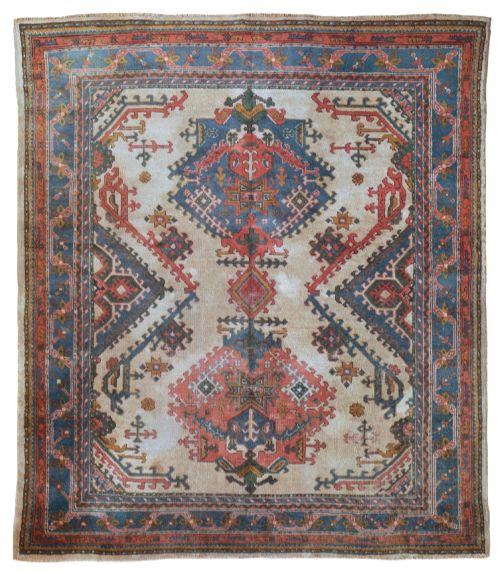


Cream Anatolian Carpet
A cream anatolian carpet brings enduring geometric tradition and soft wool texture into a room.
Cream Anatolian Carpet
A cream anatolian carpet represents centuries of weaving heritage originating from Anatolian and Ottoman regions. These pieces take the form of rugs, carpets, and prayer rugs displaying traditional designs.
The version most commonly met on this page is the village or town rug worked in wool, with examples spanning from the early nineteenth century through to the early twentieth century.
Weavers across Anatolian centres such as Milas, Konya, Ghiordes, and Ushak produced these textiles using local materials and distinct regional motifs.
Materials and construction
Makers utilised wool, hand-spun wool, and cotton foundations to build the pile and structure of these floor coverings. The choice of natural fibres contributes to the handle and resilience of the weave.
Weavers knotted the yarn by hand onto vertical looms, employing traditional Turkish knotting techniques passed down through generations. These methods created dense foundations that held intricate patterns together.
Cream Anatolian Carpet Retail Price Guide 2026
Typical asking prices for cream anatolian carpet among the pieces listed under this phrase on Sellingantiques today, from the lower quarter to the upper quarter. They describe what is for sale here now, not the wider market.
Current listings feature pieces spanning the nineteenth and early twentieth centuries, constructed from wool, cotton, and hand-spun wool.
Distinctions in quality
Quality separates through the fineness of the weave and the precision with which regional designs are executed. A finer weave allows for crisper geometric lines and more intricate detail across the field.
The handling of wool and the depth of the pile also divide standard examples from superior ones. Better pieces display supple hand-spun wool that retains its integrity and soft character over time.
The Cream Anatolian Carpet Glossary
- Prayer rug
- A small rug featuring a mihrab or niche design used historically for daily prayers. These pieces often display specific architectural motifs linked to particular weaving towns.
- Mihrab
- The arched niche design at one end of a prayer rug that mimics the prayer halls of mosques. It points the direction of prayer for the user.
- Prayer niche
- An alternative term for the architectural arch found on devotional rugs. This design element directs the visual focus of the textile.
- Pile
- The upright yarn loops that form the soft surface of a carpet. The density and length of these fibres define the texture underfoot.
- Foundation
- The underlying structure of warp and weft threads that supports the knotted pile. Cotton and wool are typical materials used for this grid.
Cream Anatolian Carpet: Frequently Asked Questions
How do I clean an antique rug?
Gentle surface dusting and professional hand washing preserve the delicate fibres of older textiles.
Avoid harsh chemical cleaners or heavy immersion unless handled by an expert in antique carpets.
Where were these rugs made?
These textiles originate from various towns, villages, and weaving regions across Anatolia and the Ottoman Empire.
Specific districts like Milas, Ushak, and Ghiordes developed distinct local palettes and design repertoires.
Can I use these rugs on modern floors?
Placing a suitable underlay beneath the textile prevents slipping and reduces friction against hard flooring.
This simple addition protects the cotton and wool foundation from undue wear during daily use.
How do I date an old rug?
Examining the materials, knot structure, dye types, and design motifs helps establish the period of manufacture.
Stylistic shifts between nineteenth-century village pieces and later twentieth-century examples offer clear clues to their age.