
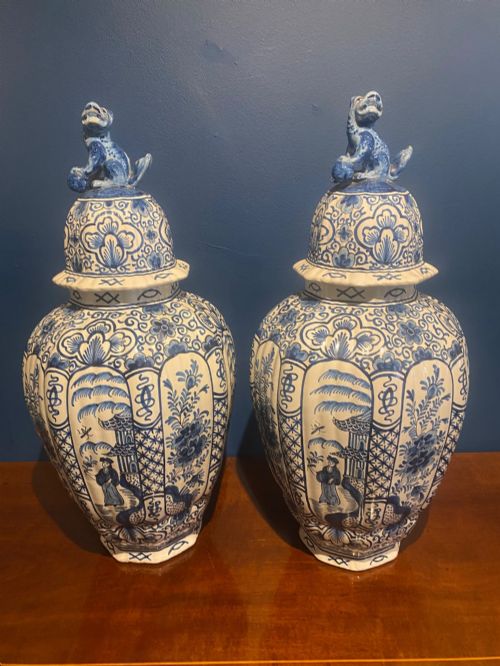
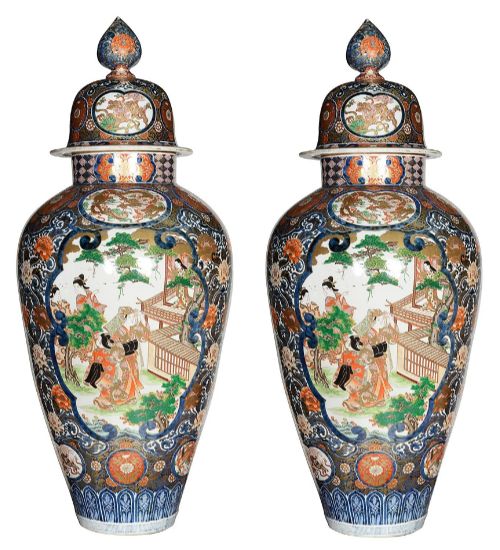
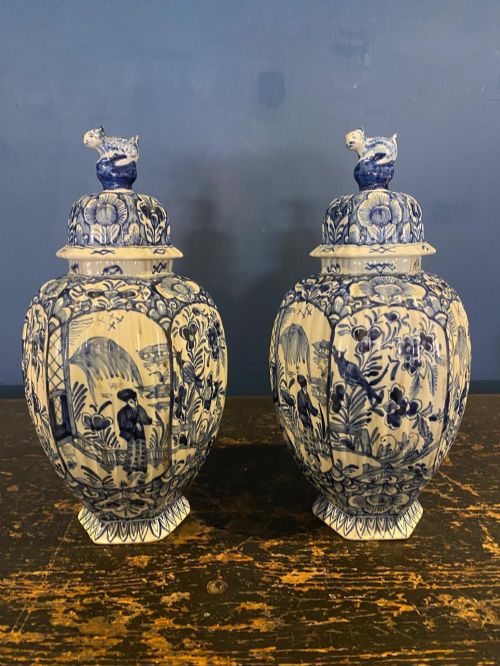
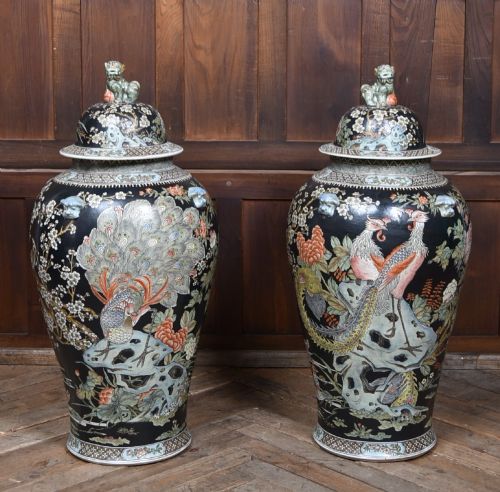
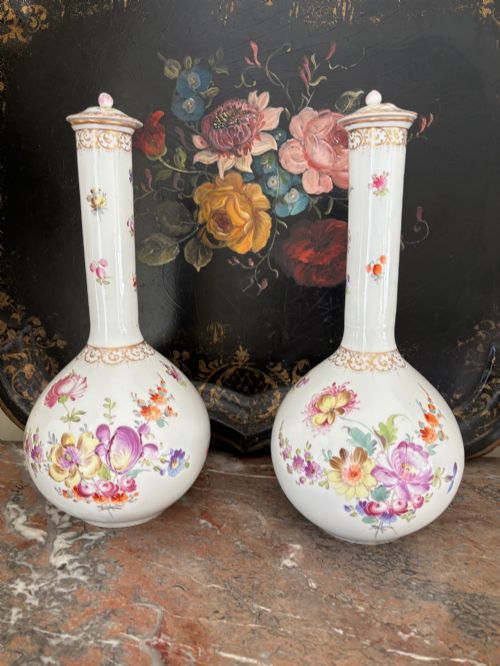
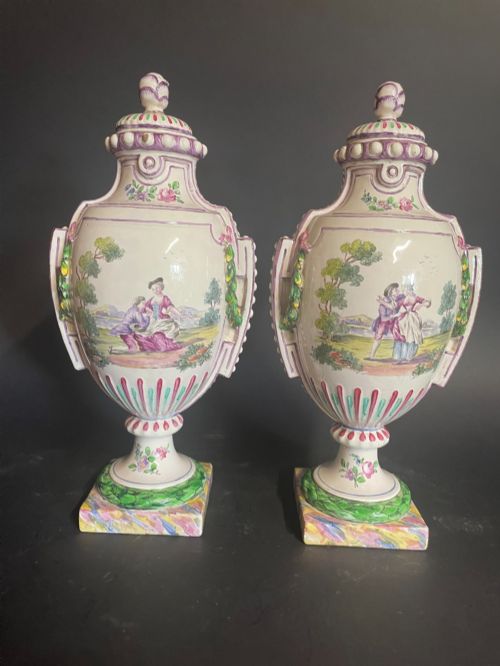
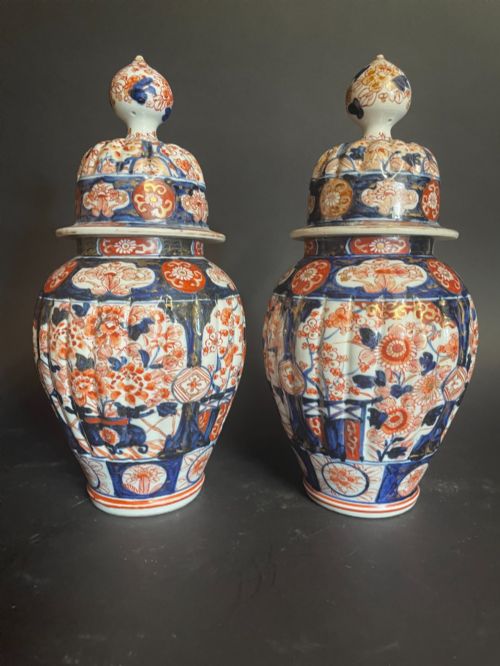
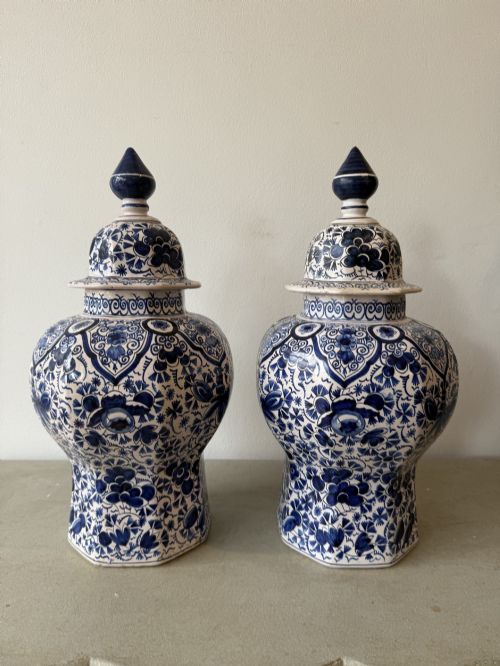
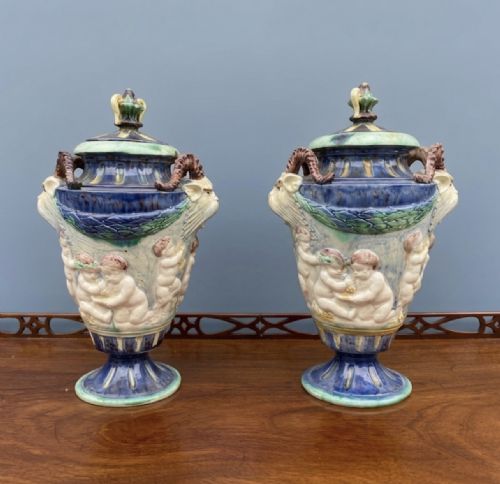


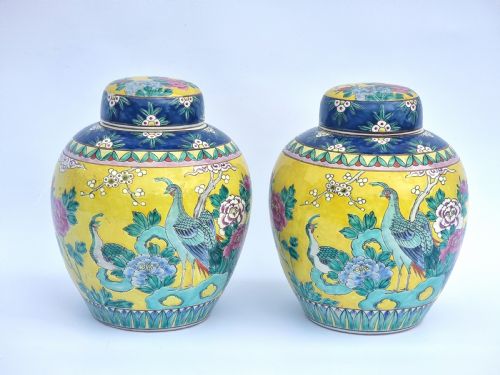


Covered Ceramic Jar Pair
A covered ceramic jar pair brings symmetry and balanced decoration to a room, offering both containment and display.
Covered Ceramic Jar Pair
A covered ceramic jar pair comprises matching vessels designed with fitted lids, originating across diverse historical periods from the seventeenth century to the twentieth century. These objects function as decorative urns, ginger jars, and lidded vases, often displayed symmetrically on mantelpieces or cabinets.
The selections available here lean heavily toward nineteenth-century production while including earlier seventeenth-century imports and later twentieth-century examples. Forms range from bulbous floor jars and ovid bodies to smaller ginger jars and pot pourri vessels.
Makers and styles span European factories such as Sitzendorf, Berlin, Sceaux, and Mason's alongside Asian export traditions including Japanese Imari, Arita, Satsuma, and Kutani. Buyers frequently encounter Dutch delftware and Chinese blue and white porcelain among these listings.
How they were made
Potters shaped these vessels using earthenware, ironstone, and porcelain bodies, frequently applying tin-glazes or white grounds before firing. Artisans then hand-painted intricate floral, foliate, and pictorial motifs using cobalt blue, polychrome enamels, and underglaze pigments.
Many European and Asian pieces incorporate additional decorative elements such as gold leaf, gilding, and cast ormolu mounts. Lids were thrown and fired to match the specific contours of each jar body, ensuring a uniform profile for the pair.
Listings for a covered ceramic jar pair span earthenware, porcelain, and ironstone across nineteenth-century and seventeenth-century periods.
What varies in quality
The finesse of the hand-painted decoration determines much of the distinction between standard and superior pieces, particularly in the precision of brushwork and the vibrancy of the enamel colours. Crisp detailing in floral panels and figural scenes separates ordinary factory output from masterworks.
The integrity of the matching pair, the preservation of original covers, and the application of auxiliary materials like ormolu mounts or gilding establish the standing of an item within its period.
Sitzendorf·Sceaux Faience·Mason’s Ironstone·Royal Vienna·Royal Worcester·Samson
The Covered Ceramic Jar Pair Glossary
- Imari
- A style of Japanese porcelain featuring a tripartite colour scheme of underglaze blue, iron red, and gilt. This aesthetic heavily influenced European factories during the seventeenth and eighteenth centuries.
- Faience
- European tin-glazed earthenware produced primarily in France and other continental centres. It provides an opaque white background for painted decoration.
- Ironstone
- A heavy, durable type of earthenware patented in the nineteenth century. It resists chipping and mimics the qualities of fine porcelain.
- Ovid
- Egg-shaped in profile, describing the rounded body form shared by many traditional ginger jars and lidded vases. This contour distributes visual weight evenly toward the lower centre.
- Ormolu
- Gilded bronze used for decorative mounts, handles, and bases on European decorative arts. It adds architectural structure and formal weight to ceramic vessels.
Covered Ceramic Jar Pair: Frequently Asked Questions
How were covered ceramic jars used?
These vessels originally served to store spices, ginger, and potpourri within domestic interiors, keeping dry goods aromatic and secure beneath fitted lids. Over time, their function shifted toward purely decorative display on side tables, cabinets, and mantelpieces.
Pairs were specifically manufactured to create balanced, symmetrical arrangements in formal reception rooms and parlours. Their presence added colour and height to interior schemes during the nineteenth century and earlier periods.
How do I identify Japanese Imari?
Japanese Imari porcelain is typically distinguished by a strict palette of cobalt blue underglaze combined with iron red and abundant gold leaf overlay. The patterns often incorporate intricate floral panels, brocade motifs, and garden landscapes.
Packs of these wares arrived in Europe via Dutch traders during the seventeenth and eighteenth centuries, prompting numerous continental potteries to produce imitations in the same distinctive style.
What is delftware?
Delftware refers to tin-glazed earthenware made in the Netherlands, most famously in the town of Delft from the seventeenth century onward. It is characterised by a white tin enamel surface painted predominantly in blue to emulate imported Chinese porcelain.
Lidded vases and ginger jars made in this technique often feature botanical designs or chinoiserie scenes executed with fluid brushstrokes.
How do I live with a covered jar pair?
Place your matching jars on stable surfaces where their lids will not be dislodged by daily traffic, such as sideboards, console tables, or mantels. Keeping them away from direct sunlight protects hand-painted enamels and delicate gilding from fading over time.
Displaying them together preserves the visual harmony intended by the maker, though slight height variations between hand-thrown historical pieces are entirely normal.
What is the difference between porcelain and earthenware?
Porcelain is fired at much higher temperatures using kaolin and petuntse, resulting in a dense, vitrified body that is white and frequently translucent. It rings when struck and does not absorb moisture even unglazed.
Earthenware, which includes faience and majolica, uses common clay fired at lower temperatures and requires a porous glaze like tin enamel to become impermeable. It is heavier in the hand and opaque throughout.