



Staffordshire Pottery Vases
Staffordshire pottery vases bring character to a mantelpiece through animal figures, spill holders, and pastoral scenes.
Staffordshire Pottery Vases
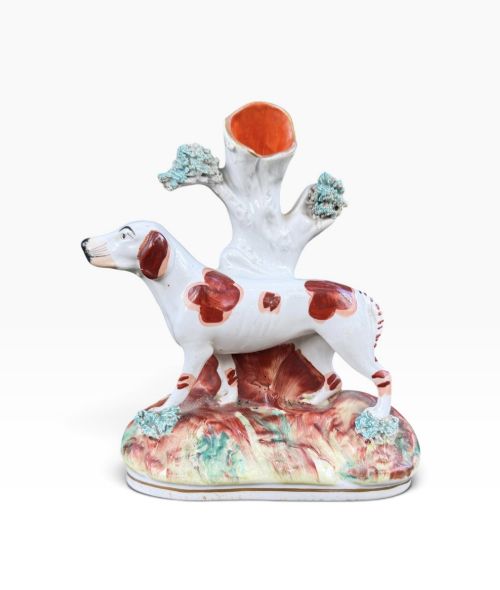
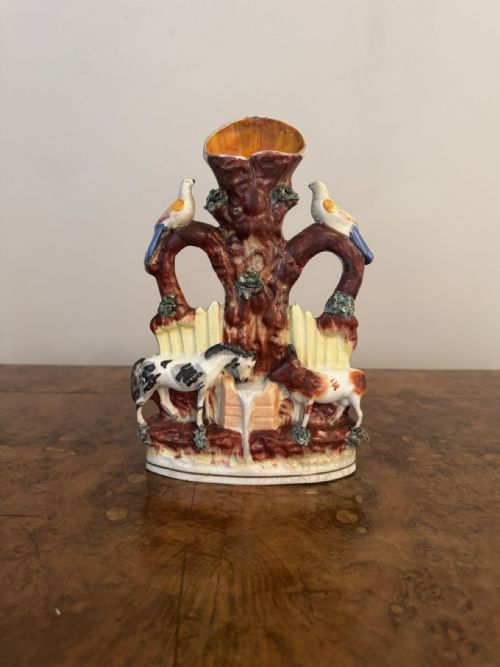
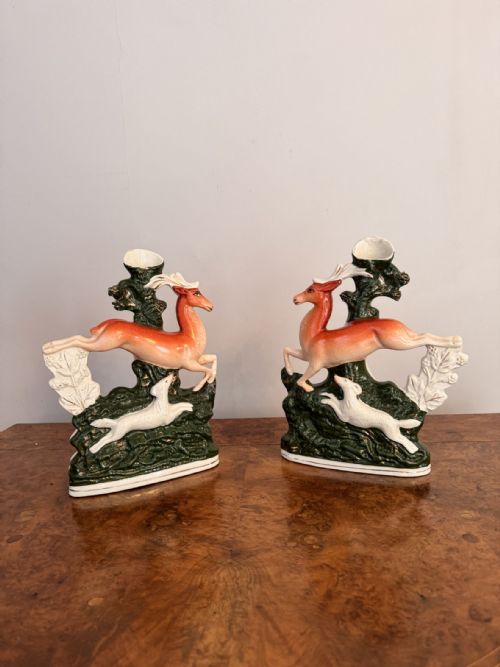
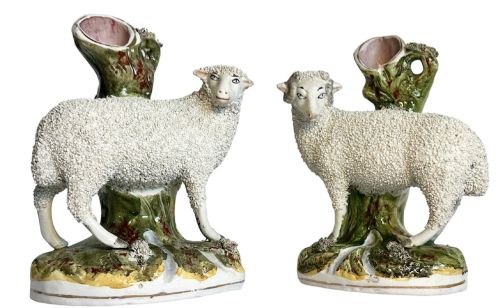
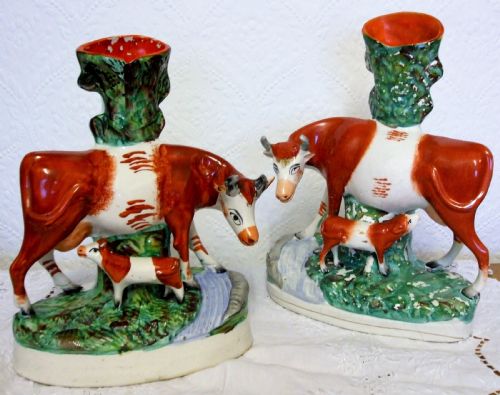
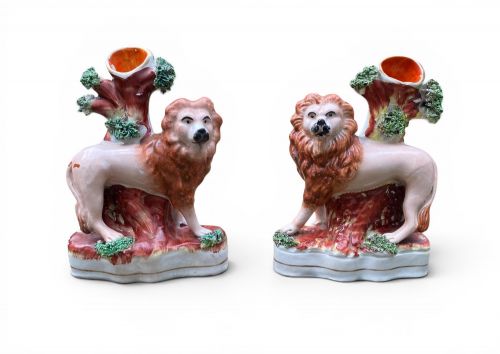
Staffordshire pottery vases encompass earthenware vessels, spill holders, and figurative groups designed in the nineteenth century. These pieces often take the form of animals like deer, sheep, lions, and cows, alongside human figures and architectural flatbacks.
Buyers will most frequently encounter nineteenth century spill vases and figures styled in the Victorian and Regency traditions. Many appear in pairs, depicting symmetrical subjects such as sheep, swans, or pastoral figures.
The objects combine functional utility for holding matches or tapers with decorative earthenware modelling. They reflect regional pottery traditions spanning the Victorian era through to the early twentieth century.
How they were made
Potters shaped these earthenware bodies using local clays before applying lead glazes and enamel colours. Many examples feature hand-painted details over moulded bases.
Makers utilised pearlware glazes alongside ceramic bodies to achieve smooth surfaces. Some grander pieces incorporated gold leaf highlights and enamelled decoration to accent the moulded forms.
Listings feature earthenware materials alongside pearlware and lead glazes across Victorian and Regency styles.
What varies in quality
The presence of matching pairs and well-executed flatback modelling distinguishes superior items. Larger sizes and complex architectural or figurer group compositions also elevate the standard.
Walton·Kent·Adams·Losol
The Staffordshire Pottery Vases Glossary
- Spill Vase
- A small hollow vessel designed to hold wooden tapers for lighting fires and candles. These often incorporate animal or human figures.
- Flatback
- A ceramic figure or vase modelled with a finished front and a flat, unpainted rear designed to stand against a wall. This technique saved time and material during production.
- Pearlware
- A refined earthenware developed in the late eighteenth century featuring a thin glaze with a faint bluish tint over a white body. It provides a pale ground for enamel painting.
- Earthenware
- Porous pottery fired at a relatively low temperature, requiring a glaze to become impermeable. It forms the base material for the majority of these nineteenth century figures.
- Lead Glaze
- A glossy coating containing lead oxide applied to pottery before firing. It creates a smooth, glassy finish that seals the porous earthenware body.
Staffordshire Pottery Vases: Frequently Asked Questions
What is a spill vase?
A spill vase is a hollow ceramic container used in nineteenth century homes to hold wooden spills or matches for lighting candles and hearth fires.
These vessels combine practical utility with decorative earthenware modelling, often featuring animals or figures attached to the side of the tube.
How do I display flatbacks?
Flatback figures and vases feature unpainted, flat rears intended to stand directly against a mantelpiece, shelf, or wall.
Their frontal composition makes them suited for narrow ledges where three-dimensional figures would take up too much depth.
What animals appear on them?
Makers frequently modelled sheep, deer, cows, lions, swans, and foxes as the central subjects for spill holders and figures.
These creatures often appear in symmetrical pairs, reflecting popular rural and exotic themes of the Victorian period.
Are they glazed earthenware?
The pieces consist of earthenware bodies finished with lead or pearlware glazes and hand-painted enamel colours.
This construction method gives the pottery its characteristic glossy surface and colourful appearance.