
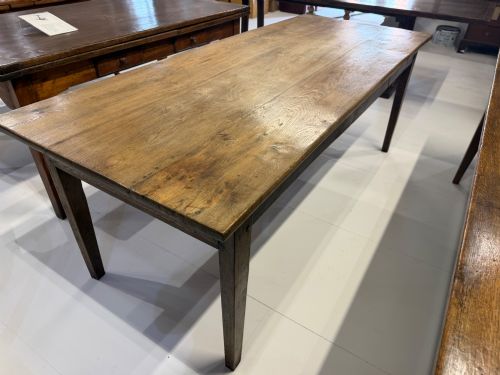
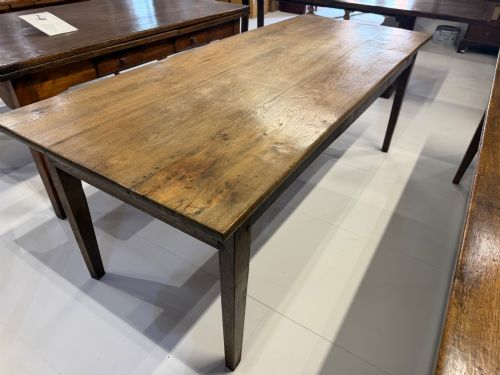
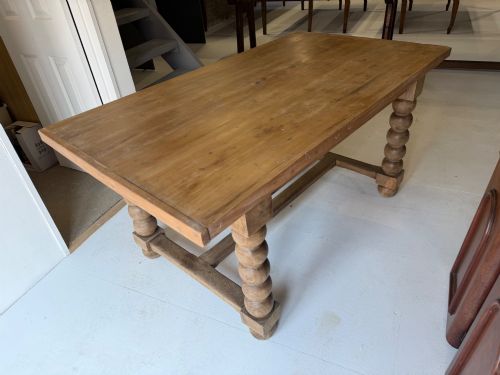
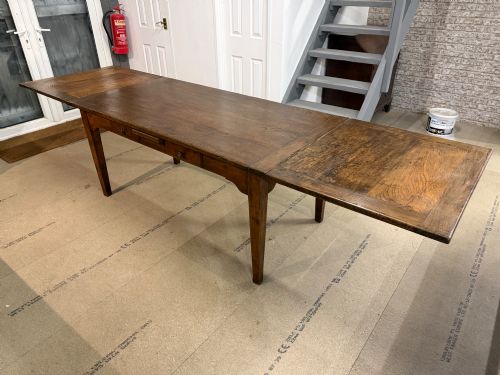
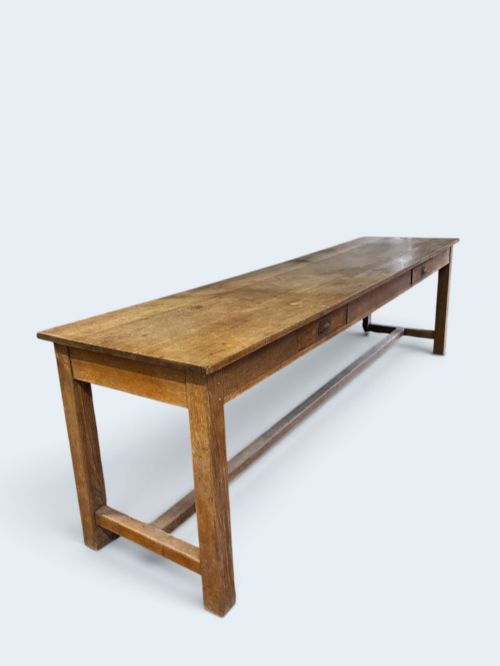
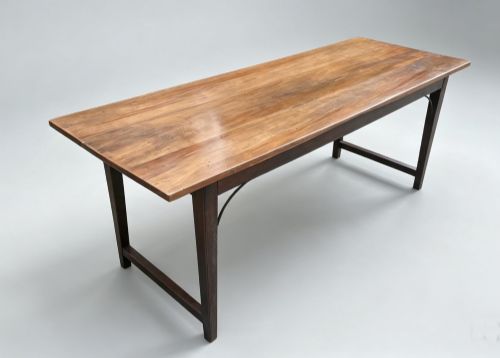
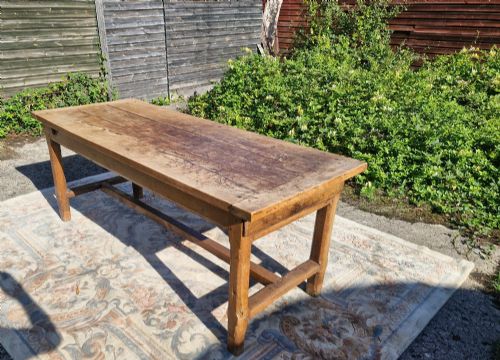
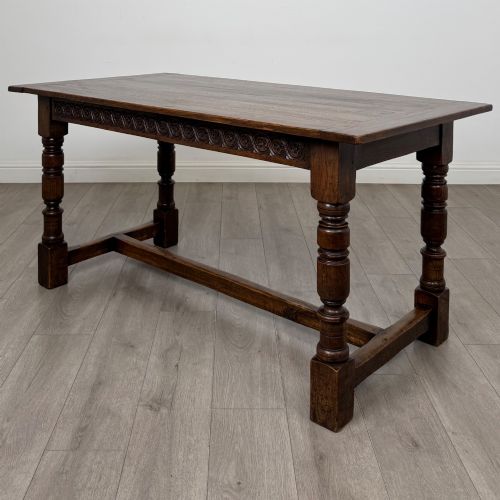
Country Refectory Table
When you search for a country refectory table, you are looking at sturdy domestic boards built to gather households together for daily dining.
Country Refectory Table
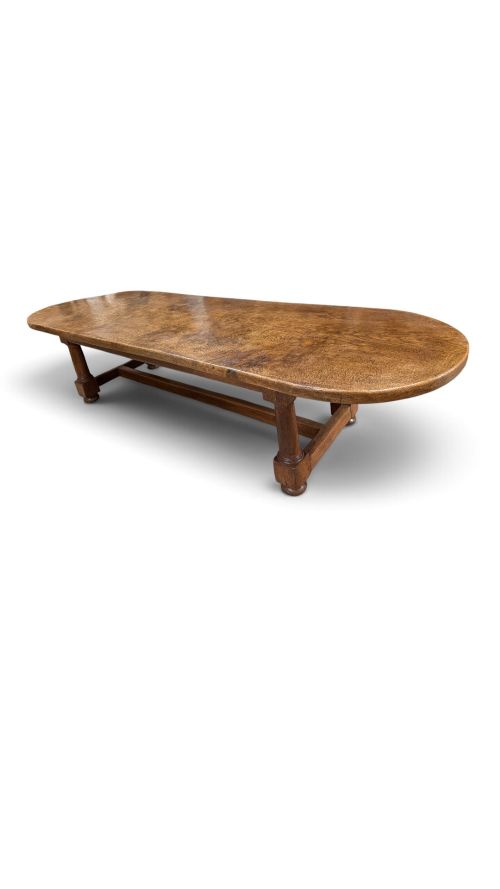
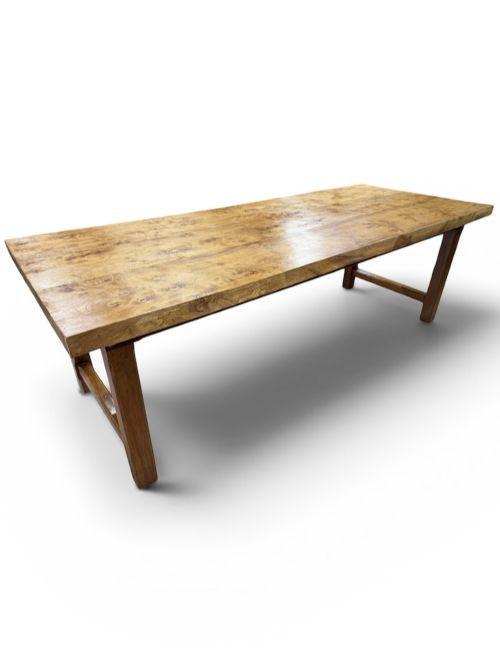
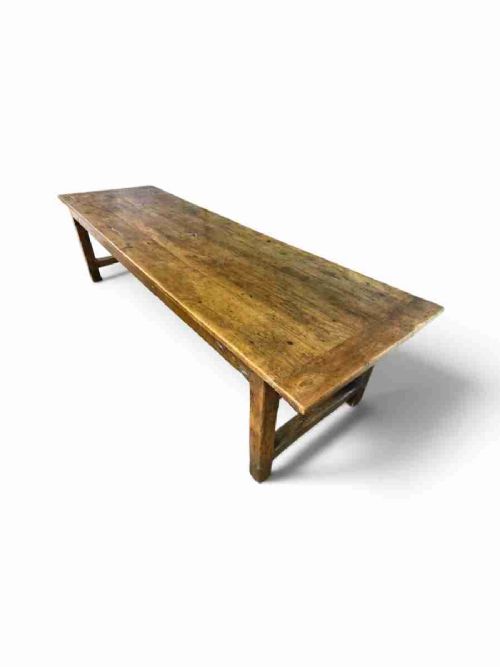
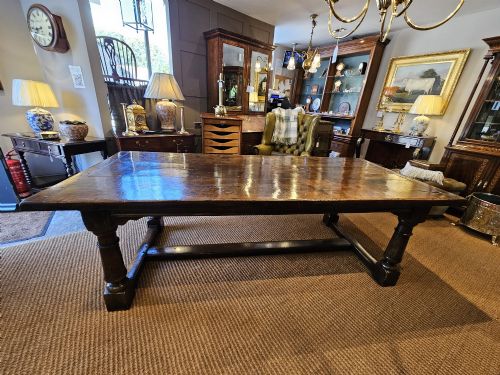
A country refectory table serves as a long, heavy dining or kitchen board designed for communal meals, drawing on traditions that stretch from the eighteenth century into the twentieth century. These pieces emerge in English, French, and Spanish provincial settings, taking the form of large dining surfaces, serving tables, and harvest boards intended for heavy daily use.
The most common examples encountered on this page date from the nineteenth century, though the selection includes Georgian origins as well as early twentieth-century revivals. Builders constructed these boards in oak, pine, elm, and fruitwoods, adapting traditional proportions to accommodate six to ten diners comfortably in farmhouse kitchens and country houses.
How They Were Made
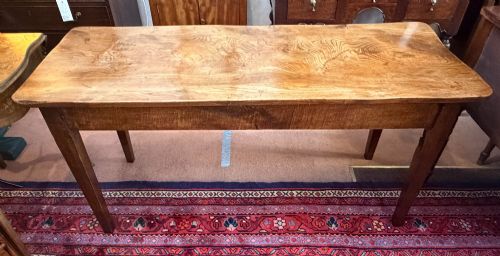
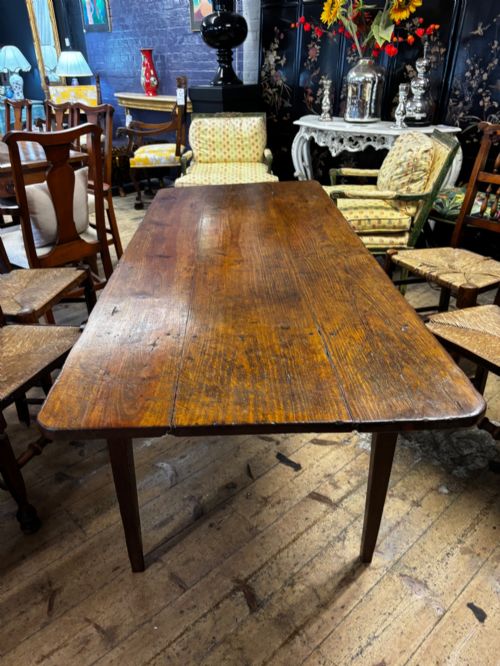
Makers relied primarily on solid timbers such as oak, elm, pine, and fruitwoods like cherry and pear, often joining single wide planks to form the table top. Construction methods involved peg joining and sturdy framing to support the considerable weight of the timber.
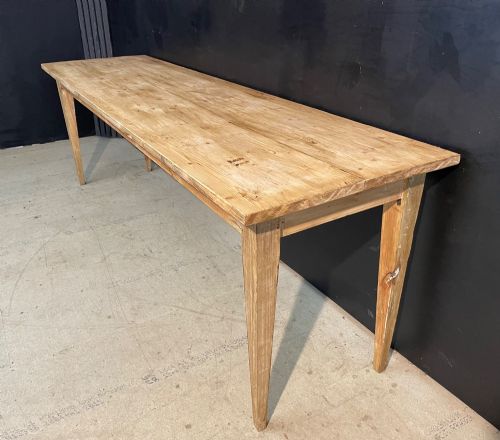
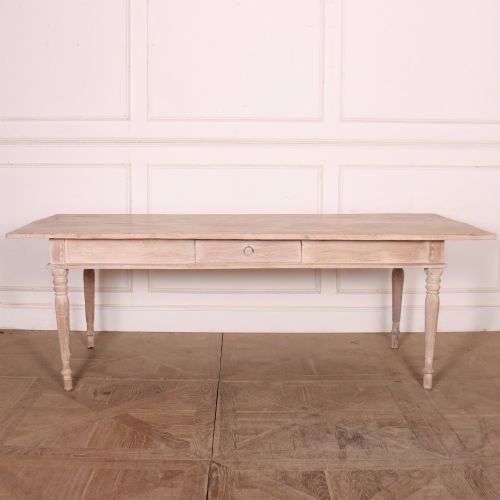
Leg designs vary from tapered and bobbin supports to heavy stretchers and rustic farmhouse legs, utilising traditional carpentry joints to ensure stability across long spans. Surfaces were frequently left untreated, waxed, or scrubbed, allowing the natural grain of the wood to show through decades of domestic service.
Some country boards bear the literal knife marks and flour stains of generations who treated them purely as workstations.
What Varies in Quality
The distinction between ordinary utility boards and finer examples rests on the selection of timber, such as single-plank tops and well-figured grain in oak or elm. Superior pieces display thoughtful proportions, balanced stretcher placement, and original joinery that remains tight and stable.
Construction details also separate regional workshop pieces from standard vernacular furniture, including the weight of the timber, the integration of peg joints, and the crispness of any carved detailing. Age and original surface patination further distinguish tables that retain their historic character from later alterations.
The Country Refectory Table Glossary
- Refectory table
- A long dining table traditionally used in communal halls and later adapted for domestic country kitchens. These boards typically feature strong underframes and stretchers to support the long top.
- Plank top
- A table top constructed from parallel boards running the length of the table. Single-plank examples utilise wide individual boards sawn from mature trees.
- Stretcher
- A horizontal timber connecting the legs of a table to provide structural rigidity and stability. In country tables, these often run low near the floor.
- Peg joined
- A traditional method of securing timber joints using wooden dowels or pegs rather than metal fasteners. This technique allows the wood to expand and contract naturally with changes in humidity.
Country Refectory Table: Frequently Asked Questions
How many people do these tables seat?
Most examples accommodate between six and ten diners, depending on the overall length of the boards. Longer provincial and harvest tables can often seat larger gatherings comfortably.
Buyers should measure their dining space carefully, allowing sufficient clearance around the table for chairs and movement.
Were these tables used only in kitchens?
While many served in farmhouse kitchens and sculleries for daily food preparation and family meals, larger examples belonged in country house dining rooms and halls. They functioned as multi-purpose surfaces for dining, serving, and communal work.
Their robust construction made them suitable for heavy domestic labour as well as formal hospitality.
How do I care for an antique wood top?
Routine maintenance involves dusting with a dry cloth and occasionally applying natural beeswax to nourish the timber. Avoid excessive moisture and direct heat sources to protect the historic surface patination.
Using placemats and coasters helps prevent water rings on vulnerable antique finishes.
How can I tell an older table from a revival piece?
Examining the underside reveals tool marks, timber shrinkage, and the construction methods used by the maker. Peg joints, hand-sawn boards, and natural wear patterns point towards earlier periods.
Revival pieces from the early twentieth century often display cleaner machine cuts and more uniform timber selection.