
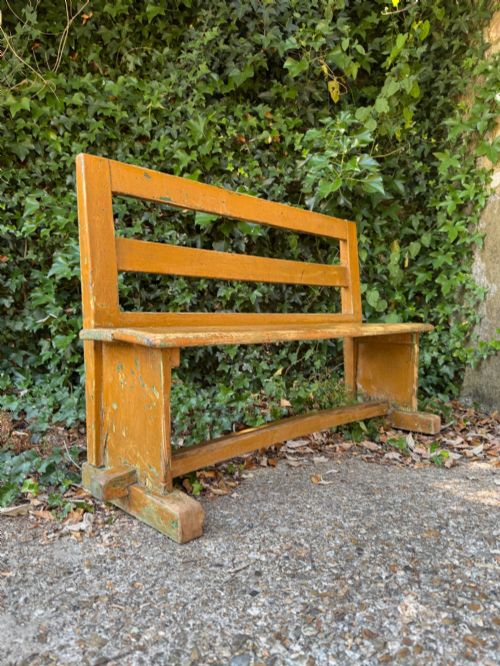
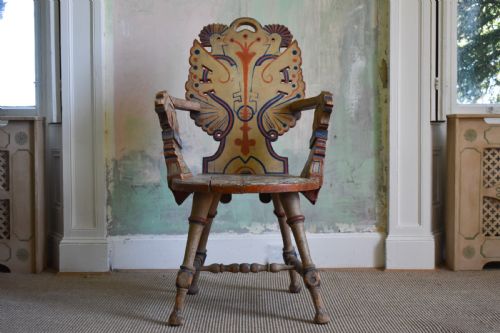
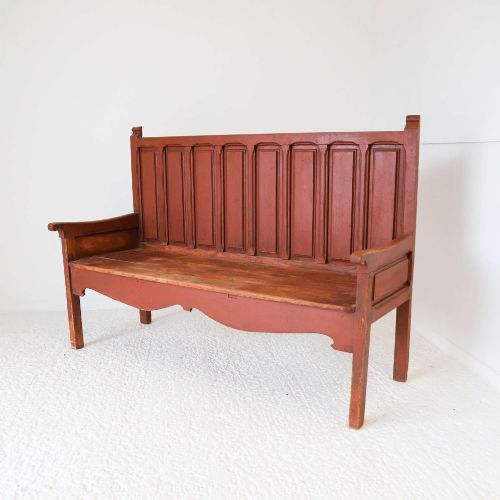
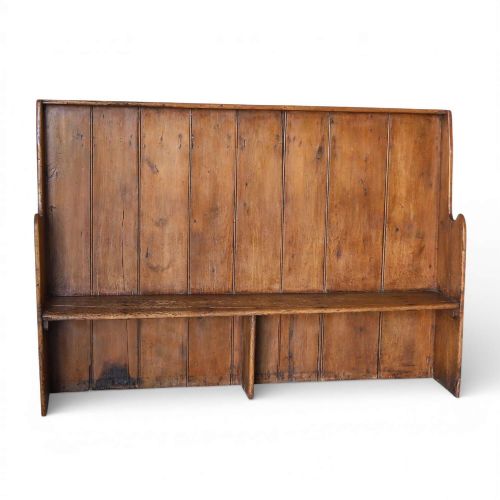
Country Pine Seating
Country pine seating brings robust domestic utility and honest regional character into a room through benches, settles, and chairs.
Country Pine Seating
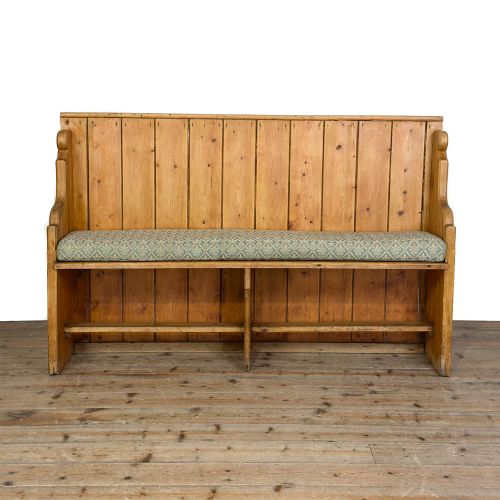
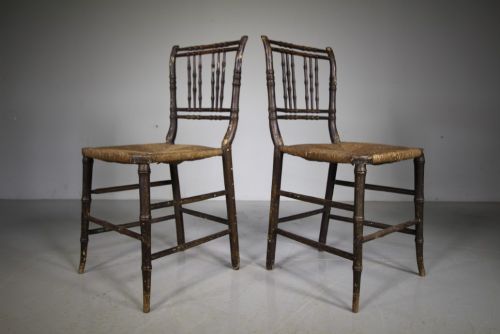
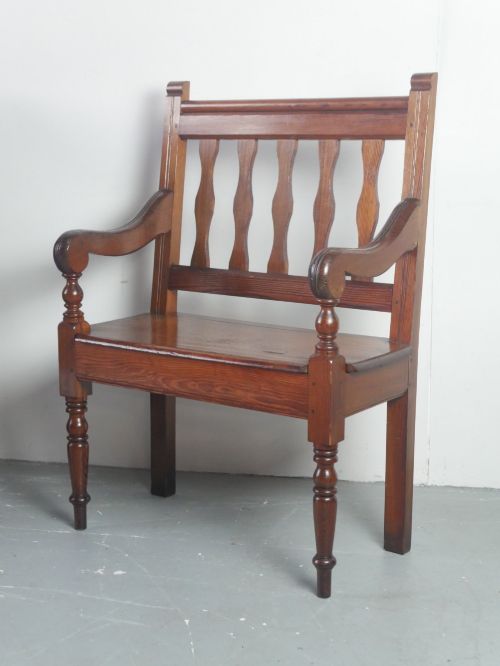
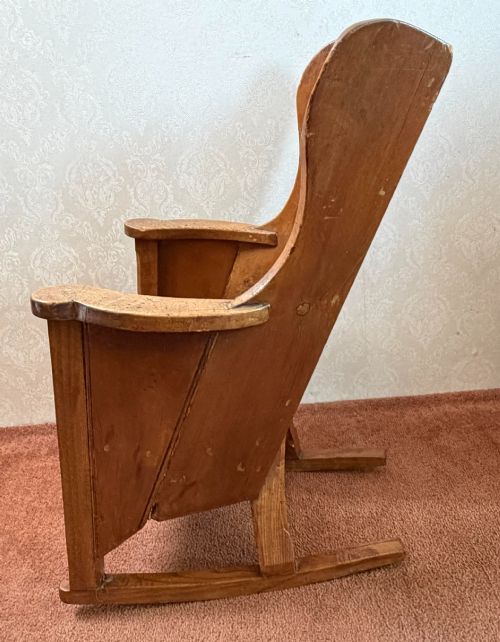
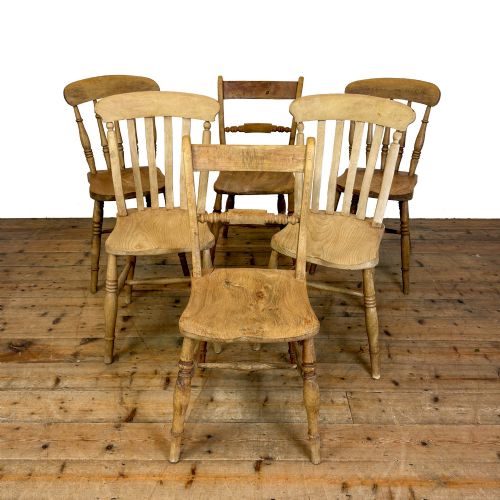
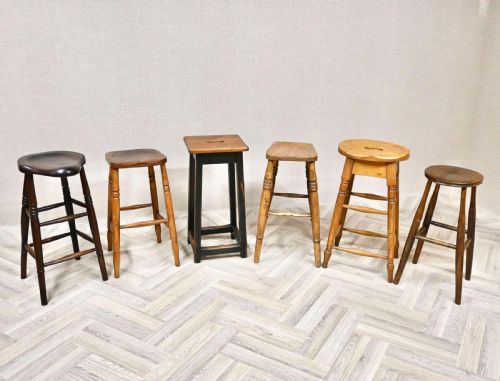
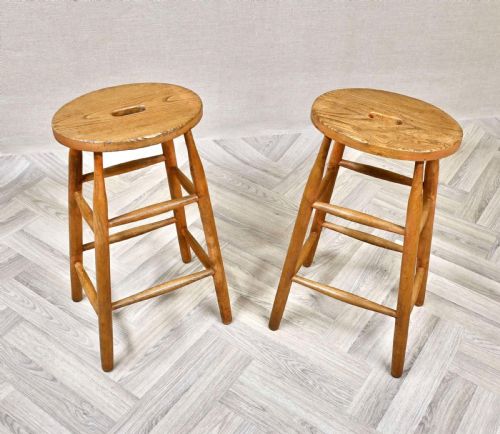
Country pine seating encompasses a broad domestic vocabulary of benches, settles, stools, and chairs made for everyday use. You encounter simple milking stools alongside high-back settles, church pews, and Windsor dining chairs.
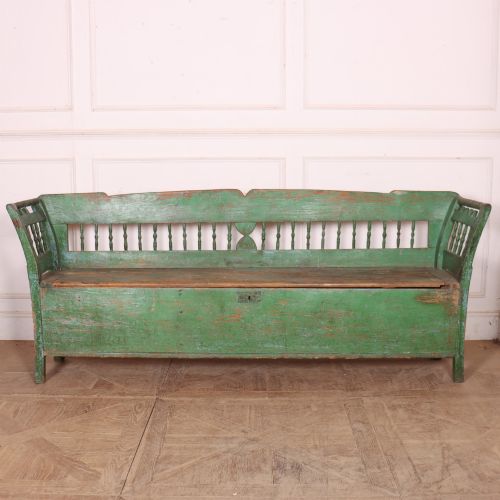
The regional variety spans English, Scandinavian, Hungarian, and Eastern European workshops, each bringing distinct proportions and local timber habits to the form. Hungarian box settles and Swedish folk armchairs appear regularly among the offerings.
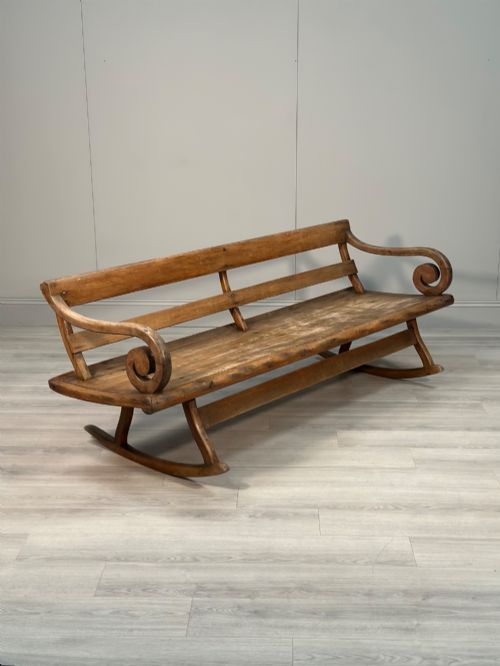
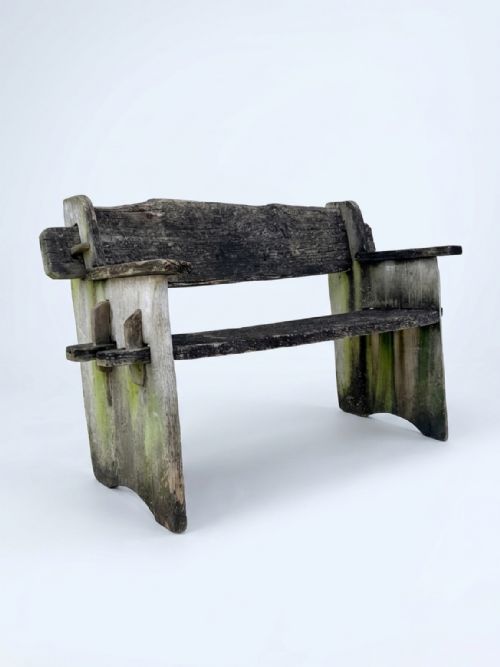
Pieces range from compact hall benches to large multi-seater settles intended for farmhouse kitchens and passages. Construction prioritises utility, resulting in unpretentious frames designed to endure decades of heavy household traffic.
Materials and construction methods
Makers relied primarily on pine alongside secondary woods like elm, beech, and timber for structural strength in legs and spindles. Surfaces were frequently left untreated, waxed to a honey brown patina, or coated in original paint layers.
Joinery methods rely on straightforward pegged mortise and tenon joints, dovetails on box settles, and turned spindles secured into solid seats. Iron brackets or fixings occasionally reinforce high-stress points on benches and pews.
Paint finishes span original ochre, green, grey, and black pigments that survive beneath subsequent layers or waxed surfaces. The physical evidence of hand-working remains visible in adze marks on seats and lathe turnings on chair legs.
Materials documented across the pieces include pine, painted surfaces, elm, beech, iron, fabric, and general timber.
Assessing quality and character
Quality rests in the survival of original surfaces, whether unblemished honey wax or intact early layers of regional paint. Altered proportions, replaced floor-facing timber, and stripped surfaces diminish the historical integrity of a piece.
Proportion and scale dictate the visual weight of country seating, with balanced turnings and harmonious joinery separating standard utility pieces from exceptional examples. Primitive regional variations display individual maker quirks that enhance their authenticity.
The Country Pine Seating Glossary
- Settle
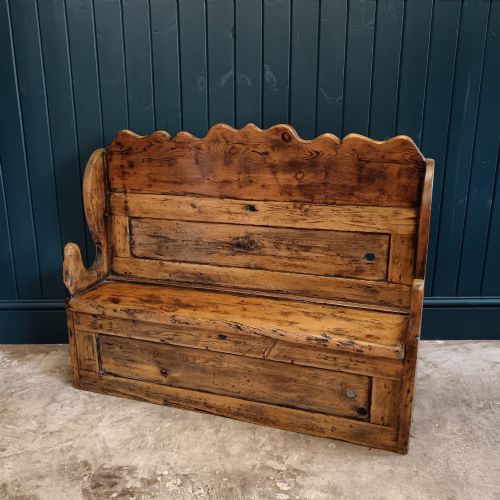
- A wooden bench with a high back, solid arms, and often a storage box beneath the seat designed to keep draughts away from the fireplace. These pieces formed the architectural centrepiece of the vernacular kitchen.
- Milking stool
- A low, three-legged stool traditionally used by dairy workers for milking livestock in byres and fields. The three-legged design ensured stability on uneven agricultural floors.
- Box settle
- A heavy bench incorporating a lidded compartment beneath the seat for storing household blankets or provisions. They offer robust enclosed storage alongside practical seating.
- Patina
- The surface sheen and colour depth developed by wood and paint over decades of handling, cleaning, and exposure to light. Original patination serves as a key indicator of untampered age.
- Vernacular
- Objects designed and built by local tradespeople or regional makers to fulfil specific domestic tasks without academic architectural pretension. These pieces reflect local material availability and traditional building methods.
Country Pine Seating: Frequently Asked Questions
What is a settle bench?
A settle bench is a high-backed wooden seat designed to block cold draughts in old farmhouse kitchens and hallways. Many examples include a lidded storage box beneath the seat for household items.
These versatile pieces stood near hearths or in entrance passages where families gathered. Their solid construction protected sitters from cold stone walls.
How do I date country pine furniture?
Dating country pine relies on examining tool marks, construction methods, hardware, and surface wear patterns. Hand-sawn timber edges, wrought iron nails, and early paint layers point towards earlier centuries.
Regional vernacular pieces often retained traditional building methods long after urban workshops modernised. Comparing joinery styles with documented examples helps narrow down the period.
Where were painted pine benches made?
Painted pine benches emerged across numerous European regions, with distinct traditions thriving in Hungary, Scandinavia, and rural Britain. Local workshops utilised whatever softwood grew abundantly nearby.
Hungarian examples frequently display bold coloured paint finishes and box-seat storage compartments. Swedish pieces often showcase folk art carving and lighter painted palettes.
How should I care for waxed pine?
Waxed pine benefits from occasional applications of natural beeswax to nourish the timber and maintain its protective sheen. Avoid placing these pieces near direct heat sources or strong sunlight.
Dusting with a soft, dry cloth prevents grime accumulation on carved details and spindles. Moisture should be wiped away immediately to protect the historic wax finish.
Can I use country benches for dining?
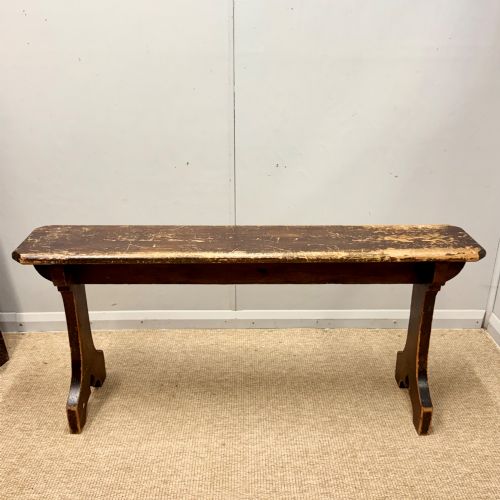
Long pine benches and church pews work well alongside rustic farmhouse tables for relaxed daily dining. Their generous lengths accommodate multiple diners without cluttering the floor space with chairs.
Checking the sitting height relative to the table clearance ensures comfortable posture during meals. Many surviving benches were originally built for communal dining halls and domestic kitchens.