



19th Century Vernacular Stool
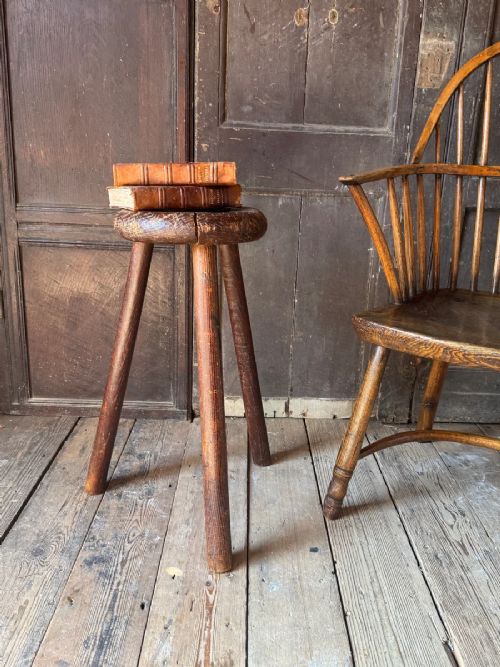
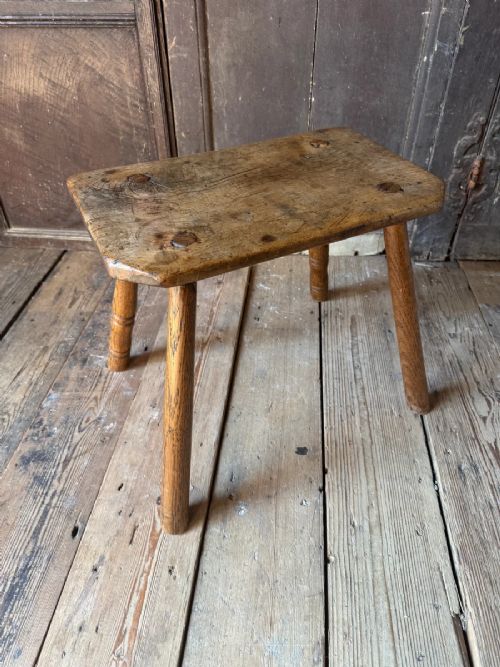
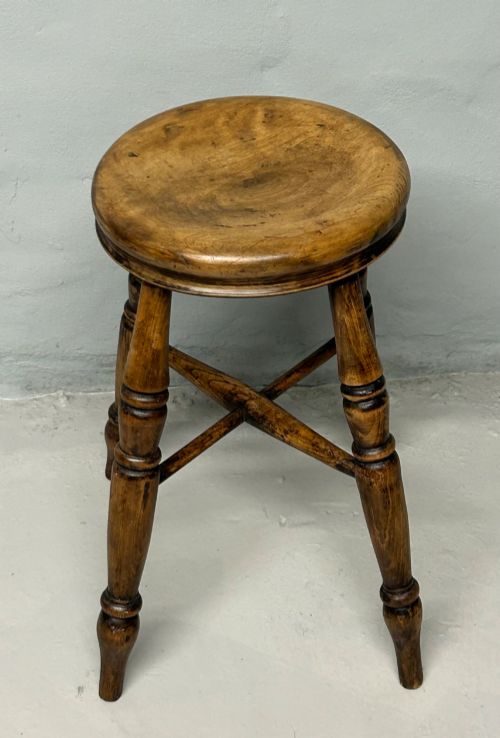
These 19th century vernacular stool examples offer sturdy utilitarian charm and honest craftsmanship designed for everyday rural life.
19th Century Vernacular Stool
A 19th century vernacular stool represents the unpretentious seating and work surfaces made for rural and trades use across the nineteenth century. These pieces include dairy stools, milking stools, tavern seats, cobbler work stools and cutler benches shaped by local needs rather than high-style cabinet makers.
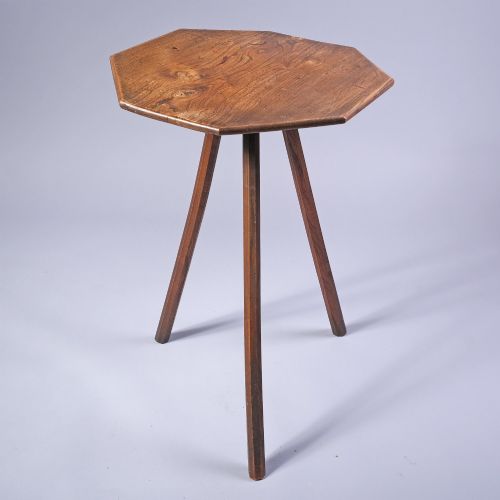
You will most frequently meet solid wood examples fashioned for specific trades or farm tasks, often featuring three or four legs joined to thick timber tops. The forms range from low milking seats to swivel stools and small occasional tables reflecting utilitarian country life.
The aesthetic is distinctly rustic, drawing on Georgian vernacular, Victorian country and French country traditions. Such pieces bring immediate texture and history into a modern interior through their honest construction and weathered surfaces.
Materials and construction
These pieces rely on homegrown British and European hardwoods chosen for toughness and availability, principally elm, oak, ash, sycamore, beech and walnut. Makers utilised timber like sycamore and elm for seats because these woods resist splitting under heavy daily use.
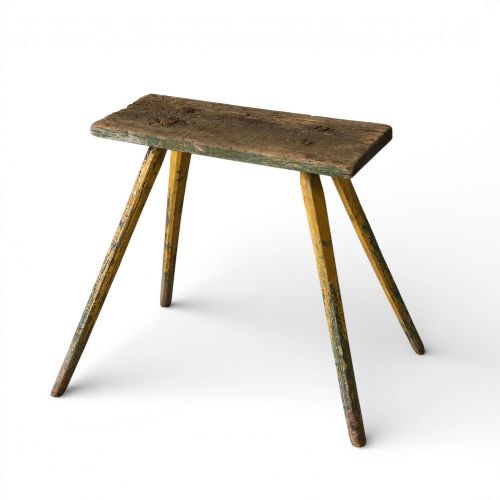
Construction typically involves traditional jointing where turned or cleft legs are wedged directly into thick wooden slabs. Some examples incorporate iron fixings or retain traces of original paint, showing the practical maintenance applied by working owners over generations.
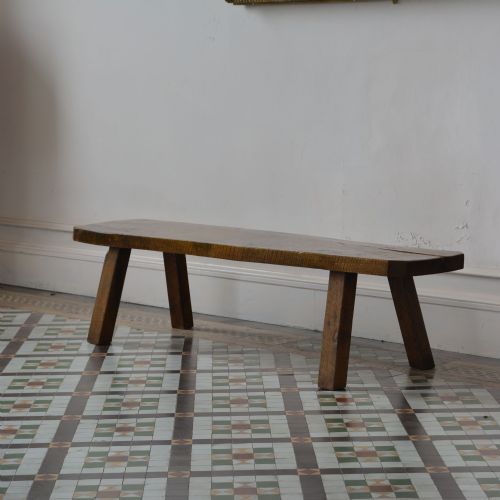
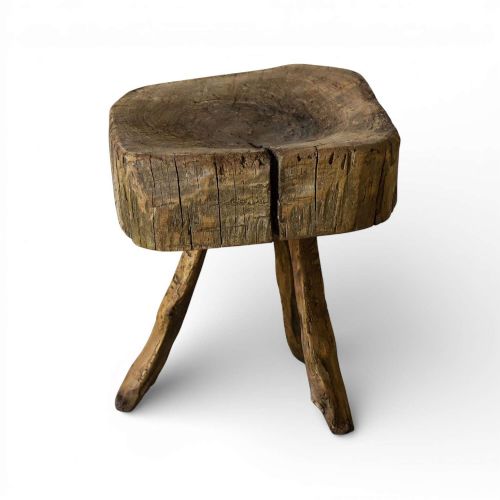
One French chopping block stands proudly on delightfully gnarled legs.
Judging quality and character
Quality in a 19th century vernacular stool rests on the harmony of proportion, the integrity of the timber and the depth of natural patination earned through decades of service. The most satisfying examples display an unforced relationship between the original function and the materials employed by the rural maker.
Surviving finish matters significantly, whether that is the bare scrubbed grain of a dairy seat or layers of original paint on a milking stool. Pieces retaining their honest marks of trade use and uncompromised structural form stand apart from over-restored alternatives.
The 19th Century Vernacular Stool Glossary
- Vernacular
- Objects made by local craftsmen for everyday use rather than following metropolitan high-style design. These pieces prioritize function and local materials.
- Pig bench
- A low, sturdy wooden bench or table traditionally used in rural butchery and farm work. They share the robust construction seen in country seating.
- Milk stool
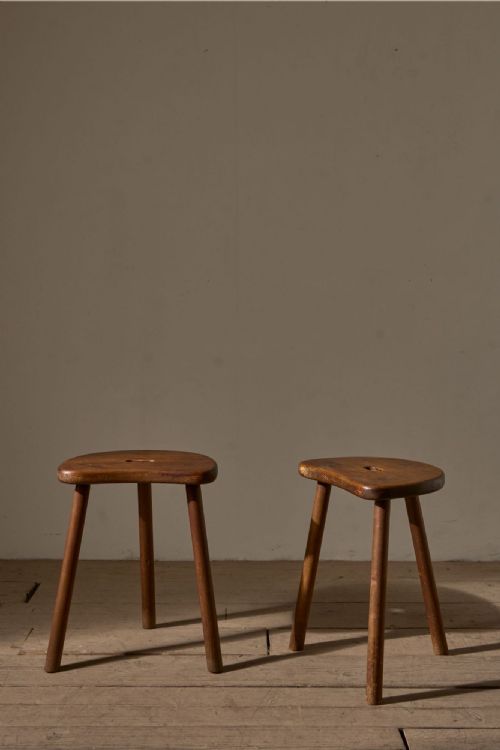
- A small, portable seat designed for hand-milking cows in the dairy or field. They usually feature three splayed legs for stability on uneven ground.
- Cutler stool
- A specialised low seat utilised by metalworkers and cutlers in trade workshops. Their compact form kept workers close to their bench tasks.
- Natural form
- Furniture retaining the organic shapes of tree branches, gnarled roots or natural slabs. This approach celebrates the irregular growth of the timber.
19th Century Vernacular Stool: Frequently Asked Questions
What is a vernacular stool?
A vernacular stool is an unpretentious piece of utilitarian seating made by local country craftsmen during the nineteenth century. These items were built for specific agricultural or trade tasks rather than formal drawing rooms.
Their design focuses entirely on strength, stability and practical utility using locally sourced timber such as elm, oak and ash.
How were trade stools used?
Trade stools served workers in various nineteenth century industries, including cutlers, cobblers and tavern keepers. Specific occupations required particular heights and stability for repetitive seated tasks.
For instance, cutler and cobbler stools kept artisans positioned close to their low workbenches throughout long working days.
How do I live with a rustic stool?
These pieces function exceptionally well as bedside tables, plant stands or extra pull-up seating in living spaces. Their compact footprint allows them to fit easily into corners or beside larger furniture.
Treat the aged timber and original surfaces with simple beeswax to maintain their historic character without removing the patina of use.
How can I tell the wood types apart?
Elm typically displays a distinctive interlocking grain pattern that resists splitting, making it common for solid seat tops. Oak and ash offer heavy, straight-grained strength often utilised for turned or cleft legs.
Softer woods like pine and fruitwoods appear in specific regional pieces, each showing characteristic weight and grain structure.