

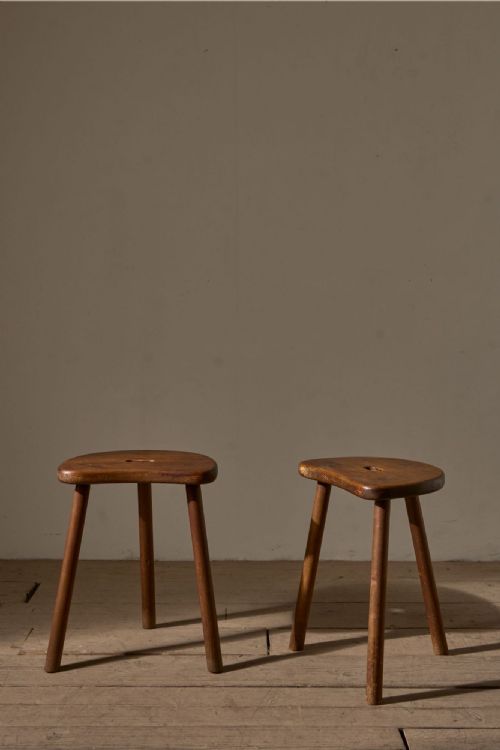

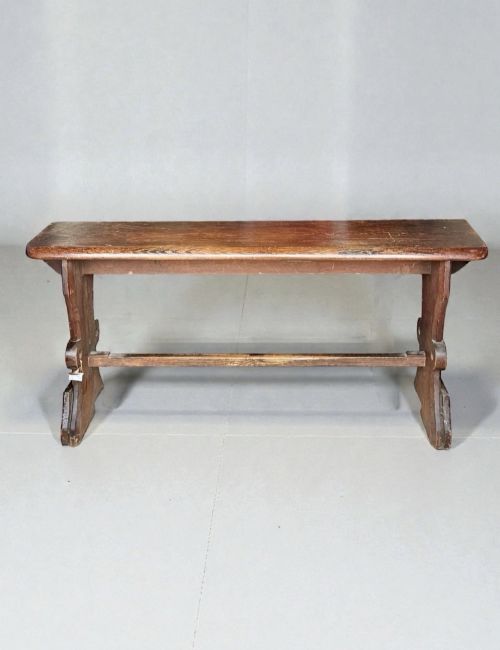


Victorian Pine Stool
These nineteenth-century pieces of victorian pine stool seating bring honest domestic utility and sturdy vernacular character into modern rooms.
Victorian Pine Stool
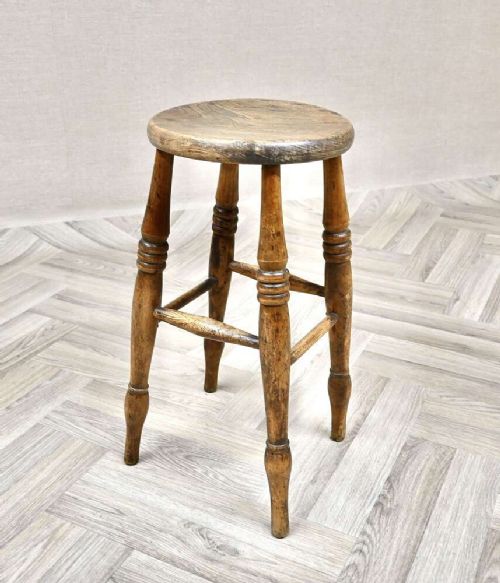
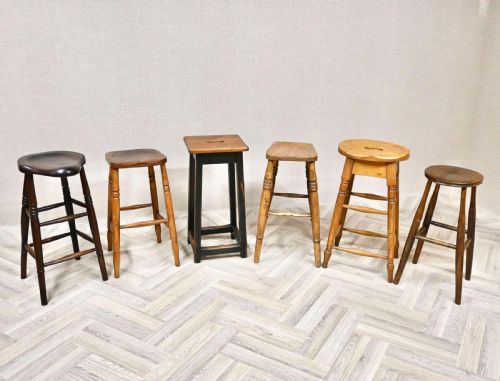
A victorian pine stool encompasses low country seats, tall bar stools, clerk's stools, hearth stools, and long bench pews dating from the nineteenth century up to nineteen-ten. The version most frequently met on this page is the nineteenth-century vernacular country stool or low kitchen seat.
Makers and makers of utilitarian furniture produced these items for functional settings like churches, railways, kitchens, and offices. Surviving examples range from small footstools and organ benches to industrial utility items and library steps.
The style spans Victorian Country, Rustic Farmhouse, Gothic Revival, and Industrial Utility, showing how everyday timber was shaped for practical tasks. Buyers encounter pieces that served as church organist seats, clerk's seating, and domestic kitchen furniture.
How they were made
Construction relies primarily on pine, often paired with elm, beech, oak, ash, hardwood, and iron reinforcements. Timber was chosen for durability and local availability, utilising simple joints to handle heavy daily use.
Many examples combine soft pine tops with harder woods for legs or stretchers, ensuring stability in workshop, kitchen, and ecclesiastical environments. Surfaces display the honest marks of hand tools, plain timber finishes, and occasional leather elements.
Object forms range from standard kitchen stools and bar variants to railway steps, library steps, and long church organ pews.
What varies in quality
Quality rests in the integrity of the timber framing, the honesty of the surface patina, and the structural balance of the legs and seats. Pieces designed for heavy industrial, railway, or church use often display thicker stock and more robust joinery.
Proportion and form separate standard utilitarian seating from rarer vernacular survivors, such as ball foot country stools or Gothic library steps. The depth of the grain and the smoothness earned through decades of handling dictate the appeal of the finish.
The Victorian Pine Stool Glossary
- Vernacular
- Everyday utilitarian furniture made by local craftsmen without grand stylistic pretensions. These pieces reflect regional traditions and practical domestic needs.
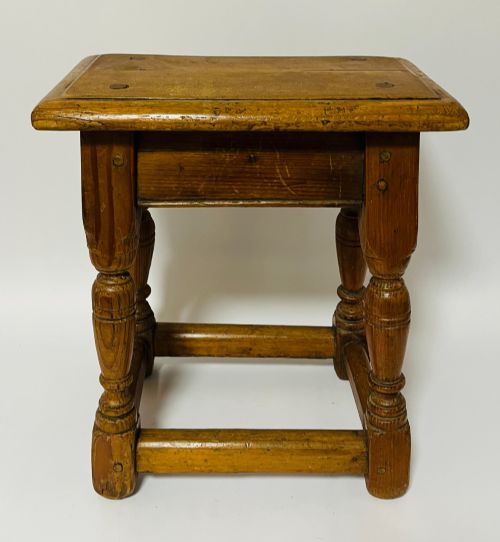
- Joint stool
- A sturdy wooden seat constructed with mortise and tenon joints rather than turned legs driven into a solid slab. They form a foundational type in early seating history.
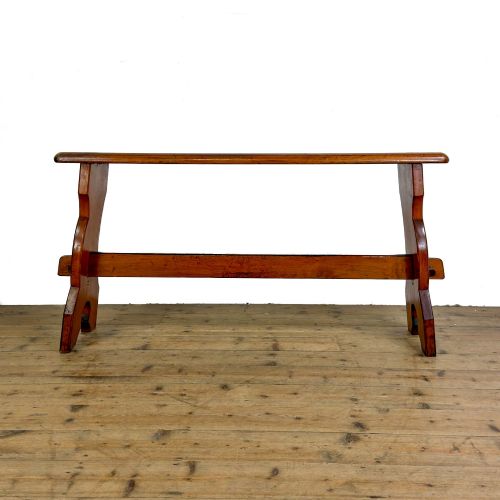
- Pew seat
- A long wooden bench form intended for ecclesiastical or communal seating. In pine, these offer extended utility as low stools or long seats.
- Library steps
- Multi-tiered wooden steps designed for reaching high shelves in studies and libraries. Victorian examples frequently incorporate Gothic revival details.
- Ball foot
- A rounded wooden foot carved at the base of a furniture leg. This feature adds a distinct decorative touch to simple country forms.
Victorian Pine Stool: Frequently Asked Questions
What is a victorian pine stool used for?
These items served various practical roles in nineteenth-century life, from clerical work and kitchen tasks to organ playing and railway operations.
Today, they function easily as spare seats, bedside tables, or low display surfaces in domestic interiors.
How do I identify a nineteenth-century pine stool?
Look for construction details like hand-cut joints, timber ageing, and utilitarian forms associated with vernacular workshops.
Materials typically feature solid pine combined with hardwoods like beech or elm for structural strength.
Are tall bar stools common in this period?
Nineteenth-century tall bar stools and clerk's stools survive as taller variants designed for raised work surfaces and commercial counters.
They often incorporate footrests and sturdy cross-bracing to handle heavy working environments.
How do I clean and care for antique pine?
Maintain the surface using a gentle wax polish and a soft cloth to preserve the historical patina accumulated over generations.
Avoid excessive moisture and direct heat sources to keep the old timber stable.