



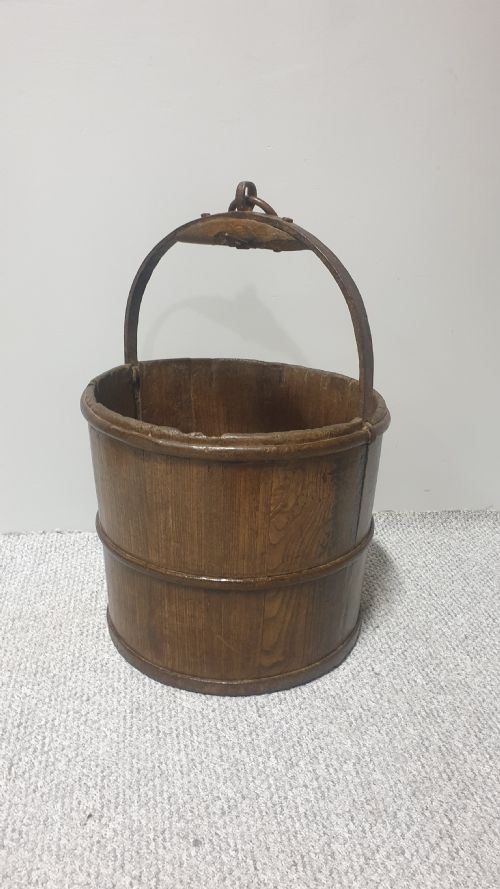
Country Oak Vessel
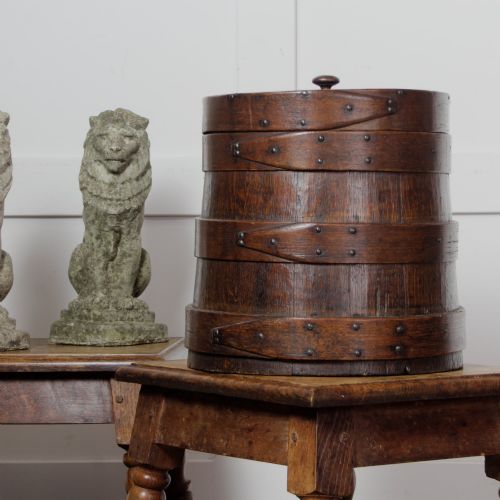
These country oak vessel examples combine honest utility with rich timber grain, offering a practical anchor for traditional interiors.
Country Oak Vessel
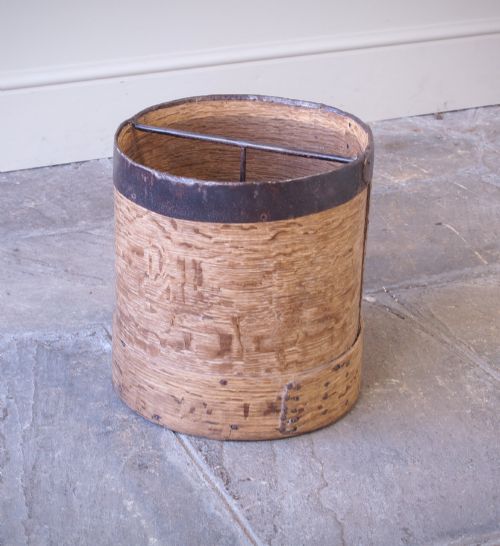
A country oak vessel is a utilitarian container forged from timber for domestic or agricultural storage, ranging from grain bins to butter tubs. When searching for a country oak vessel, buyers encounter utilitarian forms like well buckets, grain measures, and log bins that once served demanding daily tasks.
Most items appearing under country oak vessel hail from the eighteenth and nineteenth centuries, exhibiting sturdy timber construction and honest wear. These functional items reflect regional trades, utilising oak alongside iron, brass, or copper bands to secure the staves.
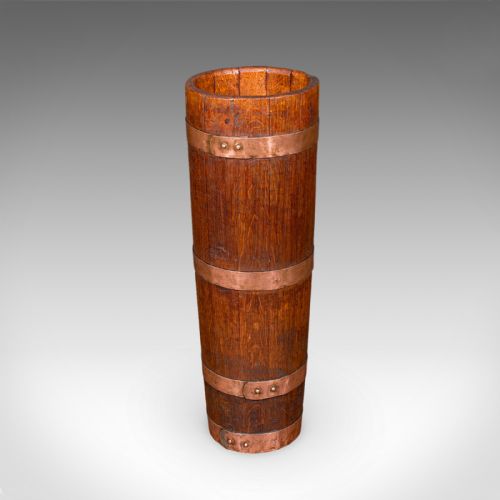
The selection leans heavily toward coopered objects, including stick stands and butter barrels designed for heavy farm or estate use. These pieces bring tactile warmth to modern spaces through honest grain and patinated metalwork.
Construction and materials
Makers built these pieces using traditional cooperage techniques, shaping individual oak staves to form watertight or durable cylindrical containers. Skilled hands bound these wooden staves together with wrought iron, copper, or brass bands, ensuring structural longevity without modern adhesives.
The primary material, oak, provided exceptional strength and resistance to moisture, while secondary metals like iron and brass supplied necessary tension and hanging handles. Woodworkers selected dense timber and shaped it with hand tools, leaving subtle tool marks that confirm age and manual production.
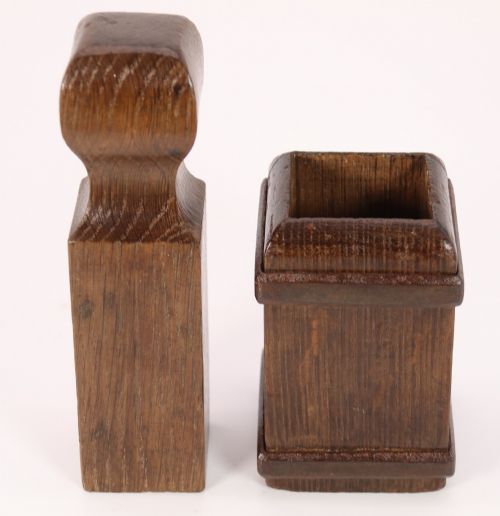
Some unusual treen containers hiding in these listings may have served specifically for collecting wine dregs at the dining table.
Judging quality and character
Quality rests in the integrity of the original construction, particularly the tight fit of the staves and the matching patination of the timber and metal bands. Superior examples retain their original handles, mounts, and surface warmth without extensive replacement timber.
Distinction also lies in the crispness of the cooperage and the specific domestic function, whether an apothecary crusher or a large well bucket. Pieces that maintain their structural honesty alongside deep, unpolished surfaces stand apart from heavily restored alternatives.
The Country Oak Vessel Glossary
- Coopered
- Constructed from curved wooden staves bound together by metal or wooden hoops. This method was essential for making vessels like buckets and barrels.
- Stave
- A narrow, shaped piece of oak with bevelled edges that forms the vertical sides of a bucket or barrel. Multiple staves lock together under tension.
- Treen
- Small handmade wooden domestic objects and utensils. Items in this category range from mortars and pestles to small containers.
- Wrought iron
- Iron beaten into shape by hand while hot, commonly used for the sturdy bands and handles found on utilitarian oak containers.
Country Oak Vessel: Frequently Asked Questions
What were these wooden vessels used for?
These containers served practical roles in agrarian and domestic life, holding grain, flour, butter, or well water. Some acted as specialised tools like apothecary crushers or wine dreg collectors.
Over time, households repurposed these sturdy containers for fireside log storage, umbrella stands, or garden planters.
How do I care for antique oak?
Keep these items away from direct heat sources and extreme humidity fluctuations to prevent the oak staves from shrinking or splitting.
An occasional application of a suitable wax helps maintain the surface sheen and nourishes the dry timber without altering the patina.
Are the metal bands always iron?
While wrought iron is the most common material for securing the staves, some pieces feature brass or copper bands. Dutch and English makers selected different metals depending on the intended use and regional workshop practices.
These metal components often display hand-beaten textures and secure fixings that contribute significantly to the visual weight of the object.
How do I date a country oak vessel?
Dating relies on observing construction marks, the type of metal used for the bands, and the overall wear on the oak timber. Eighteenth-century examples often display hand-forged ironwork and deeper patination compared to later Victorian items.
The specific form, such as a Georgian grain bin or a mid-nineteenth-century butter tub, also points directly to the era of manufacture.