
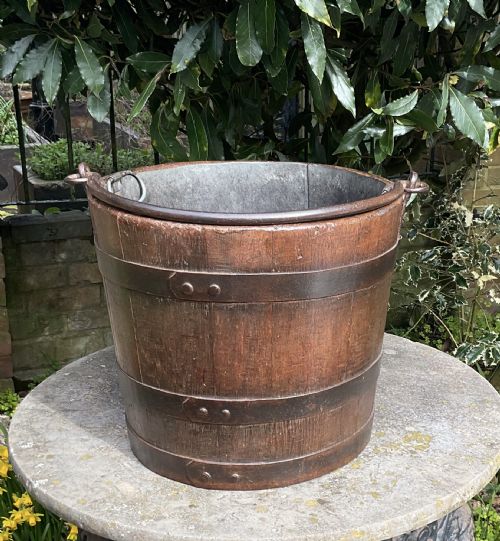


Dark Oak Bucket
A dark oak bucket brings rustic utility and rich grain into a room, serving as a robust container for fuel, plants, or umbrellas.
Dark Oak Bucket
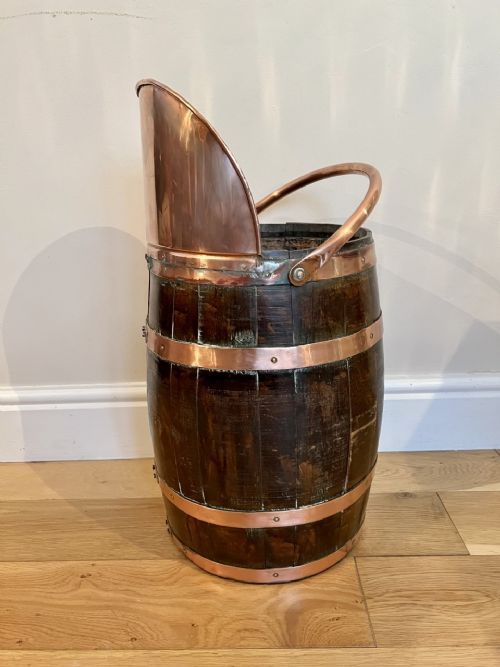
When you search for a dark oak bucket, you encounter heavy functional vessels spanning the Georgian, Victorian, and Edwardian eras. These pieces range from coopered log bins and coal buckets to jardiniere planters and umbrella stands.
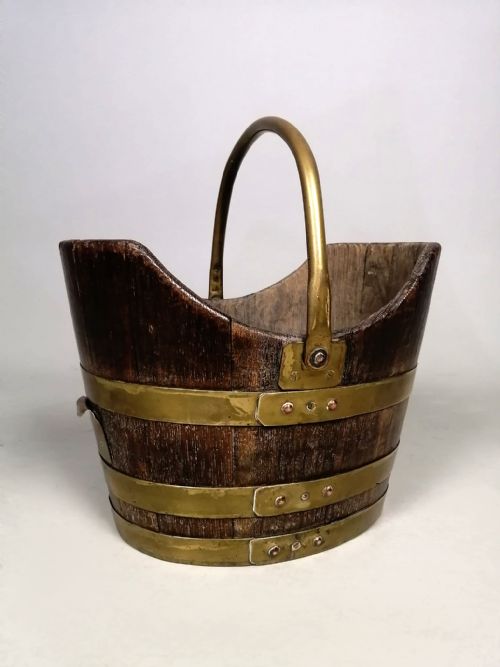
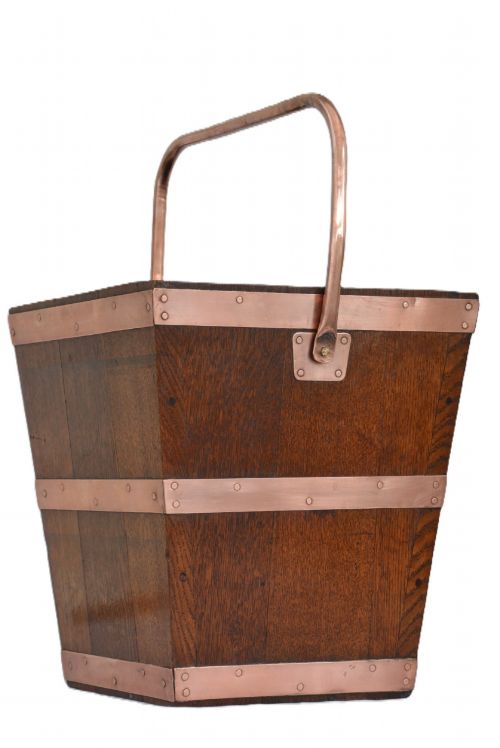
The version most commonly met on this page is the Victorian or Edwardian coopered container, often bound with brass, copper, or iron bands and fitted with an inner liner for practical use.
How they were made
Staves of timber are shaped and assembled using traditional cooperage techniques, then secured tightly with metal bands of brass, copper, or iron. Handles, drop-fronts, and mountings of cast metal or silver plate provide structural reinforcement and decorative contrast.
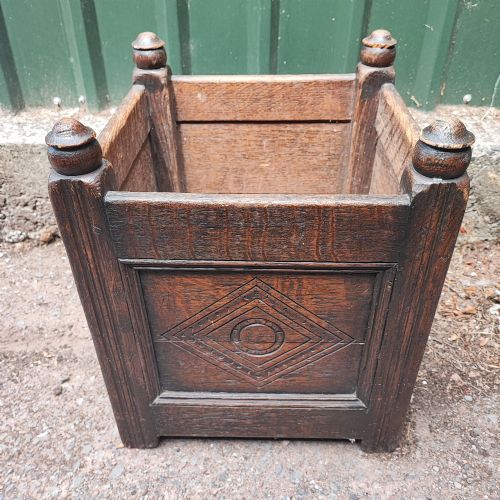
Selected examples incorporate carved decoration on the solid oak body, while others rely on the natural warmth and deep grain of the wood enhanced by age and polish.
One delightfully specific nineteenth-century container survives solely for the collection of discarded wine dregs.
What varies in quality
The standard of a dark oak bucket depends on the crispness of the cooper's work, the weight and quality of the metal bands, and the survival of original interior liners. Pieces with substantial gauge metalwork and well-figured timber stand apart from simpler utilitarian items.
Attribution to known workshops or the presence of subtle carved details elevates an everyday fireside accessory into a piece of finer decorative art.
Lister and Co
The Dark Oak Bucket Glossary
- Coopered
- Constructed from curved wooden staves bound together with metal hoops, much like a traditional barrel. This method ensures the vessel remains stable and strong.
- Purdonium
- A specialised box or bucket designed for holding coal near a fireplace, often featuring a sloping front or a drop-down door for easy access.
- Jardiniere
- An ornamental pot or stand intended for holding plants or flowers. In oak, these often feature protective metal liners to handle moisture.
- Treen
- Small handmade wooden objects of domestic use. They display the turning and carving skills of earlier woodworking traditions.
- Coal bin
- A heavy container built to store fuel for a hearth. These frequently incorporate iron or brass handles for lifting.
Dark Oak Bucket: Frequently Asked Questions
How were dark oak buckets originally used?
These vessels served primarily practical roles around the home, holding coal for fires, peat for hearths, or water from wells.
Over time, many of these sturdy containers transitioned into decorative roles, holding plants, logs, or walking sticks in hallways and reception rooms.
How do I care for antique oak?
Keep wooden pieces away from direct heat sources and sudden temperature changes to prevent the timber from splitting or warping.
Apply a traditional wax polish occasionally to nourish the grain and maintain a soft protective sheen on the surface.
Are original liners important?
Original ceramic or metal liners add authenticity and protect the interior wood from moisture and debris left by fuel or plants.
Many surviving pieces retain their functional inserts, which contributes significantly to their completeness and utility.
How can I tell the period?
Georgian examples often show finer proportions and distinct brass banding, while Victorian and Edwardian pieces frequently feature heavier construction and varied metal mounts.
Examining the construction methods, tool marks, and style of any metal fittings helps place the piece within its historical era.