




Rustic Fire Bucket
A rustic fire bucket is a sturdy hearth container built for duty, offering practical storage for fuel while bringing genuine nineteenth-century character to a room.
Rustic Fire Bucket
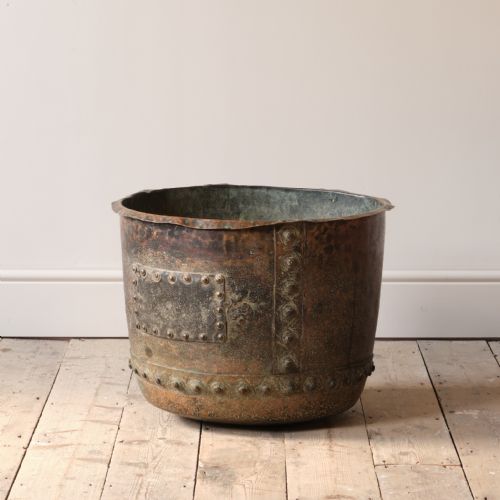
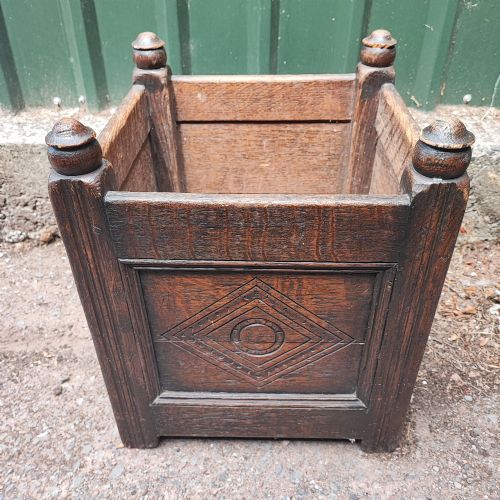
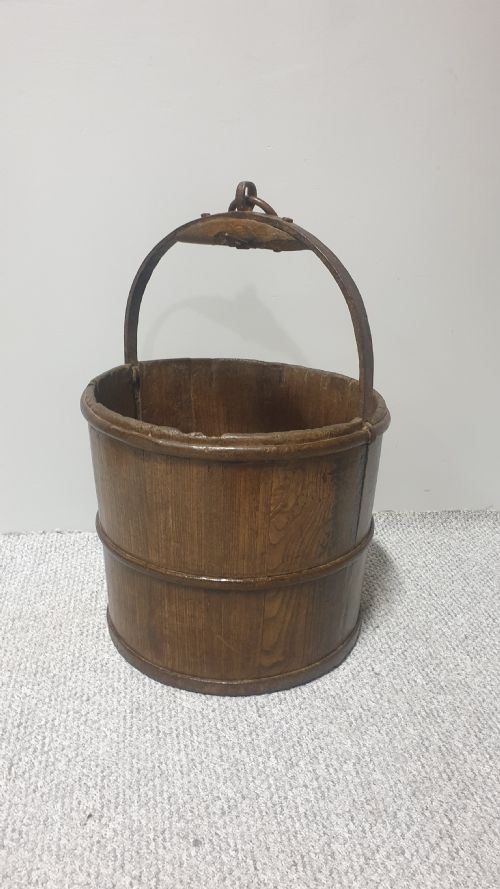
A rustic fire bucket encompasses heavy metal vessels, sturdy timber boxes, and riveted containers originally built for utility near the hearth. The examples gathered here span the nineteenth century, taking the form of deep copper log bins, oak boxes banded in iron, and brass cauldrons.
Buyers frequently encounter nineteenth-century copper planters and log buckets alongside Victorian country oak boxes. These objects bridge the gap between utilitarian fire accessories and decorative vessels suitable for modern living spaces.
How they were made
Makers utilised heavy sheet copper, brass, and wrought iron, joining the metal panels with visible hand-beaten rivets to ensure lasting strength. Oak bodies were reinforced with iron straps, creating rigid structures designed to withstand heavy daily loads of timber.
Surfaces show the natural marks of early manufacturing, from the warm patination of aged copper to the rustic grain of untreated country oak. Metal vessels often feature applied iron swing handles or riveted drop rings for carrying.
Many a heavy copper boiler has retired from washing day duty to spend its twilight years guarding dry logs by the hearth.
What varies in quality
Quality rests in the weight of the metal and the integrity of the structural joins rather than mere ornamentation. Heavy-gauge copper with robust hand-riveting sits at the upper end of the scale, showing genuine structural purpose.
The character of the aged surface defines the visual appeal, distinguishing pieces with honest patination and minimal modern intervention from those with overly polished or altered finishes.
The Rustic Fire Bucket Glossary
- Riveted
- Joined together with metal pins that are hammered flat on the ends. This traditional construction method provides immense strength to copper and iron vessels.
- Patina
- The surface sheen and colour developed over decades through use, handling, and oxidation. It serves as a visual indicator of age and genuine wear.
- Cauldron
- A large round metal pot with a wide opening and carrying handles. These heavy pieces were often repurposed from utilitarian duties to fireside log storage.
- Verdigris
- The green or blue crust that forms naturally on copper and brass due to atmospheric oxidation. Collectors often prize this weathering for its distinctive appearance.
Rustic Fire Bucket: Frequently Asked Questions
What is a rustic fire bucket used for?
These robust metal and timber containers were designed to hold water or sand near the hearth for safety. Today, they serve primarily as practical log bins and planters.
Their generous proportions make them ideal for storing firewood neatly beside an open fireplace or wood burner.
How do I care for antique copper?
Antique copper requires minimal intervention to preserve its historic surface. Dusting with a dry cloth and avoiding harsh chemical cleaners protects the natural patination.
Leaving the metal untouched allows the genuine ageing process to continue undisturbed over the years.
Are these buckets waterproof?
Metal vessels formed from riveted copper or iron often retain their water-tight integrity, though timber boxes require a waterproof liner. This makes many of the copper examples equally suitable for use as garden planters.
Testing the interior helps determine whether a specific vessel can hold damp soil or fresh cut flowers without leaking.
How do I date a nineteenth-century log bin?
Dating relies on observing construction details such as hand-beaten rivets, iron strap fixings, and the specific composition of the metal. Nineteenth-century pieces frequently display heavy gauge copper and hand-forged ironwork typical of the Victorian era.
Comparing the manufacturing techniques and material choices against dated examples helps establish the correct period.