



Country Oak Hutch
A country oak hutch brings honest timber and centuries of domestic utility directly into a modern kitchen or dining space.
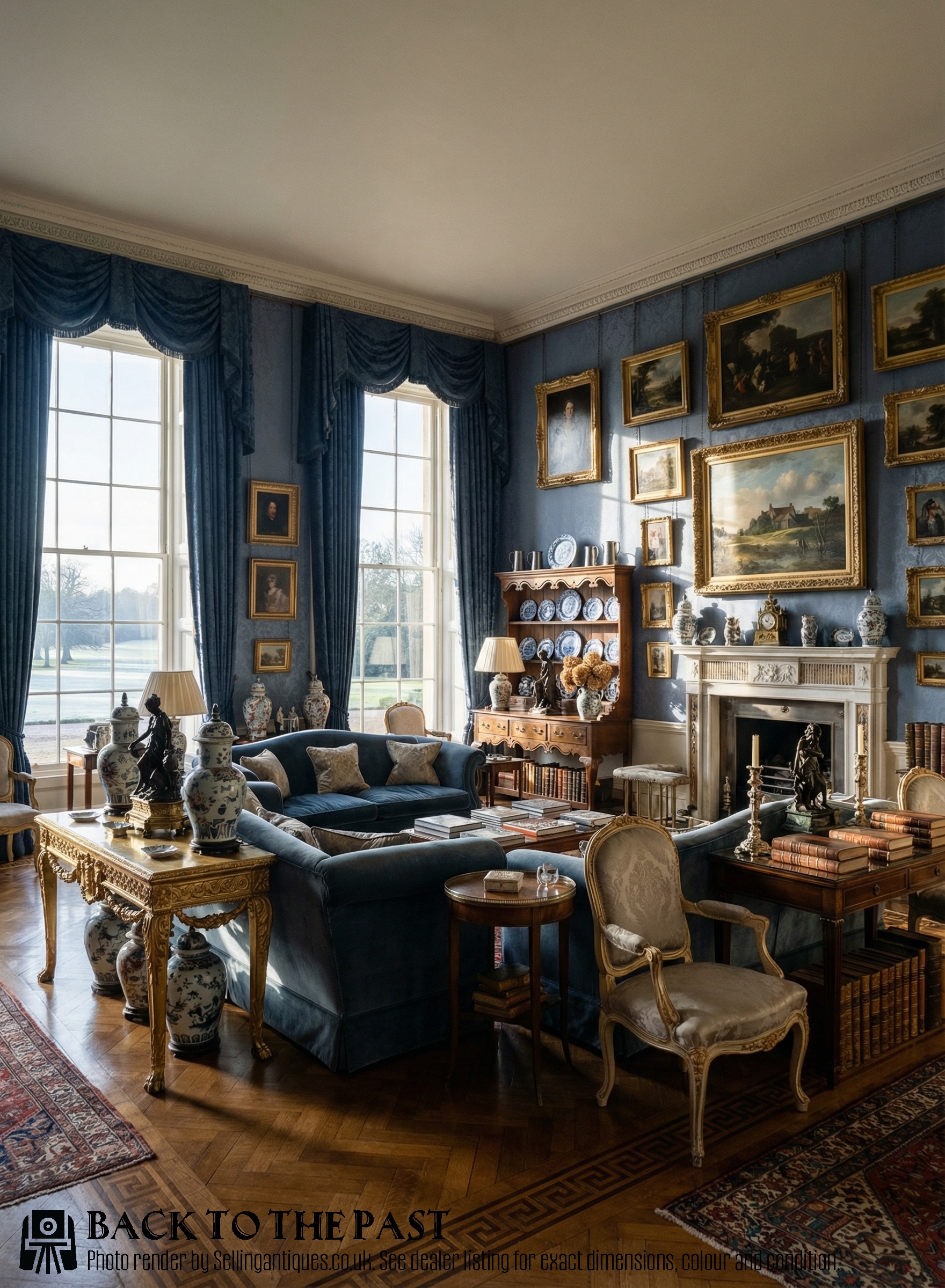
Country Oak Hutch
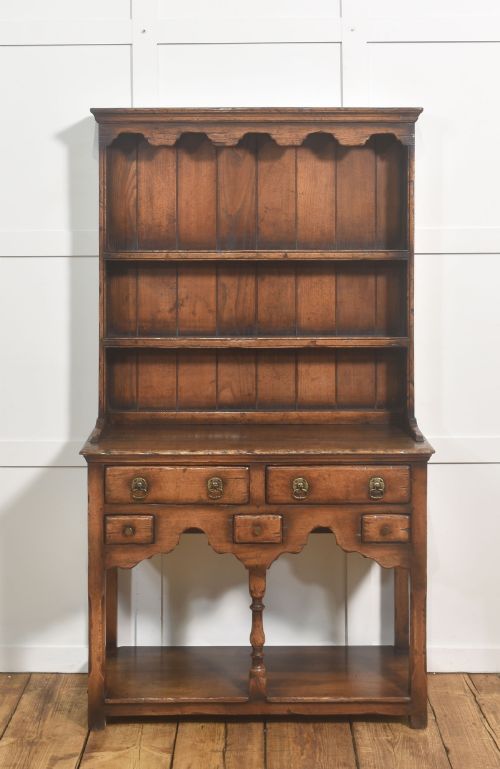
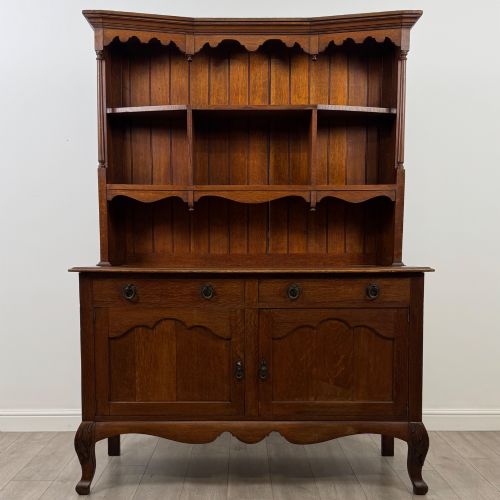
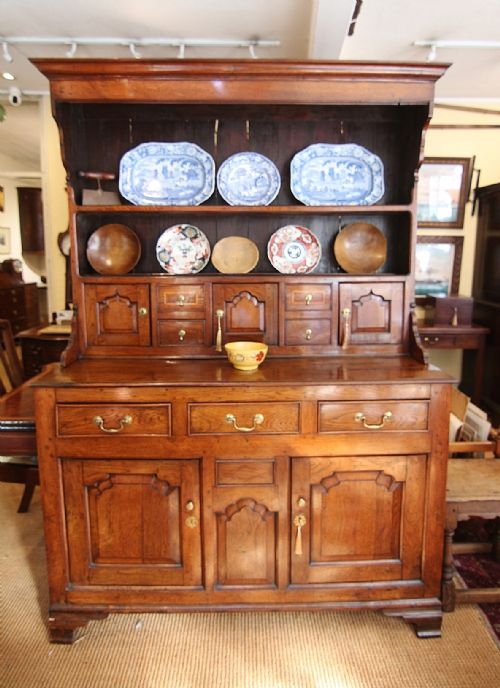
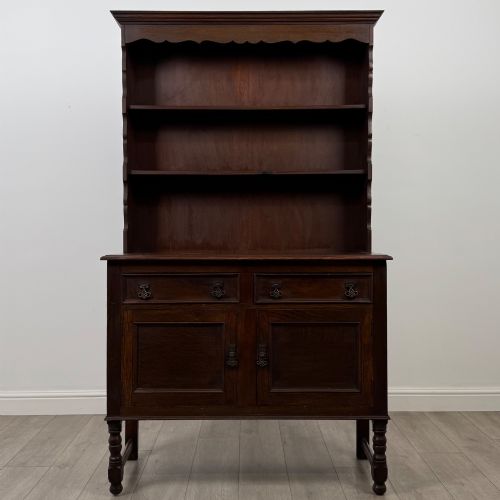
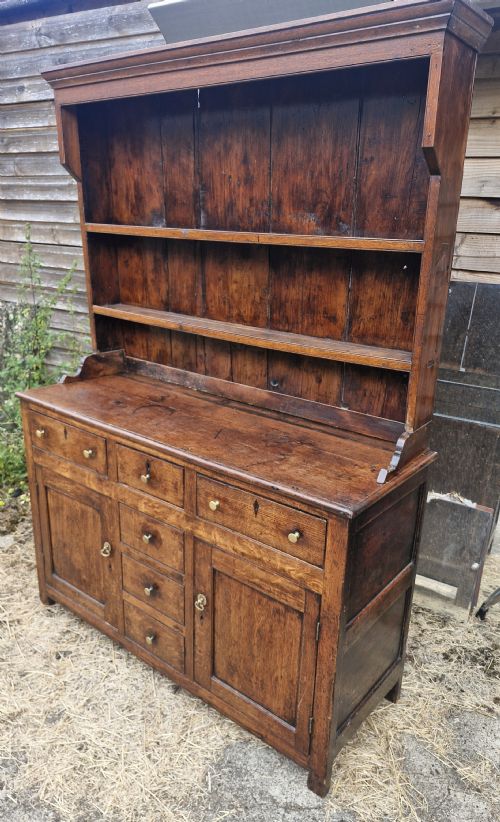
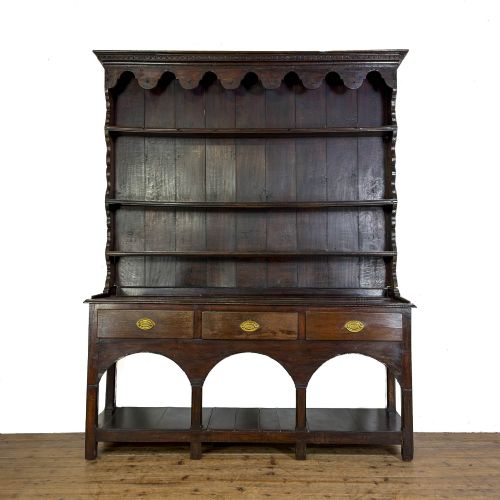
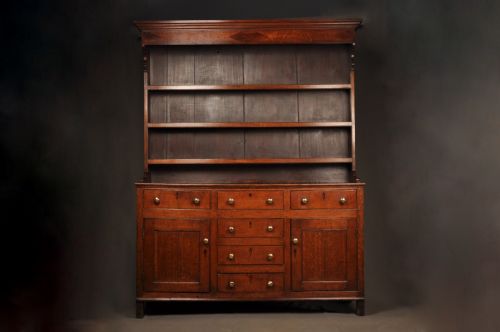
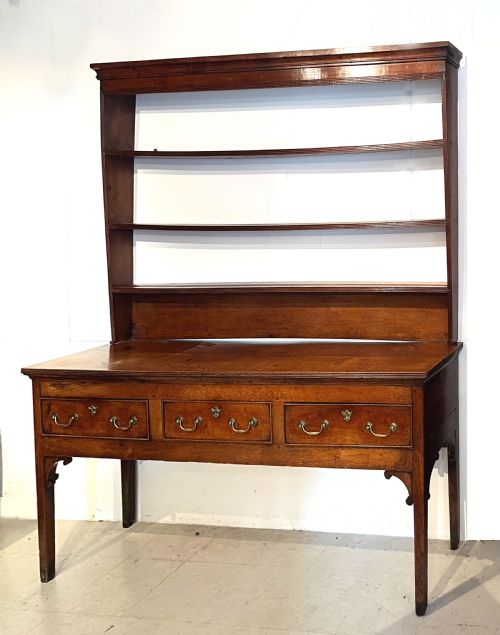
When buyers search for a country oak hutch, they encounter a range of heavy utilitarian furniture designed for storing tableware, provisioning food, and displaying plates in domestic settings. The pieces seen here span centuries of regional domestic carpentry, crossing into Welsh dressers, cottage dressers, and provincial cabinets.
The most common forms on this page include base cupboards paired with upper plate racks, two-part hutches, and open shelf units. Origins stretch from English farmhouses and Welsh valleys to French provincial workshops, executed primarily in solid timber with regional variations in drawer configuration and cornice moulding.
Construction dates range from the seventeenth century through the Edwardian era, capturing periods such as the Georgian and Victorian epochs. Buyers frequently find pieces featuring pot-boards, breakfront drawers, or glazed upper sections designed for practical storage.
Materials and Construction
Makers relied primarily on solid oak, occasionally integrating secondary timbers like elm, walnut, and pine for internal shelving or backing boards. Metalwork hardware typically involved forged iron hinges and brass pulls, while decorative elements sometimes incorporated inlay wood and bone details.
Cabinetmakers utilised traditional joinery methods including pegged mortise and tenon frames, hand-cut dovetails for drawer construction, and panelled doors. Surfaces were hand-planed and finished to highlight the natural grain of the timber without heavy synthetic varnishes.
Country Oak Hutch Retail Price Guide 2026
Typical asking prices for country oak hutch among the pieces listed under this phrase on Sellingantiques today, from the lower quarter to the upper quarter. They describe what is for sale here now, not the wider market.
Listings feature country oak hutches spanning the seventeenth century through the Edwardian period, incorporating regional styles from Wales, England, and France.
Distinguishing Quality in Timber and Joinery
Quality rests in the integrity of the timber selection and the retention of original components like plate racks, handles, and backboards. Pieces displaying hand-cut dovetailing and pegged joints demonstrate superior craftsmanship compared to later alterations.
The survival of original surface patination and honest wear through centuries of use distinguishes finer regional examples. Structural harmony between the upper rack and lower base cabinet dictates the overall balance of the piece.
The Country Oak Hutch Glossary
- Plate rack
- An open shelving superstructure mounted on top of a dresser base, designed specifically for displaying ceramic plates upright.
- Pot-board
- An open lower shelf situated near the floor between the legs of a dresser, historically used for storing heavy pots and pans.
- Breakfront
- A cabinet design where the central section projects forward from the flanking sections, creating architectural depth.
- Buffet a deux corps
- A tall two-part provincial French cupboard featuring an upper and lower cabinet section separated by a moulding.
- Vernacular
- Furniture built by local country joiners following regional traditions rather than metropolitan architectural patterns.
Country Oak Hutch: Frequently Asked Questions
What is the difference between a hutch and a dresser?
In practical terms, a country oak hutch and a dresser often overlap in form, typically combining a lower storage cabinet with an upper display rack. Regional terminology often dictates the name, with Welsh dressers and cottage cupboards sharing similar multi-tiered storage functions.
Historically, these pieces served the rural kitchen as both a food preparation surface and a display unit for family ceramics. The terminology simply reflects local building traditions across English, Welsh, and French provinces.
How do I care for antique oak furniture?
Maintaining country oak requires keeping pieces away from direct heat sources and drastic humidity shifts that can cause timber to split. Regular dusting with a dry, soft cloth preserves the natural wax finish without building up greasy residue.
Applying a traditional beeswax polish occasionally helps nourish the dry grain of older timber. Avoid silicone-based commercial sprays, which can penetrate porous antique wood and damage the patination.
Where were these pieces originally made?
These hutches and dressers originated in rural workshops across Britain and continental Europe, specifically tailored to regional domestic needs. Examples frequently trace back to Welsh valleys, English farming counties, and French provincial districts.
Local joiners utilised locally available timber like oak and elm, resulting in distinct regional characteristics. These geographical variations appear in cornice carvings, drawer layouts, and foot designs.
How do I date an oak hutch?
Dating relies on examining construction techniques, tool marks, timber selection, and hardware styles across the piece. Hand-sawn boards, pegged joinery, and irregular dovetails generally point toward earlier seventeenth or eighteenth-century origin.
Later Victorian and Edwardian examples often feature more uniform machine-sawn timber and different fastening methods. Comparing the form with dated regional exemplars helps narrow down the period of manufacture.
Can I use a hutch in a modern kitchen?
A country oak hutch provides substantial storage and display space that functions well in contemporary kitchen or dining environments. The deep lower cupboards accommodate modern dinnerware, while upper shelves display everyday crockery or glassware.
The robust timber construction handles daily use easily, bringing tactile warmth and historical character to modern interiors.