

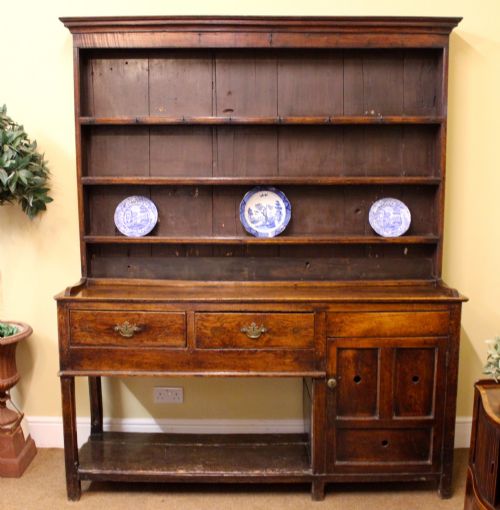
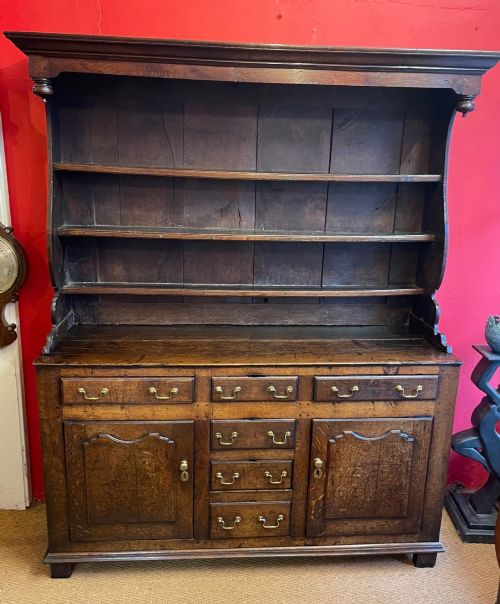
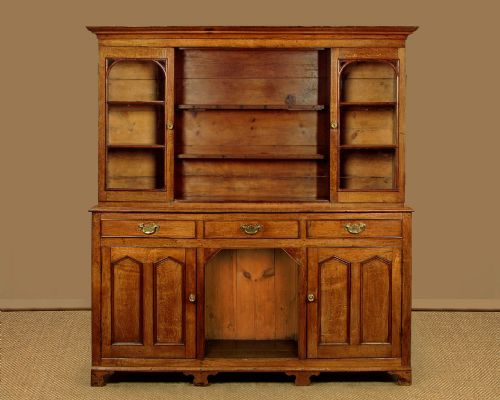
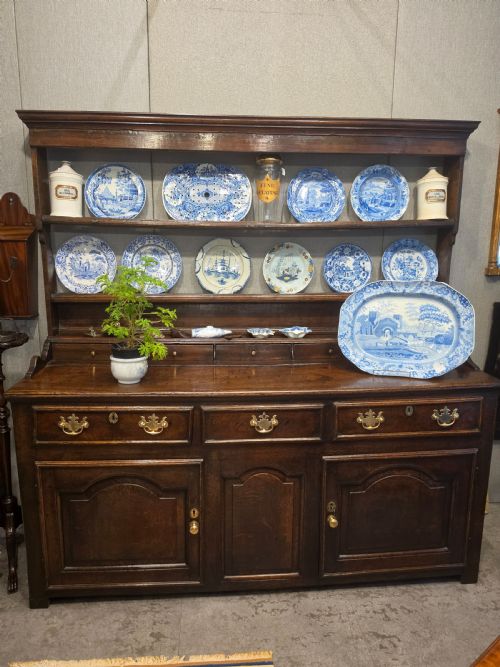


Country Oak Dresser Rack
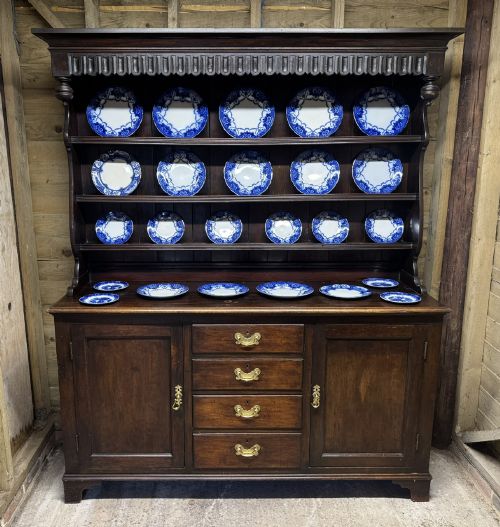
A country oak dresser rack is a practical wall-hung display for earthenware plates, bringing traditional domestic charm to any kitchen.
Country Oak Dresser Rack
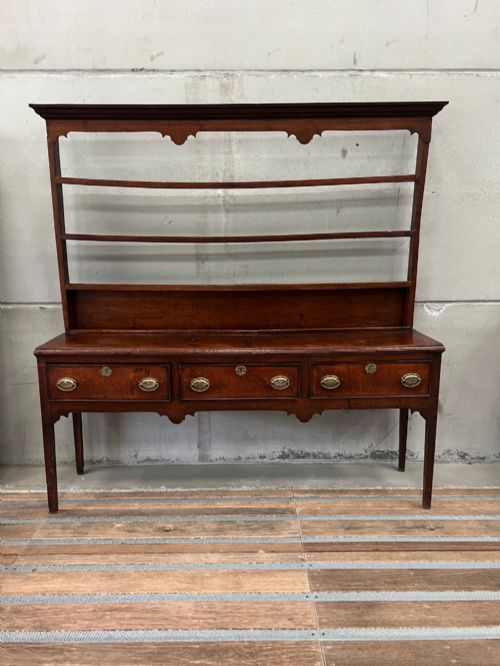
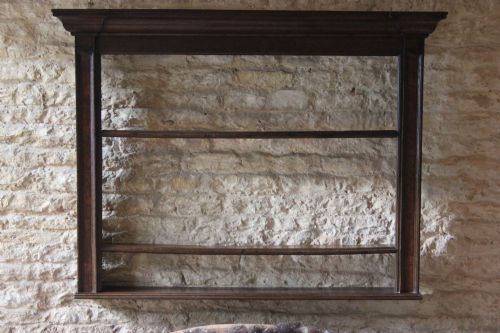
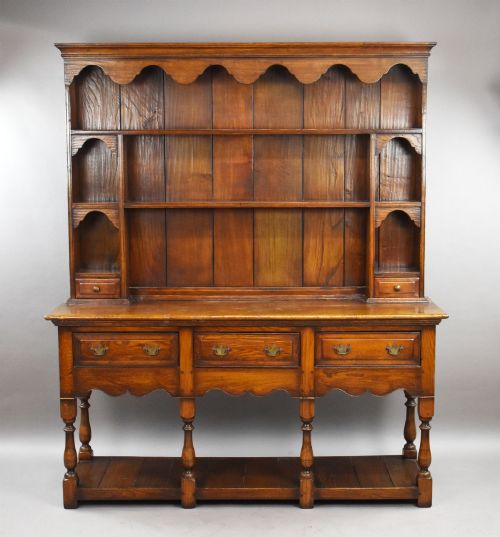
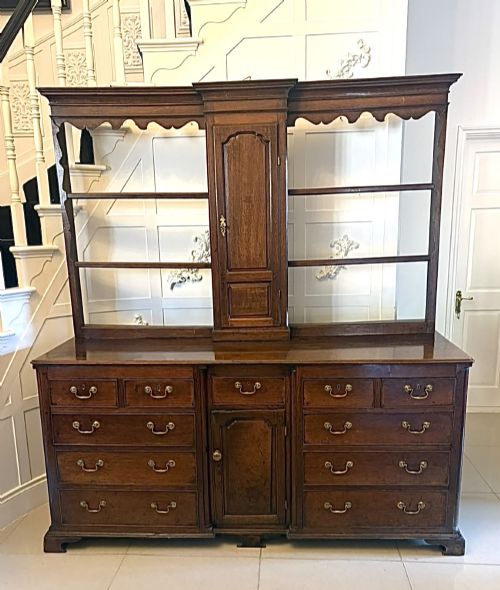
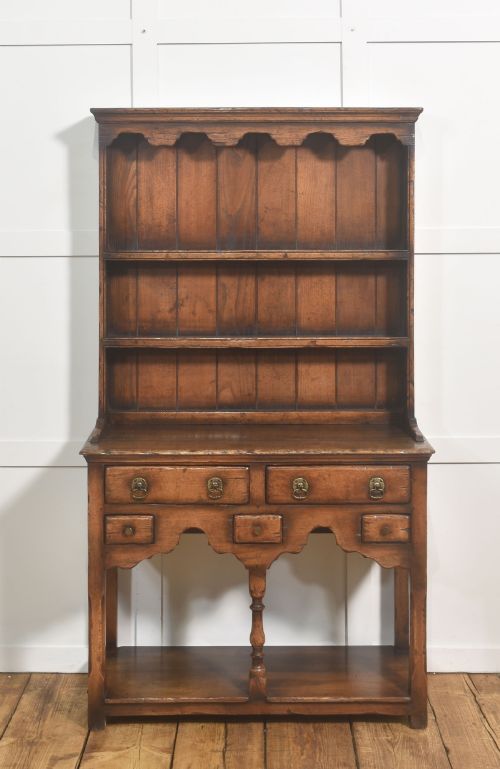
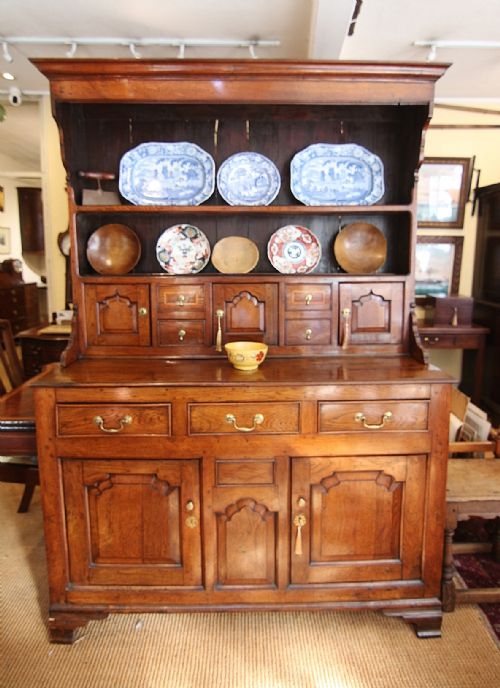
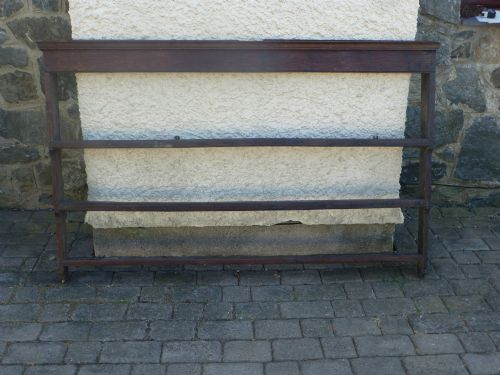
When you search for a country oak dresser rack, you encounter wall-mounted open shelves designed to hold delft plates and kitchen pottery. These pieces originate across British regional centres, including Welsh, Shropshire, and North Country workshops.
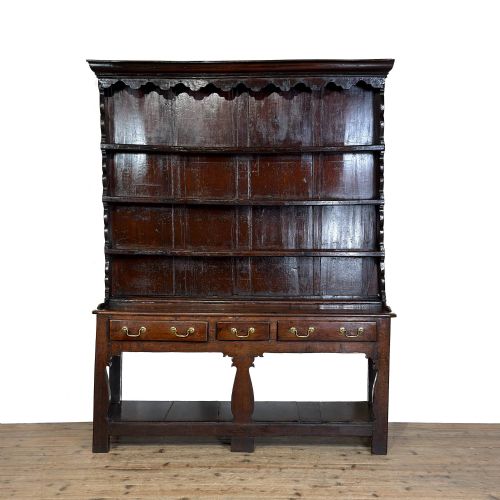
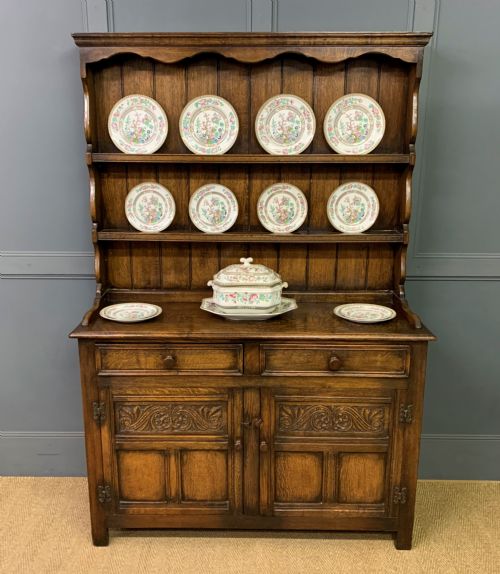
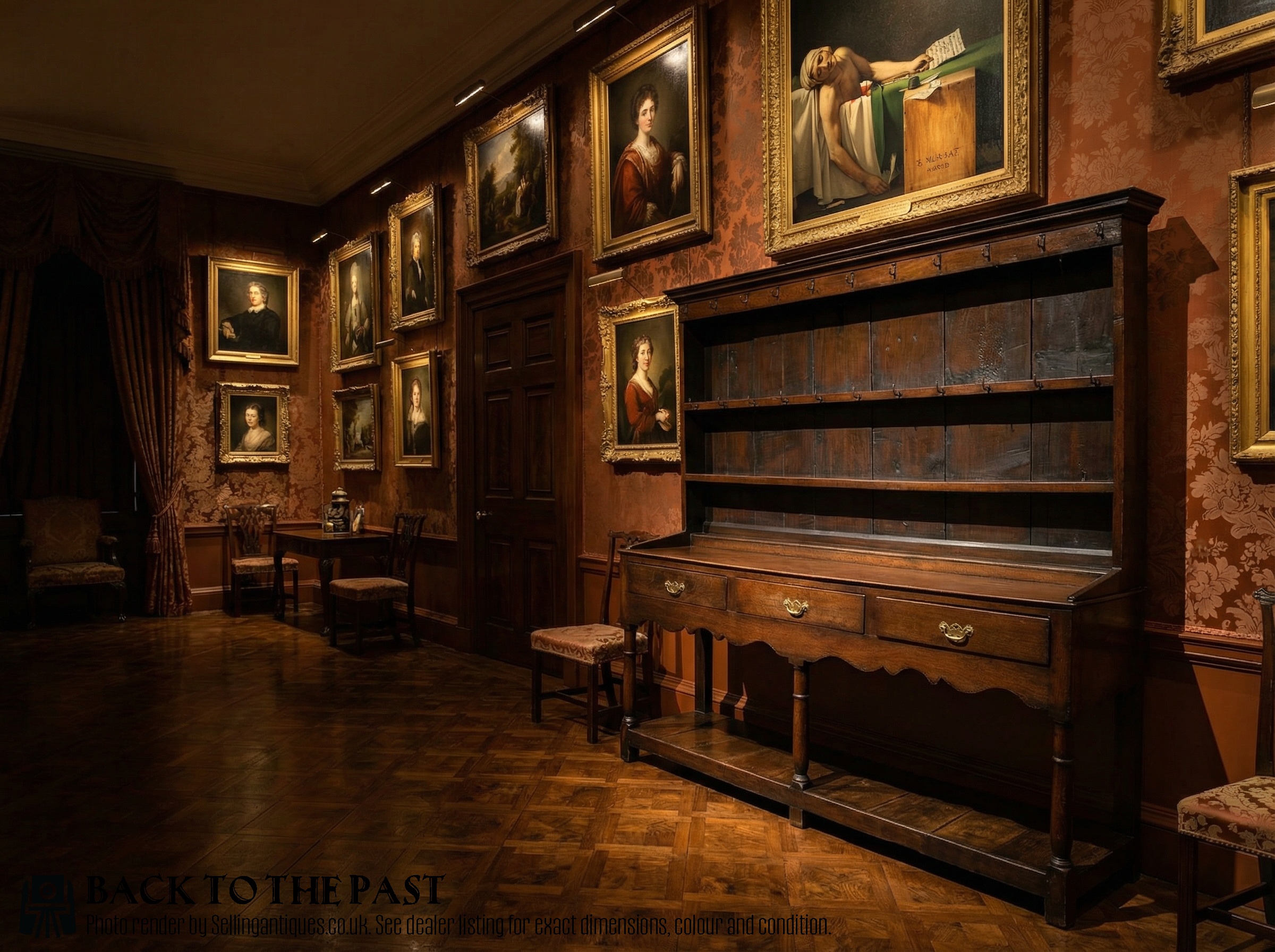
The versions most common on this page date from the eighteenth and nineteenth centuries, appearing either as standalone wall racks or as the upper sections separated from full kitchen dressers.
Examples display vernacular styles influenced by Georgian cabinet-making traditions, utilising straightforward carpentry to create functional storage for everyday household ceramics.
How they were made
Carpenters constructed these racks primarily from solid oak, sometimes incorporating pine for internal framing or secondary boards. Brass or iron hooks frequently appear fixed to the underside of shelves for hanging cups and small jugs.
Makers shaped the timber using hand tools, employing pegged mortise and tenon joints to secure the uprights and plate rails. Fretwork, shaped friezes, and occasional inlay distinguish the regional Welsh and English country designs from simpler utility pieces.
Country Oak Dresser Rack Retail Price Guide 2026
Typical asking prices for country oak dresser rack among the pieces listed under this phrase on Sellingantiques today, from the lower quarter to the upper quarter. They describe what is for sale here now, not the wider market.
Some historic racks retain old cafe provenance tags, reminding us these sturdy shelves once held mugs in bustling Snowdonian meeting spots.
What varies in quality
The distinction between standard examples and finer pieces lies in the choice of timber figure, the depth of cornices, and the sophistication of regional detailing. Superior racks display carefully selected quarter-sawn oak with rich patination alongside crisply shaped friezes rather than plain boards.
Proportion and structural integrity separate robust provincial work from lesser items, with better pieces retaining original pegging, intact plate rails, and uncompromised backboards that reflect skilled vernacular craftsmanship.
The Country Oak Dresser Rack Glossary
- Delft
- Tinned earthenware pottery commonly displayed on these racks. The term refers to both English and Dutch tin-glazed ceramics popular in the eighteenth century.
- Potboard
- A lower board or open shelf fitted near the floor on dresser bases, though related wall racks focus entirely on upper tier display space.
- Vernacular
- Architecture and furniture built by local craftsmen using traditional regional methods and available materials. It avoids grand metropolitan styles in favour of practical local utility.
- Breakfront
- A piece of furniture featuring a central section that projects forward from the flanking sides. This arrangement adds architectural depth to larger dresser compositions.
Country Oak Dresser Rack: Frequently Asked Questions
How do I hang a heavy oak rack?
These solid timber racks require secure fixing directly into wall studs or masonry using heavy-duty brackets. The substantial weight of oak shelving and loaded ceramic plates demands robust load-bearing support.
Professional installation ensures the piece remains stable against the wall without pulling away under the weight of historical tableware collections.
Were these racks originally attached to dressers?
Many racks functioned as the upper tier of a two-piece kitchen dresser, while others were built specifically as wall-hanging units. Surviving examples often show evidence of having stood atop bases or hung independently from the start.
Examining the top surfaces and mounting points reveals whether a rack belonged to a base or served strictly as wall furniture.
What is the difference between Welsh and English racks?
Welsh country racks frequently incorporate distinctive shaped friezes, arched details, or local cabinet-making traits such as Snowdonia or Llanrwst construction patterns. English regional pieces often display simpler linear forms typical of Shropshire or West Country workshops.
Both regional traditions prioritise practical plate display, utilising local oak and traditional joinery methods suited to farmhouse kitchens.
How should I clean antique oak?
Dust the timber regularly with a dry cloth and apply occasional applications of traditional beeswax to nourish the dry surface. Avoid modern silicone sprays or wet cleaners that can penetrate unsealed grain and damage the historic patination.
Gentle maintenance preserves the deep colour and natural lustre accumulated across centuries of domestic use.