
Country Low Stool
These country low stool pieces are honest, utilitarian seats built to last, offering simple charm and practicality for any room.
Country Low Stool
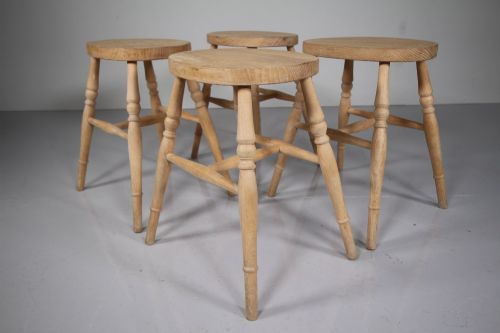
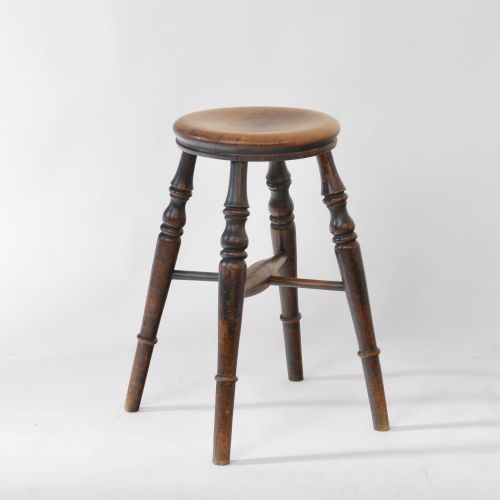
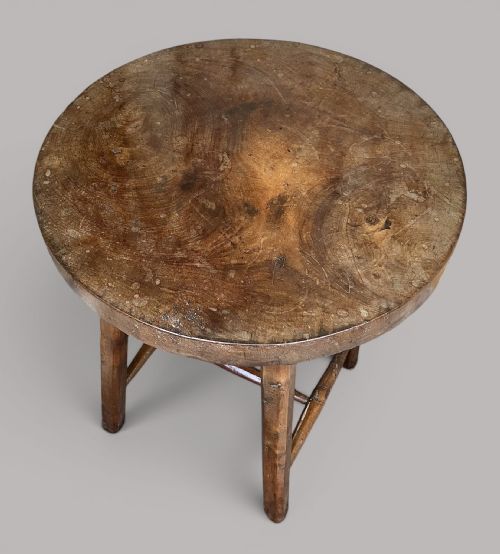
A country low stool is a humble, sturdy seat found across farmhouses, workshops, and taverns from the eighteenth century onwards. You will most frequently meet vernacular oak, elm, and ash examples designed for everyday domestic labour or hearth-side use.
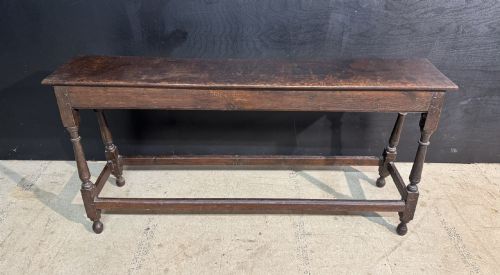
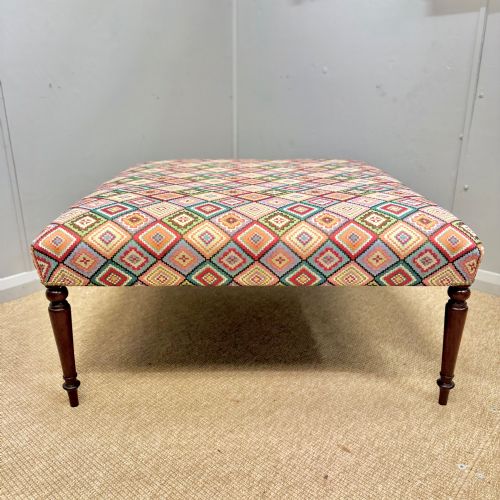
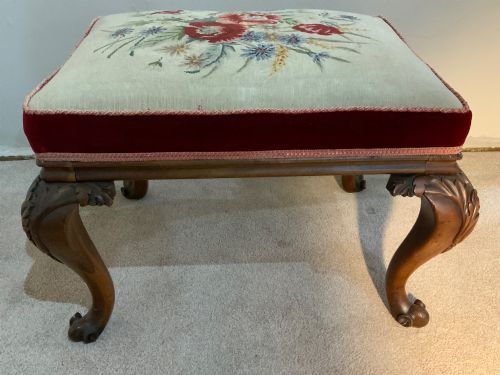
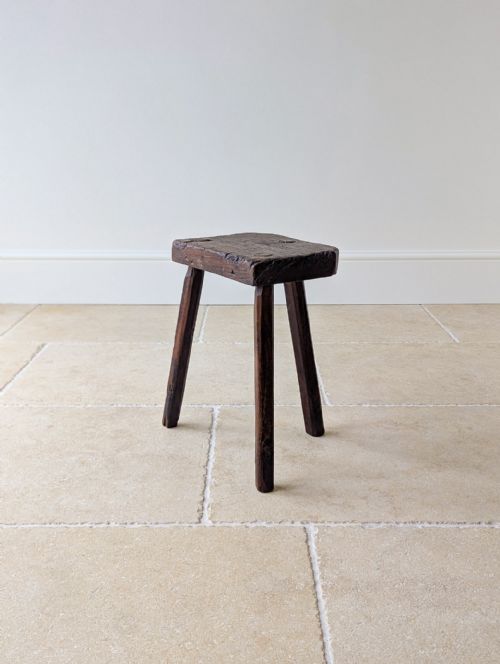
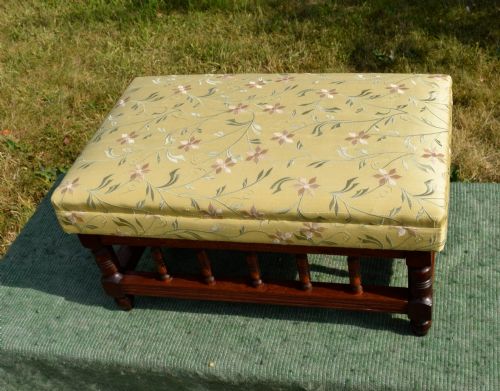
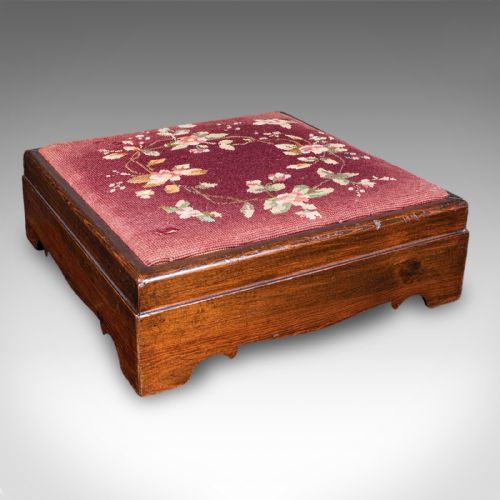
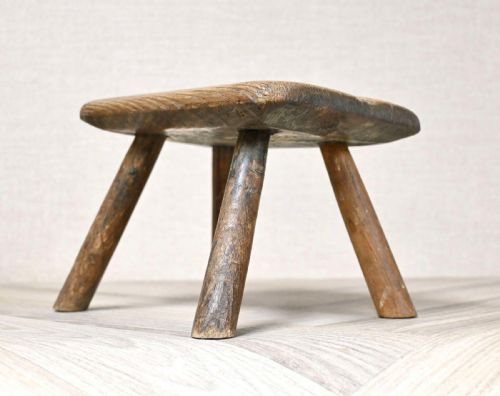
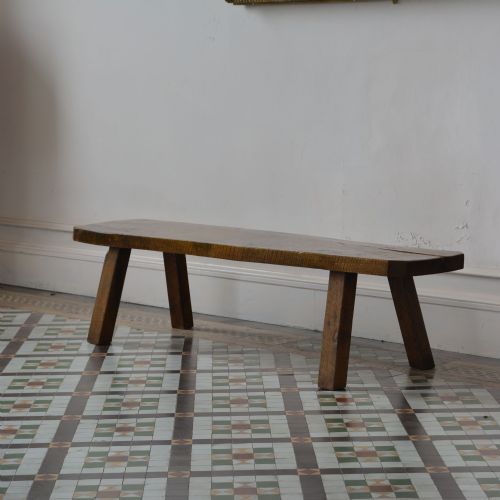
The form encompasses simple three-legged milking stools, heavy joint stools, and low footstools meant for fireside seating. These utilitarian pieces prioritise function over ornament, reflecting the practical needs of rural life.
How they were made
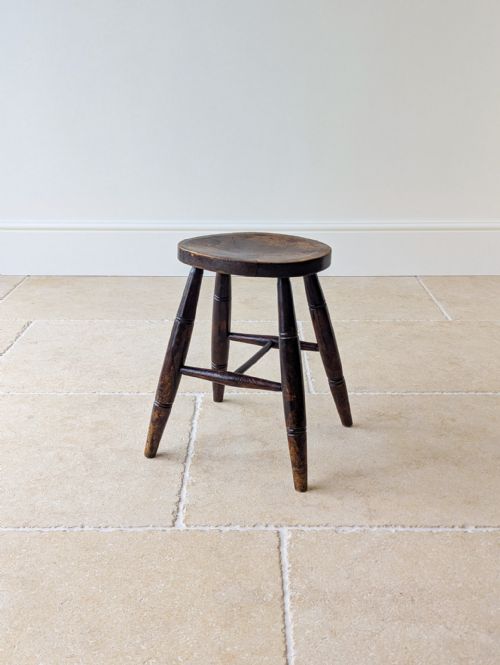
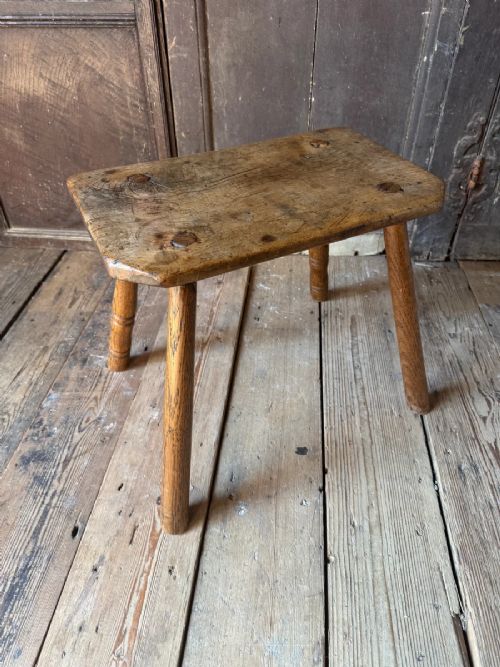
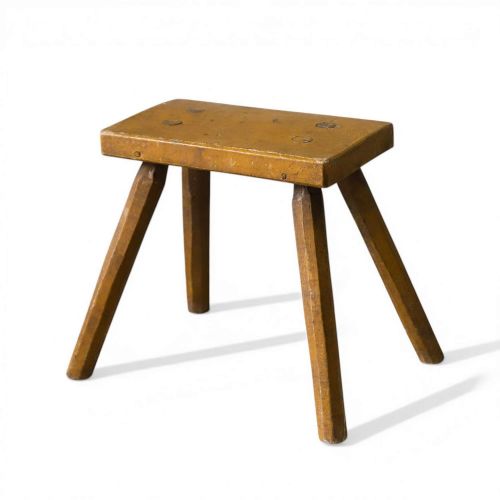
Maker-craftsmen utilised durable native timbers such as oak, elm, ash, and pine, selecting woods that could withstand heavy daily use. Seats were often shaped from single blocks of elm or sycamore, while legs were commonly turned or cleft and wedged directly into the seat underside.
Joint construction relies on traditional pegged mortise and tenon joints, particularly in heavier oak joint stools. Surfaces show the honest marks of draw-knives, adzes, and lathes rather than factory standardisation.
Periods represented span from the eighteenth century through the Georgian, Victorian, and Edwardian eras up to the early twentieth century.
What varies in quality
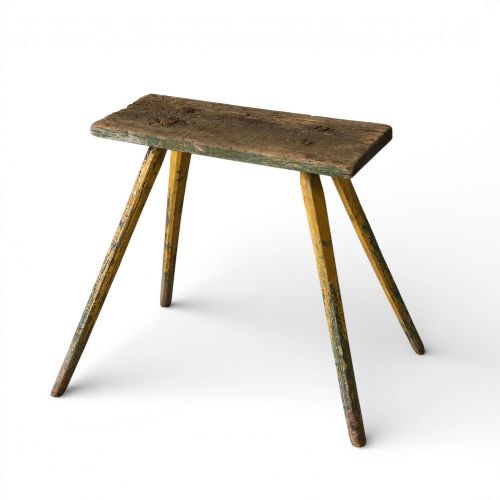
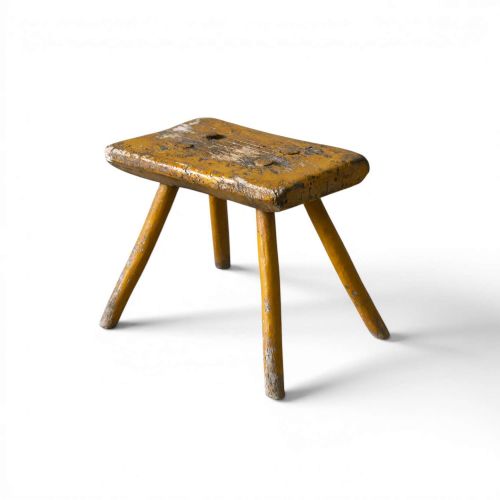
Quality rests in the integrity of the timber, the retention of original surface patination, and structural honesty. Untouched surfaces bearing years of genuine wear and original paint finish command greater appreciation than stripped or heavily restored examples.
Proportion and construction methods also separate standard utility items from finer vernacular work. Well-turned legs, balanced seating slabs, and tight, original joints indicate superior regional craftsmanship.
The Country Low Stool Glossary
- Joint stool
- A sturdy wooden stool constructed with mortise and tenon joints pegged together rather than glued. These pieces served versatile seating and utility roles in early households.
- Milking stool
- A small, usually three-legged seat designed for use while milking livestock. Their tripod design ensured stability on uneven floors.
- Vernacular
- Objects made by local craftsmen following regional traditions rather than high-style academic designs. This term describes honest, unpretentious domestic items.
- Patina
- The surface sheen and colour developed over decades through handling, waxing, and ageing. Good patination is a hallmark of genuine historical age.
Country Low Stool: Frequently Asked Questions
What were country low stools used for?
These low seats served practical daily functions around the farmhouse, dairy, and hearth. People used them for milking animals, working near the fire, or reaching low shelves.
Their compact size made them easily movable to wherever a spare seat was needed during chores.
How do I date an old stool?
Dating relies on examining the tool marks, timber species, and construction methods used by the maker. Hand- cleft wood and primitive pegging often point towards earlier eighteenth-century origins.
Later nineteenth-century pieces may show the use of commercial lathes or softer pine timbers, though vernacular traditions persisted long.
Where should I place a low stool at home?
Their low profile suits placement beside a fireplace, at the foot of a bed, or as a small side table for books. They also work well in hallways for putting on shoes.
Keep them away from direct heat sources to prevent the old timber from drying out and splitting.
Are painted finishes original on these stools?
Some pieces retain early or original painted surfaces, particularly continental milking stools finished in ochre, yellow, or green pigments. Original paint adds significant character and historical value.
Careful inspection reveals whether paint layers are contemporary to the piece or applied much later.