
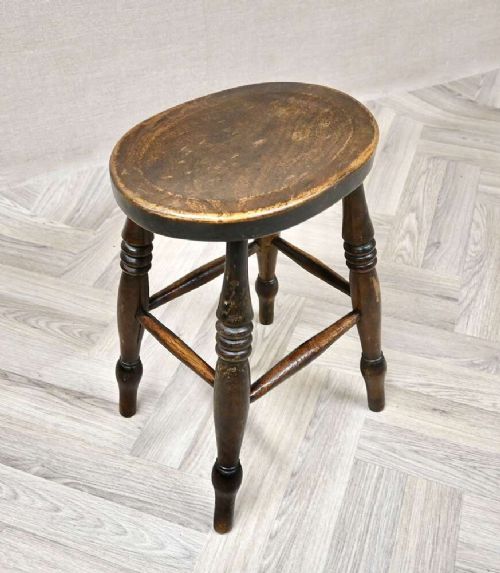
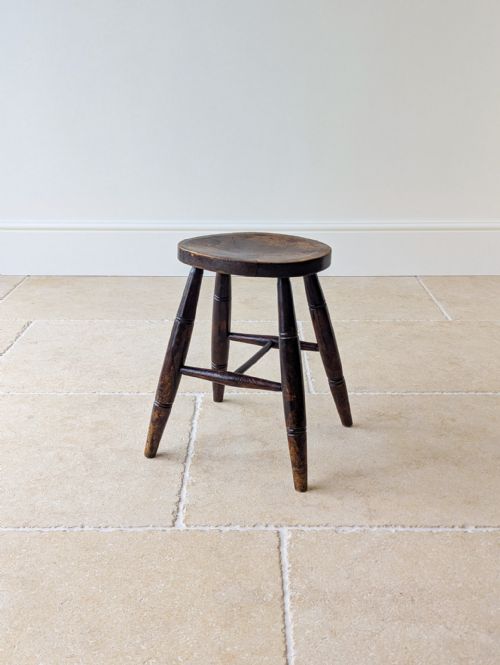
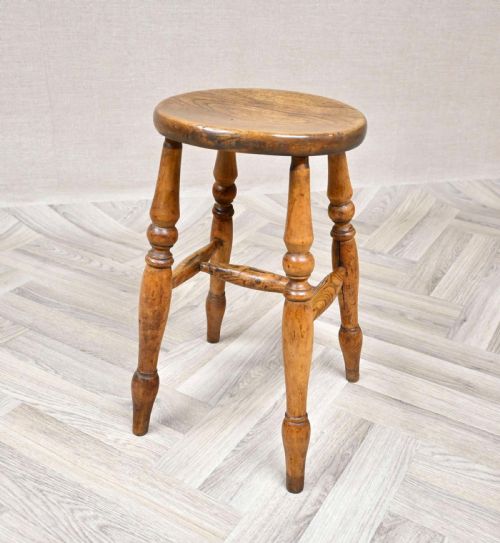
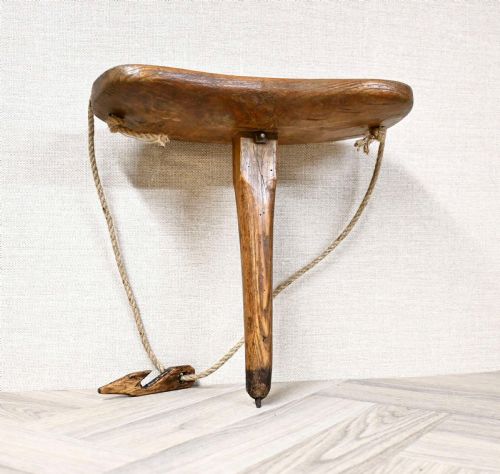


Traditional Oak Milking Stool
These traditional oak milking stool examples are honest pieces of vernacular furniture valued for their robust utility and rustic charm.
Traditional Oak Milking Stool
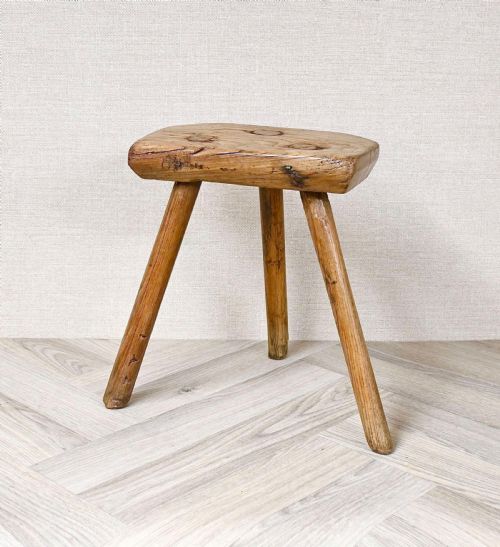
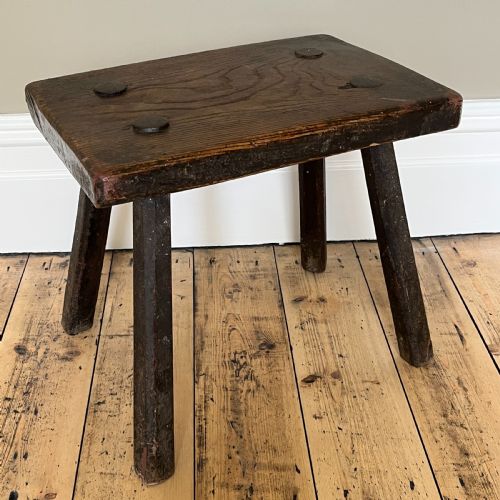
A traditional oak milking stool represents the utilitarian seating once used in rural dairies and farmhouses. Buyers searching for this phrase typically find robust, unpretentious items designed for daily agricultural work rather than formal drawing rooms.
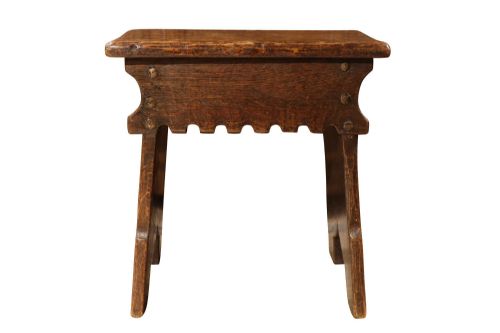
The pieces appearing on this page span several centuries, reaching from the eighteenth century through the Victorian era and into the early twentieth century. Alongside oak, you encounter vernacular seating constructed from elm, ash, beech, pine, and mixed hardwoods.
Forms vary from simple three-legged tripod bases and unusual single-leg designs to five-plank constructions and Windsor-style seats. These sturdy items served multiple domestic and agricultural purposes around the hearth and the farmyard.
How they were made
Maker-craftsmen utilised whatever local timber was readily available, frequently combining solid oak tops with ash or elm legs. Traditional pegged construction secured the joints without complex metal hardware.
Tops were shaped from solid timber blocks or thick planks, sometimes featuring circular or oval profiles shaped with drawknives and adzes. Legs were often turned on simple lathes or shaved by hand and wedged firmly into bored socket holes.
What varies in quality
Quality rests in the integrity of the construction and the honesty of the wear. Pieces retaining their original pegging and untouched patination command greater appreciation than those heavily restored or altered.
Proportion and timber selection also distinguish individual items. Well-balanced tripod stances and richly grained hardwood tops set apart superior vernacular examples.
The Traditional Oak Milking Stool Glossary
- Vernacular furniture
- Everyday objects made by local craftsmen for practical use rather than following high-style academic designs.
- Tripod
- A three-legged base construction ensuring stable placement on uneven floors.
- Pegged construction
- A method of joining wooden components using tight wooden dowels instead of metal nails or modern adhesives.
- Adze
- A traditional cutting tool used for shaping and hollowing wooden seat tops.
- Windsor
- A style of seating featuring turned legs and spindles socketed directly into a solid wooden seat.
Traditional Oak Milking Stool: Frequently Asked Questions
Are these stools actually for milking?
Many low three-legged forms were indeed taken into the dairy or field for milking cows by hand. Others served as general low seating around the farmhouse hearth.
Over time, their sturdy build made them useful for various household tasks where a low, movable seat was practical.
How do I date an old stool?
Dating relies on examining tool marks, timber shrinkage, construction methods, and overall wear patterns. Eighteenth and nineteenth-century examples show hand-tool working methods distinct from later production.
Nail types, peg construction, and the type of wood used also offer solid clues to the period of origin.
How should I clean a wooden stool?
Maintain the surface by dusting with a dry cloth and occasionally applying a suitable wax to nourish the dry timber. Avoid harsh modern cleaning agents that strip the historic patination.
Keeping the piece away from direct heat sources prevents the old oak and elm from splitting.
Why do some have three legs?
Three-legged stools sit firmly on uneven stone or earth floors without wobbling. This practical design choice was essential for rural farmhouses and dairy environments.
Four-legged variants appear frequently too, often reserved for more even indoor flooring.