



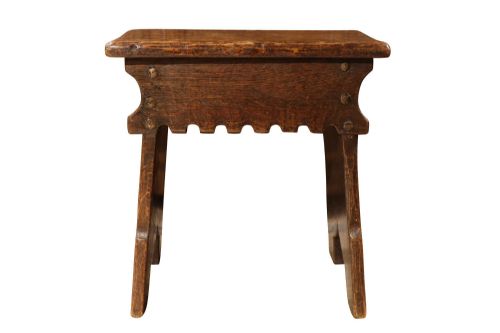


Arts Crafts Oak Stool
An arts crafts oak stool brings honest timber and simple hand-carved joinery directly into a room.
Arts Crafts Oak Stool
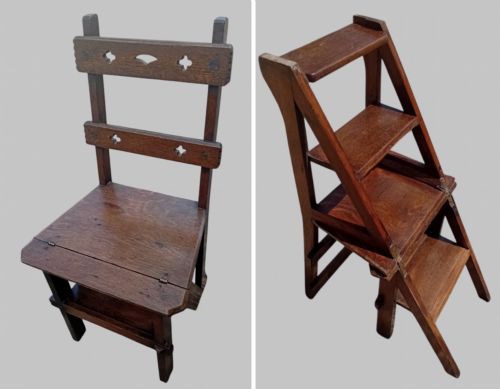
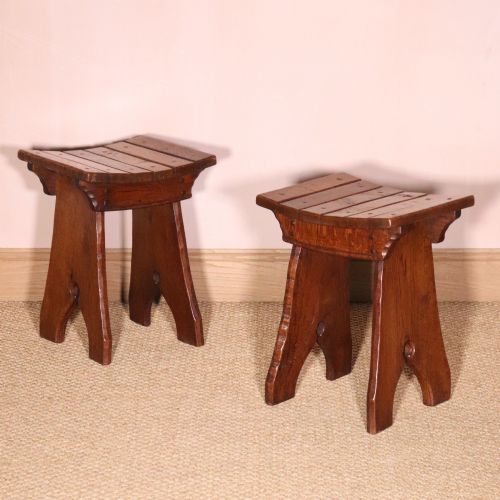
An arts crafts oak stool stands for utility combined with thoughtful vernacular design, shaped across the late nineteenth and early twentieth centuries. Pieces matching this description appear in forms ranging from simple joint stools and low footstools to saddle-seated and rush-topped examples.
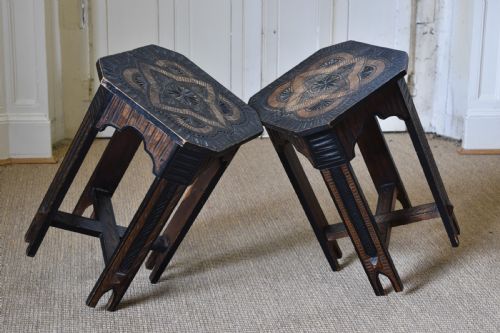
The variations span simple pegged construction to elaborate chip carving and Celtic revival motifs. Buyers frequently encounter pieces linked to regional workshops or larger retail houses of the period.
How they were made
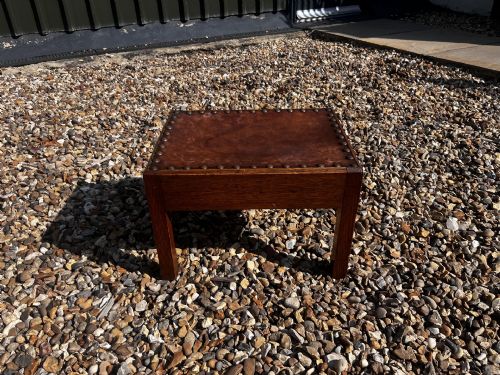
Makers relied primarily on solid oak, often complemented by secondary timbers like elm, alongside supportive elements in leather, rush, cane, and brass. Construction methods prioritised traditional pegged joints, dovetailing, and sturdy framing rather than mass-produced metal fixings.
Surface ornamentation involved chip carving, Celtic patterns, and simple chamfering to highlight the natural grain and texture of the wood.
Some workshops added hidden compartments and carved animal motifs, turning a modest seat into a secret box.
What varies in quality
The standard of an arts crafts oak stool rests on the integrity of its timber selection and the precision of its handmade joints. Examples displaying well-considered proportions, crisp hand-carving, and original materials like leather or rush sit at the upper end of the scale.
Simpler workshop output or later revival adaptations show less refined chisel work and more standardised framing, reflecting different tiers of period production.
Arthur Simpson of Kendal·Jack Grimble·David Oakleafman Langstaff·Liberty and Co
The Arts Crafts Oak Stool Glossary
- Joint stool
- A traditional wooden stool constructed with mortise and tenon joints held together by wooden pegs. These pieces typically feature rectangular tops and four straight legs.
- Cotswold School
- A twentieth-century design movement focusing on handcrafted furniture that values visible construction and local materials. Pieces often display understated forms and honest execution.
- Saddle seat
- A wooden seat carved with a scooped or concave surface to fit the body. This technique appears on specific seating forms intended for comfort without upholstery.
- Chip carving
- A decorative technique where small chips of wood are removed from the surface to create geometric or organic patterns. It requires a steady hand and sharp gouges.
- Pegged construction
- A method of joining wooden components using dowels inserted through pre-drilled holes. This technique avoids modern metal screws and accommodates natural wood movement.
Arts Crafts Oak Stool: Frequently Asked Questions
How do I identify a genuine period piece?
Examine the timber for depth of grain, patination, and construction methods such as pegged joints rather than modern screws. Period pieces show tool marks and hand-finished surfaces consistent with early twentieth-century workshop practices.
Compare the proportions and carving style against documented examples from regional schools and known makers of the era to confirm authenticity.
What materials were used for the seats?
Original seating surfaces include solid oak boards, woven rush, split cane, and tensioned leather. Many incorporate woven or pegged elements designed to flex with daily use.
Replacements or restorations are common on softer materials like leather or rush, so check whether these elements show appropriate age.
Where should I place a low stool in a modern room?
These compact pieces function well as impromptu seating beside low tables, as footstools near armchairs, or as surfaces for plants and books. Their neutral wood tones integrate easily into both traditional and contemporary interiors.
Keep them away from direct heat sources and strong sunlight to protect the natural timber and original finishes.
How do Cotswold School pieces differ from standard ones?
Cotswold School furniture emphasises unpretentious design, exposed construction details, and a close connection to traditional craft guilds. The emphasis rests on the natural qualities of the oak rather than heavy applied decoration.
Standard commercial items from the same period often rely on machine-cut mouldings and historical revival styles like Jacobean or Gothic.