



Four Leg Wooden Stool
These four leg wooden stool examples offer sturdy everyday seating rooted in centuries of rural craft and domestic utility.
Four Leg Wooden Stool
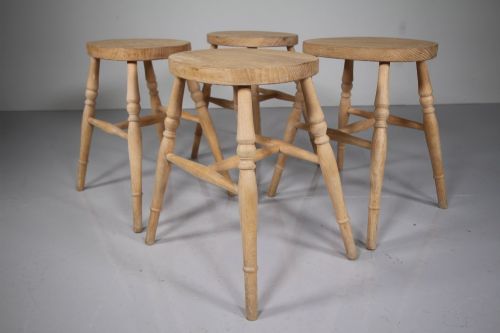
A four leg wooden stool serves as a compact seat found across domestic, farm and hearth settings. When you search for a four leg wooden stool, you encounter forms ranging from low kitchen and dining designs to early hearth stools. Pieces span the eighteenth, nineteenth and early twentieth centuries, drawing on Georgian, Edwardian and rustic vernacular traditions.
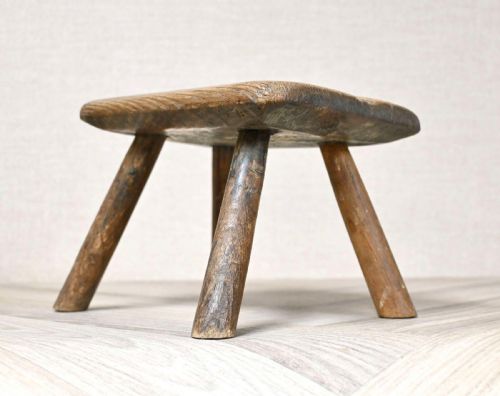
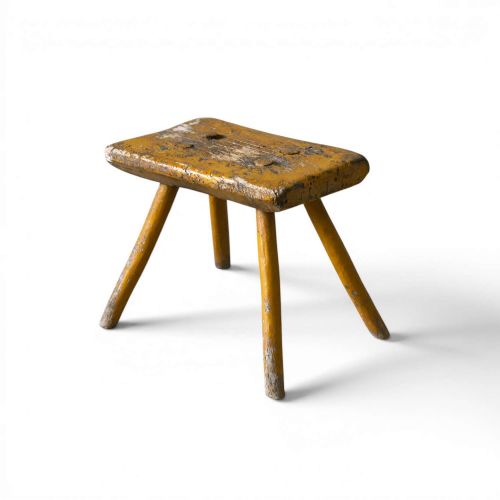
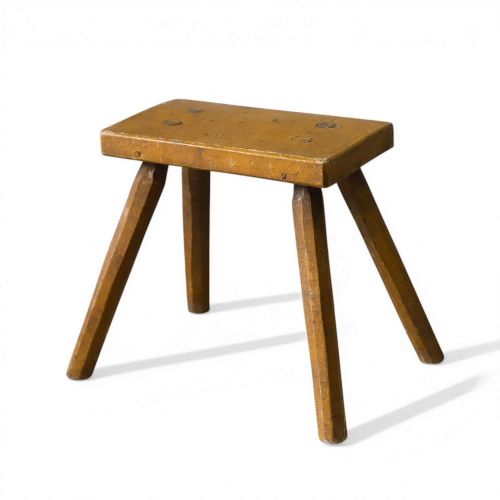
The pieces on this page lean heavily towards country workshops and vernacular traditions rather than formal urban cabinetmaking. You meet simple oak and elm seats alongside painted Eastern European milking stools and diminutive carved examples. Their forms remain straightforward, prioritising utility around the hearth, kitchen or dairy.
Construction and materials
Timbers like oak, elm, yew wood, beech and pine form the core of these pieces, often utilised in solid form for seats and legs. Makers selected local hardwoods and softwoods depending on regional availability and the intended function of the seat. Surfaces frequently display natural grain or retain original ochre and yellow paint finishes.
Joinery methods rely on traditional pegged or wedged joints that secure the legs directly into the underside of the seat. Many examples show hand-sculpted rounded tops shaped with drawknives or adzes to provide comfort without upholstery.
Four Leg Wooden Stool Retail Price Guide 2026
Typical asking prices for four leg wooden stool among the pieces listed under this phrase on Sellingantiques today, from the lower quarter to the upper quarter. They describe what is for sale here now, not the wider market.
Regional variants span English country workshops and Eastern European milking forms with original ochre and yellow paint.
Assessing quality
Quality rests in the integrity of the timber, the subtlety of the seat shaping and the retention of original surface finishes. A piece with a deeply sculpted seat and untouched original paint carries greater character than a stripped down or heavily restored equivalent.
Proportion and balance dictate the presence of a superior vernacular object. Sturdiness in the leg joints without excessive modern intervention preserves the honest utility intended by the original rural maker.
The Four Leg Wooden Stool Glossary
- Vernacular
- Objects made by local craftsmen for everyday use rather than following high-style academic designs. These pieces reflect regional traditions and available materials.
- Hearth stool
- A low seat positioned near the fireplace for warmth or tending the fire. They often feature robust timber construction to withstand heat and daily proximity to the hearth.
- Milking stool
- A small, portable seat traditionally used by dairy workers. They typically feature three or four legs and a compact seat for stability on uneven ground.
- Primitive
- A descriptive term for early or rustic furniture lacking sophisticated decorative flourishes. The construction focuses entirely on practical utility.
Four Leg Wooden Stool: Frequently Asked Questions
What rooms suit a four leg wooden stool?
These pieces fit naturally into kitchens, hallways or beside a fireplace as flexible extra seating or small display surfaces. Their compact footprints allow them to tuck easily beneath tables or into corners.
Because they originate from rural and domestic traditions, they complement both traditional period interiors and simpler modern spaces that benefit from natural wood textures.
How do I care for antique timber stools?
Keep wooden seats away from direct heat sources and dramatic humidity shifts to prevent the timber from splitting. Regular dusting with a dry cloth maintains the surface.
Avoid harsh chemical cleaning products, particularly on pieces that retain traces of original paint or natural wax finishes. A gentle application of beeswax helps nourish dry wood over time.
How do I distinguish eighteenth century pieces?
Early examples from the eighteenth century typically exhibit hand-carved tool marks, pegged joinery and dense, aged timber patination. The wear patterns reflect generations of domestic use.
Later nineteenth and twentieth century pieces often incorporate standardised turnings or machine-sawn components alongside traditional hand-shaping methods.
Are painted finishes usually original?
Original paint surfaces show natural wear, craquelure and integration with the underlying timber consistent with age. Pigments like ochre and yellow indicate specific regional traditions.
Later overpainting can sometimes conceal earlier layers, so examining the edges and underside helps determine the true age of the surface coating.