

Country Ladderback Chairs
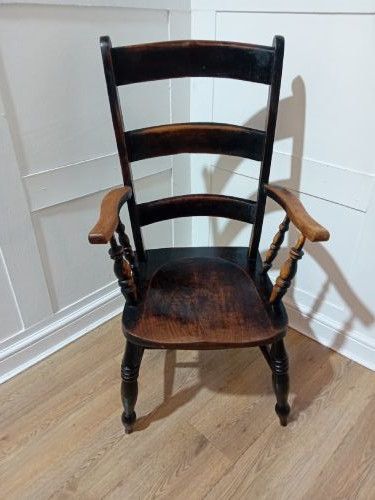
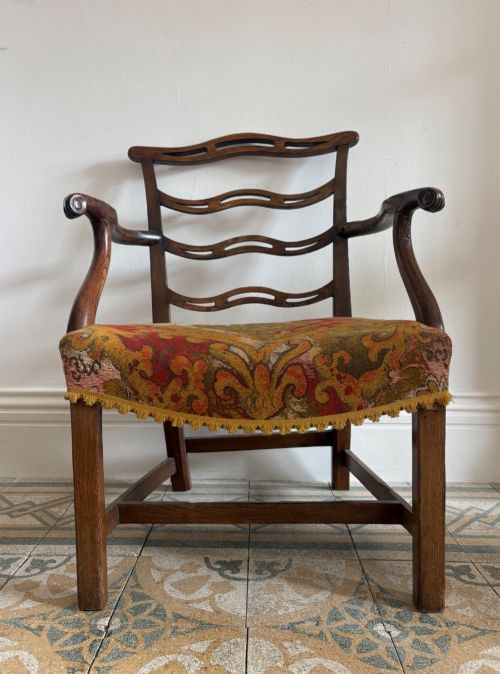
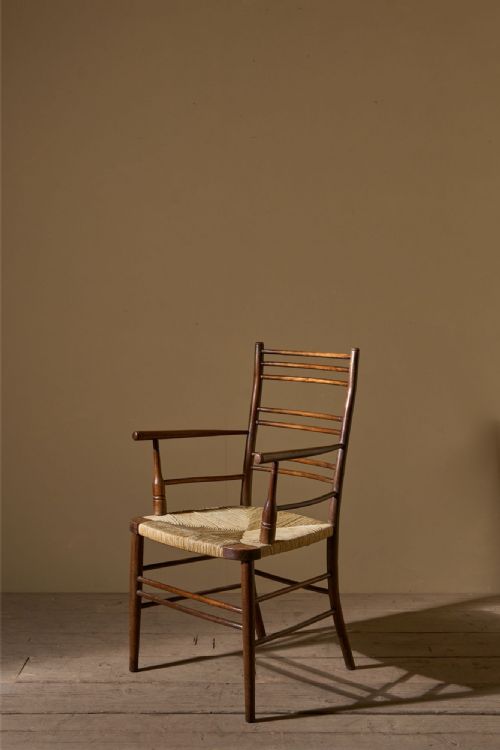
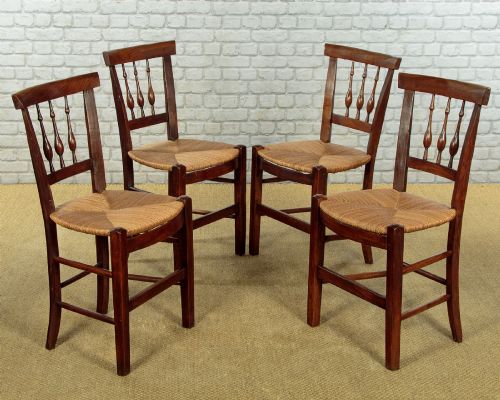
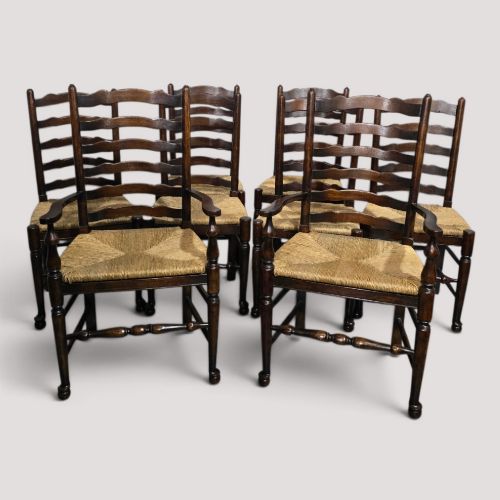
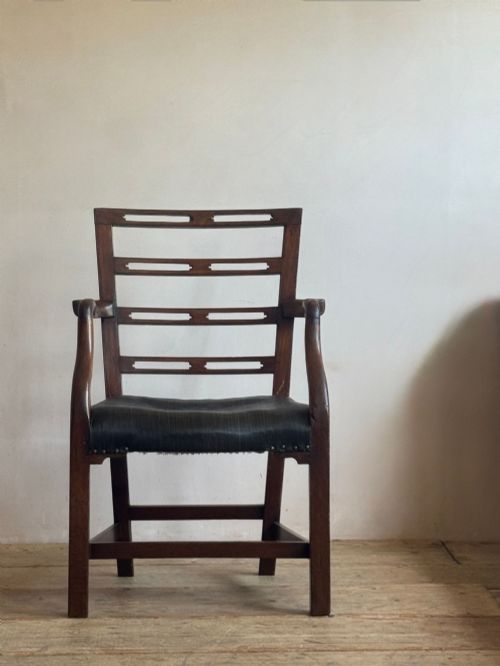
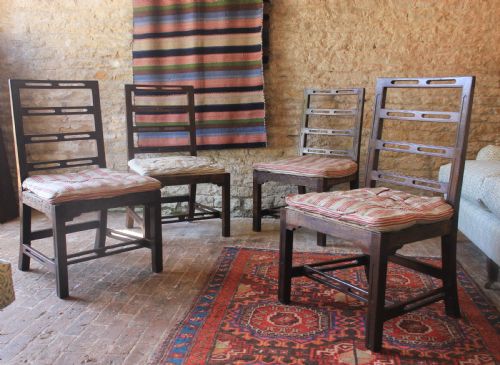
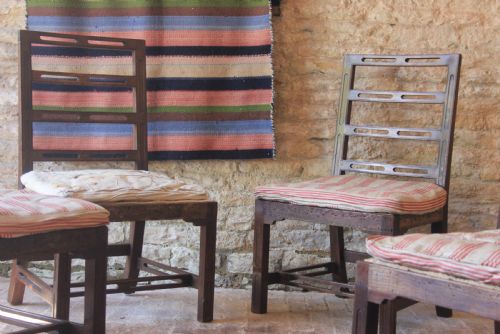
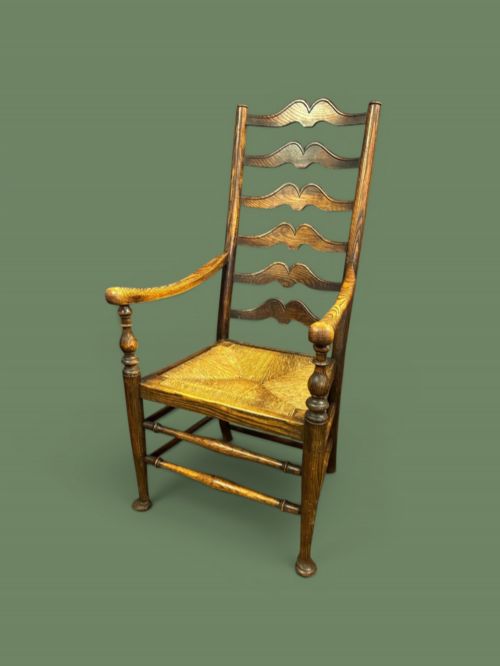
Country ladderback chairs are traditional vernacular seating pieces defined by horizontal slat backs and woven seats, offering timeless rustic character and robust construction.

Country Ladderback Chairs
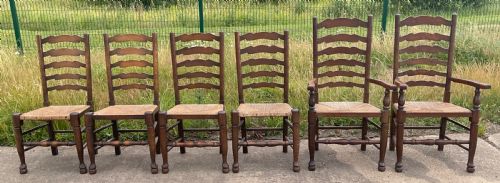
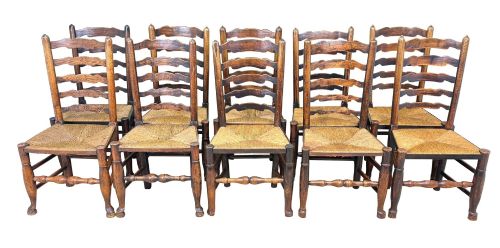
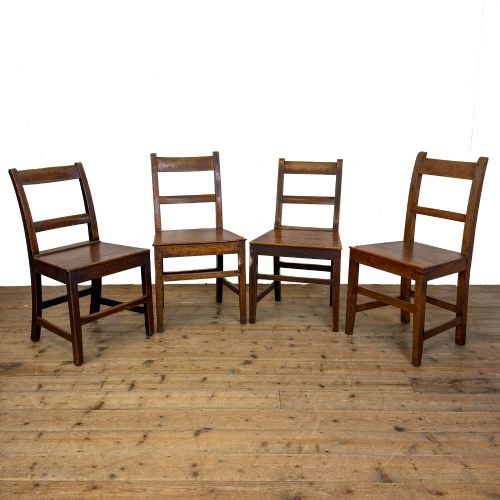
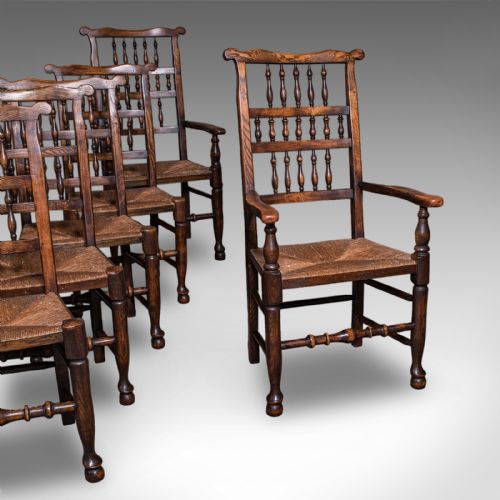
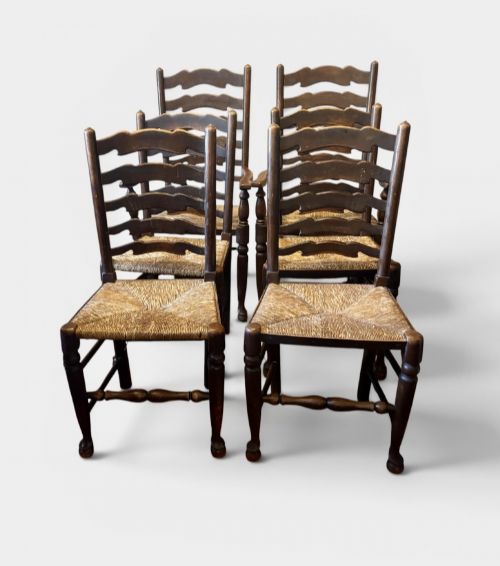
When you search for country ladderback chairs, you encounter regional forms spanning the eighteenth, nineteenth, and early twentieth centuries. These traditional seats range from single side chairs to large sets of dining chairs and carvers.
The versions most frequently seen on this page originate from English, Irish, Welsh, and Scottish workshops, utilising local timbers such as oak, ash, elm, and beech. Makers constructed them primarily for everyday domestic use in farmhouses and cottages.
Beyond standard dining chairs, the category encompasses armchairs, rocking chairs, high chairs, and settees. Many feature woven rush, straw, or tape seats designed to provide durable comfort.
Materials and Construction
Craftsmen built these chairs using a combination of turned wood frames and flexible seating materials. Ash, beech, and elm supplied the resilient turned uprights and horizontal slats, while oak and mahogany appeared in select regional variants.
Seats were traditionally woven from rush, split cane, or plaited straw, known locally as súgán, and secured around wooden rungs. Carpenters utilised green wood turning and mortise and tenon joints to ensure structural endurance under daily strain.
Listings feature eighteenth and nineteenth-century regional ladderback forms constructed from native hardwoods like oak, ash, elm, and beech.
Assessing Quality and Character
Quality in these vernacular pieces rests upon the integrity of the frame construction and the retention of original surfaces. Chairs retaining their early painted finishes or rich untouched patina command greater appreciation than heavily stripped examples.
The subtlety of the ladder slat turnings and the tightness of the original rush or straw weaving differentiate standard vernacular output from finer regional craftsmanship. Uniformity across larger sets also distinguishes superior matching groups from assembled harlequin collections.
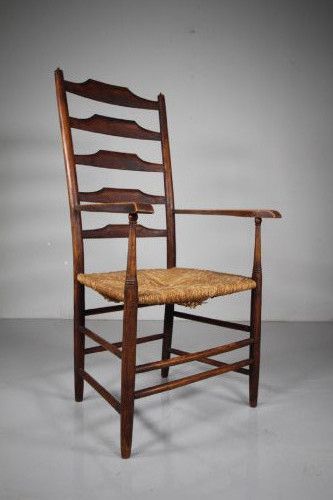
Philip Clissett
The Country Ladderback Chairs Glossary
- Ladderback
- A chair style featuring a backrest composed of multiple horizontal wooden slats or rails. These rails are often curved or shaped to fit the contour of the sitter's back.
- Rush seat
- A seating surface woven from dried marsh rushes twisted into cords. This traditional technique yields a flexible, durable pad supported by the chair frame.
- Harlequin set
- A collection of chairs that match in general style and period but vary slightly in minor details. Such sets were often assembled over time from individual pieces.
- Carver
- An armchair designed with armrests, traditionally placed at the head of a dining table. Pairs of these often accompanied larger sets of single side chairs.
- Súgán
- An Irish term for twisted straw or hay used to weave vernacular chair seats. This material provides a rustic, textured surface common in traditional regional seating.
Country Ladderback Chairs: Frequently Asked Questions
How do I date an old ladderback chair?
Dating relies on examining the turning style of the uprights, the construction joints, and the wear patterns on the wood. Earlier eighteenth-century examples often display hand-carved elements and heavier timber sections.
Later nineteenth and twentieth-century versions introduce machine-turned components and standardised dimensions. Comparing the timber species and regional characteristics helps narrow down the decade of production.
Are rush seats durable for daily use?
Traditional rush seats are surprisingly sturdy and withstand regular seating if kept in dry indoor environments. The natural fibres flex with weight and distribute pressure evenly across the frame.
Avoid exposing them to excessive moisture, which can rot the natural plant fibres. With proper care, an original or restored rush weave lasts for decades of everyday dining.
What is a harlequin dining set?
A harlequin set consists of chairs that share a similar period, timber, and ladderback design but are not from the exact same original workshop batch. Country furniture was frequently gathered in this manner as households acquired pieces over time.
These sets offer a cohesive aesthetic while displaying charming individual variations in turning and grain. They provide a practical solution for buyers seeking larger dining arrangements.
How should I care for antique wood finishes?
Maintain antique wooden surfaces by dusting regularly with a soft, dry cloth and applying traditional beeswax periodically. Avoid modern silicone sprays or harsh chemical cleaners that can degrade the historic patina.
Keep the chairs away from direct heat sources and dramatic humidity fluctuations to prevent the timber from warping or splitting. Gentle upkeep preserves the natural sheen developed over centuries of use.