


Turned Leg Ladderback Chairs
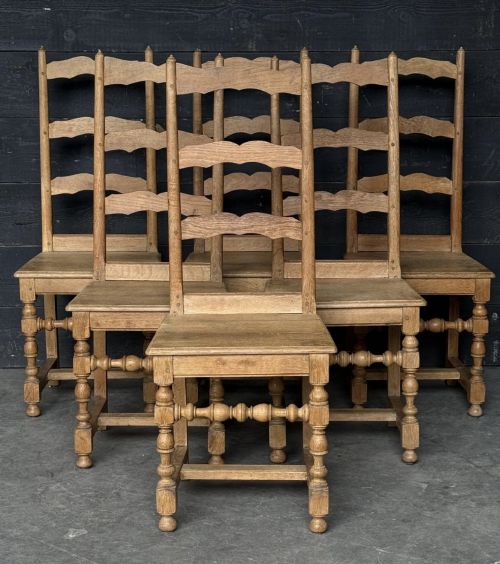
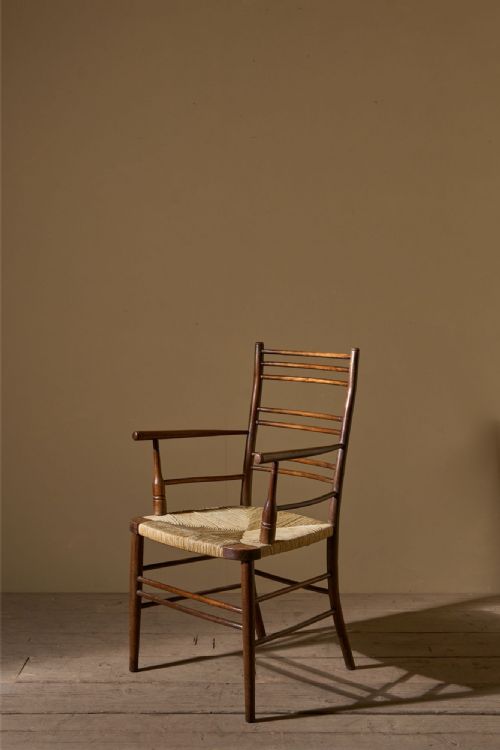
Turned leg ladderback chairs are robust vernacular seats defined by horizontal rungs and lathe-turned supports, offering rustic character and enduring utility.

Turned Leg Ladderback Chairs
Turned leg ladderback chairs bring traditional country character to dining spaces through structured slat backs and turned wooden supports. When you search for turned leg ladderback chairs, you encounter seating built for functional longevity across multiple generations.
The pieces listed here span the nineteenth century, the Regency era, and the early twentieth century, taking the form of both single dining chairs and armchairs. You will frequently find sets alongside smaller pairs or harlequin groupings.
Stylistic influences range from English country and rustic farmhouse to Arts and Crafts vernacular. Elm and oak provide the primary structural frameworks for these regional forms.
How they were made
Cabinet makers utilised native hardwoods such as oak, elm, ash, and beech to construct the frames, turning the legs on a lathe for structural stability and decorative profile. Horizontal slats form the characteristic ladder backs, steam-bent or shaped to support the sitter.
Traditional seating surfaces employ woven rush or upholstered pads finished in fabric, leather, or brass detailing. These organic materials are secured directly to the wooden seat frames using time-honoured joinery methods.
Elm was chosen for seats because its interlocking grain resists splitting when heavy farmers sat down hard after dinner.
What varies in quality
The distinction between standard utility seating and finer examples rests in the selection of timber and the precision of the lathe turning. Selected hardwoods exhibit tighter grain patterns and superior structural integrity over centuries of use.
Original woven rush seats demand skilled hand-craftsmanship that elevates the piece above later replacements. The harmony within a harlequin set or a matched group influences the overall desirability of the seating.
The Turned Leg Ladderback Chairs Glossary
- Ladderback
- A chair style featuring multiple horizontal wooden slats between the upright rear posts. This design descends from centuries of traditional vernacular furniture making.
- Rush
- Dried marsh grass twisted into cord and woven tightly to form a durable seating surface. It provides a flexible and supportive base for traditional dining chairs.
- Harlequin set
- A collection of chairs that share a similar style, period, or form but were not originally manufactured as a single matched set. Collectors often assemble these groups for a traditional dining arrangement.
- Vernacular
- Everyday furniture built by local craftsmen using regional timbers rather than following high-style metropolitan fashions. These pieces prioritise practical function and local utility.
Turned Leg Ladderback Chairs: Frequently Asked Questions
How do I date a ladderback chair?
Dating relies upon timber selection, tool marks, and construction techniques visible beneath the frame. Earlier pieces often display hand-split components and distinct wear patterns.
Design details such as the profile of the turned legs and the joinery methods help narrow the period of manufacture between the nineteenth and early twentieth centuries.
Are these chairs suitable for daily dining?
These robust country chairs were originally built for heavy daily use in kitchens and farmhouses. Their solid wood construction handles regular seating well.
Consider the height and depth of the seat relative to modern dining tables. Rush and upholstered pads offer comfortable support for everyday meals.
How do I care for rush seats?
Keep woven rush surfaces dry and protect them from direct sunlight to prevent the natural fibres from becoming brittle. Occasional gentle dusting maintains the material.
Avoid excessive moisture during cleaning, as dampness can weaken the twisted grass strands and compromise the integrity of the weave.