





Traditional Ladderback Armchair
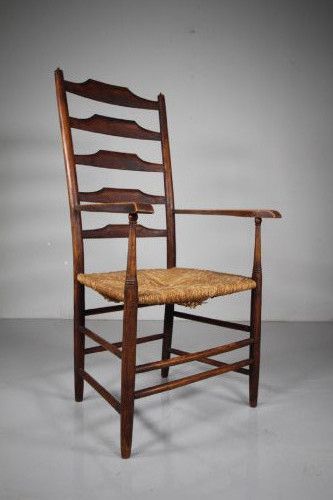
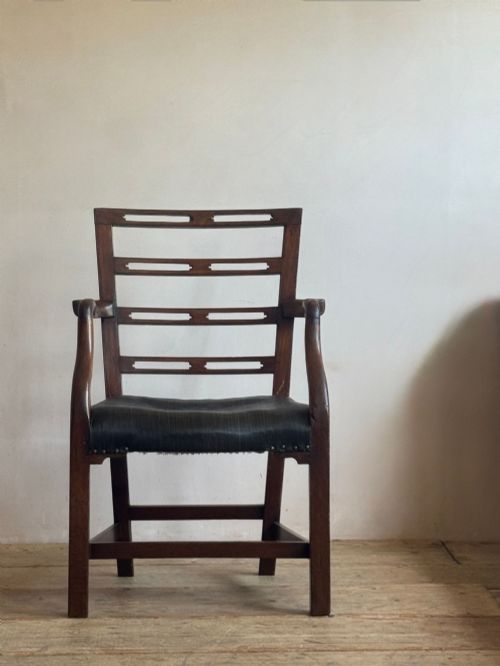
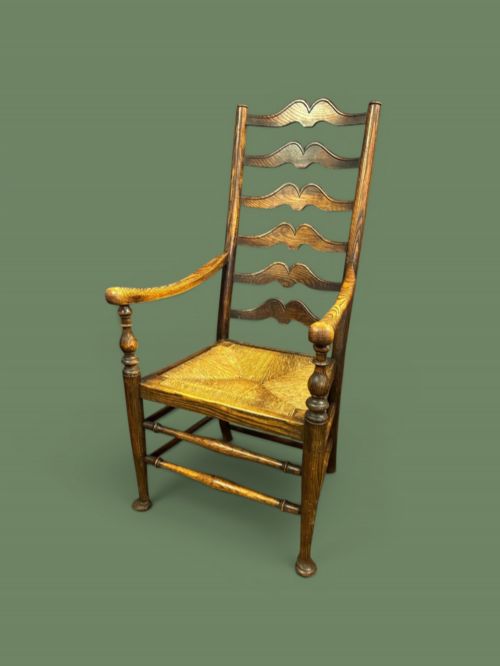
A traditional ladderback armchair brings sturdy regional vernacular woodwork into daily use, offering upright timber slats and woven seating.
Traditional Ladderback Armchair
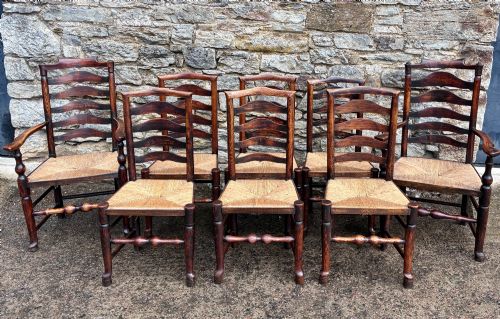
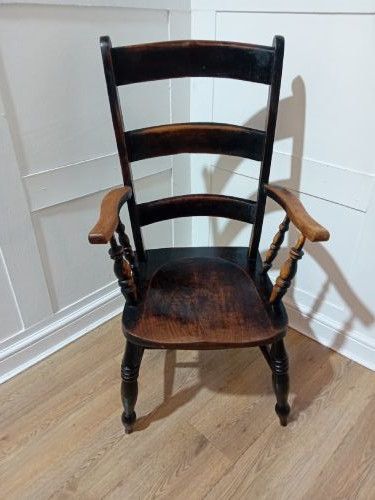
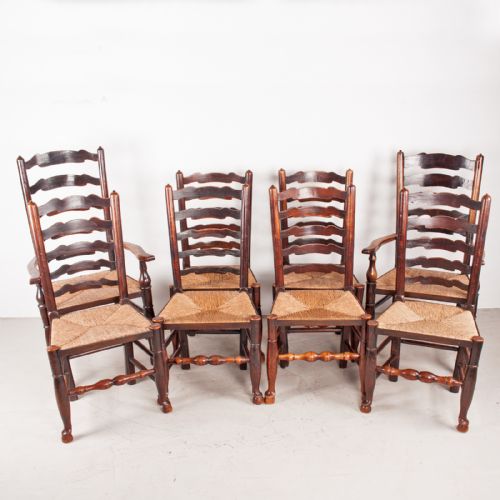
The version most commonly met on this page is the country armchair made from regional timbers like ash, elm, oak, and beech. These pieces often incorporate rush or sea grass seats, reflecting centuries of utilitarian domestic furniture production in England.
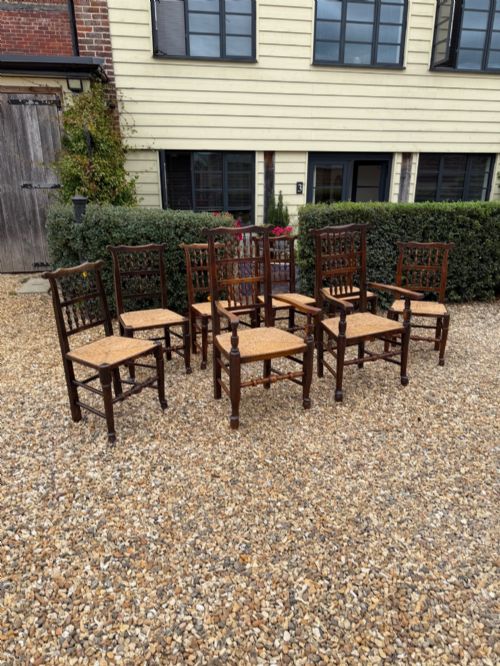
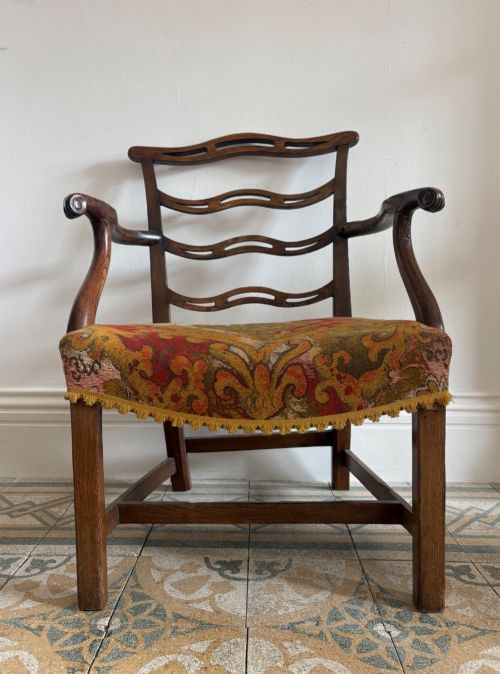
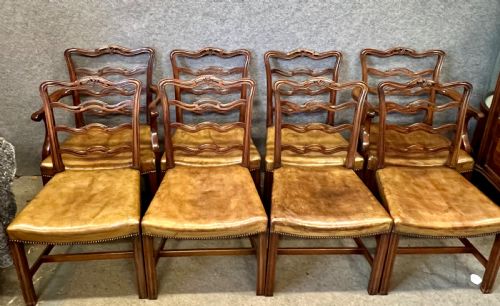
Makers and workshops varied from rural bodgers to known studios, producing armchairs, carvers, and rocking chairs. The listings show forms ranging from heavy solid kitchen seating to lighter Chippendale revival dining chairs.
Materials and construction
Makers utilised native hardwoods such as ash, elm, and oak for frames, turning uprights on lathes and steam-bending horizontal slats. Beech and mahogany also appear in later revival pieces and formal dining carvers.
Seats rely on traditional woven materials, predominantly rush and sea grass, twisted and patterned by hand across the open frame. Some regional variations employ fabric, leather, or tapestry inserts dropped into the wooden rebates.
Listings span multiple centuries of production, recording regional timber choices from eighteenth-century ash and elm to twentieth-century oak and beech.
Judging build and finish
Quality rests in the integrity of the timber framing and the tightness of the joinery between posts and slats. Well-made examples retain original surface finishes, from painted ash to aged polished elm, without excessive timber replacement.
The durability of the rush or sea grass seating determines longevity, with tightly woven organic cordage outlasting loose modern repairs. Proportional balance across the arms and the rhythmic graduation of the ladder slats separate standard utility chairs from finer vernacular pieces.
Philip Clissett·Dicon Nance·Liberty & Co
The Traditional Ladderback Armchair Glossary
- Ladderback
- A chair design characterised by horizontal wooden slats fitted between the rear upright posts. These slats provide back support and often feature curved or shaped profiles.
- Carver
- An armchair designed to match a set of dining side chairs, usually positioned at the head of a table. These pieces feature supportive armrests integrated into the primary frame.
- Rush
- Dried marsh grass utilised for weaving traditional chair seats. This flexible material creates a durable, textured surface across an open wooden frame.
- Vernacular
- Regional furniture built by local craftsmen to satisfy practical domestic needs rather than following strict metropolitan design rules. These pieces utilise locally sourced timbers.
- Spindle back
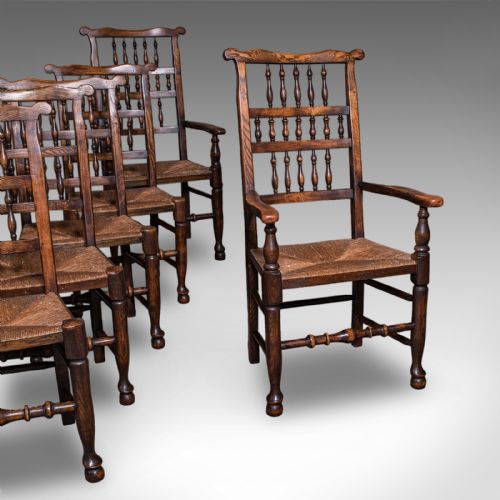
- A seating variation featuring multiple slender turned vertical wooden rods in the backrest rather than horizontal slats. This construction lightens the visual weight of the frame.
Traditional Ladderback Armchair: Frequently Asked Questions
How do I date a ladderback armchair?
Dating relies on observing timber species, turning styles on the posts, and construction methods. Earlier examples often display hand-turned ash or elm with pegged joints.
Later pieces from the Arts & Crafts period or the twentieth century show cleaner lathe work and standardised components. Comparing the wear patterns on the feet and arms also helps establish age.
Are rush seats durable for daily use?
Traditional rush seating is surprisingly resilient and supports regular daily sitting when kept in stable indoor conditions. Natural marsh grass flexes slightly under weight without losing its tension.
Moisture remains the primary hazard for organic cordage, so these chairs perform best away from damp environments. Periodic waxing of the wooden frame helps preserve the overall structure.
What is a country carver chair?
A country carver is an armchair designed with wooden armrests, historically placed at the ends of a dining table. These seating options mirror the design of simpler side chairs in the set.
Vernacular carvers offer sturdy timber frames built for daily kitchen or dining use. They provide wider seating proportions compared to standard side chairs.
Can I use these chairs at a desk?
Many sturdy armchairs and low ladderback designs function effectively as desk or occasional chairs. Their supportive armrests and upright postures suit seated writing tasks.
Checking the seat height against a modern desk ensures comfortable knee clearance. Solid timber and rush construction provides stable support for workspace use.