



Woven Rush Seat Armchair
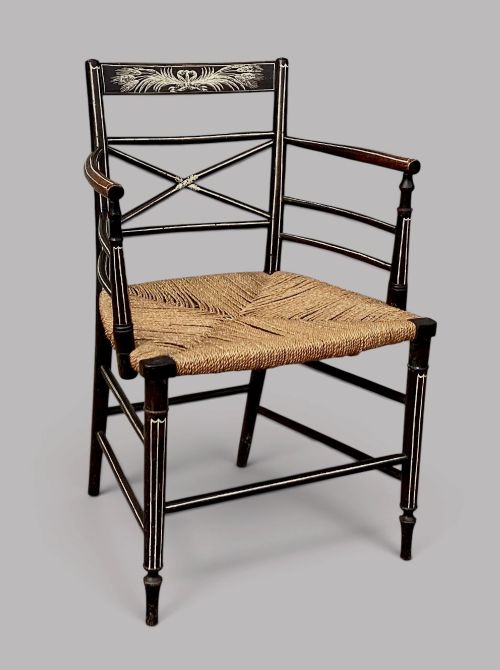
A woven rush seat armchair brings tactile warmth and vernacular strength to a room, combining turned timber frames with hand-plaited natural seating.
Woven Rush Seat Armchair
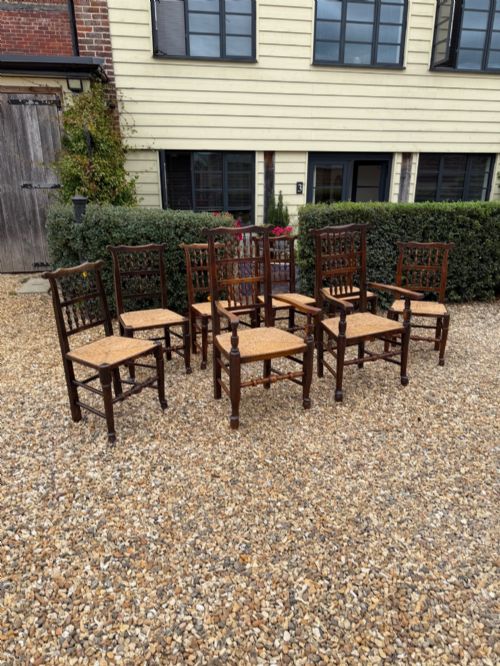
The most common examples on this page reflect country house traditions, featuring native hardwoods paired with traditional woven seating materials. Regional designs from Lancashire, Cheshire, and Scotland appear alongside distinctive Arts and Crafts workshop productions.
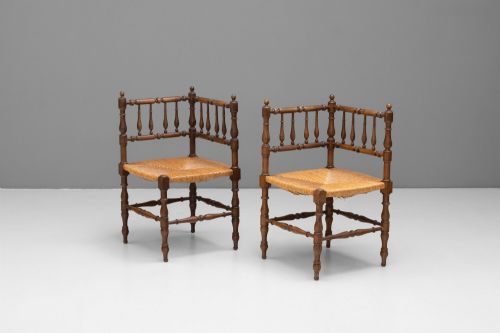
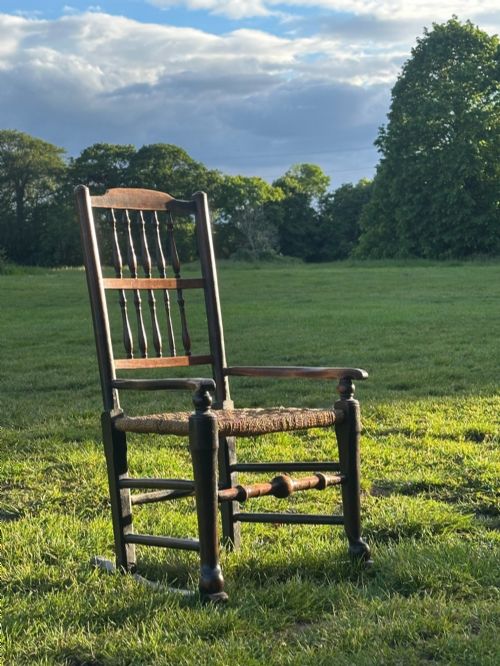
Forms range from low lounge armchairs and corner chairs to children's high chairs and rocking chairs. The construction prioritises domestic utility and tactile comfort, relying on time-honoured turning and joining methods.
How they were made
Frames rely on native timbers such as oak, elm, ash, beech, fruitwood, and mahogany, shaped through traditional turning and joinery techniques. Woodworkers selected specific woods for their tensile strength in spindles or their weight in structural posts.
Seats are constructed by hand-weaving natural rush or sea grass around internal rails, creating a durable and slightly yielding surface. This plaited technique distributes weight evenly across the frame while maintaining breathability.
Several armchairs incorporate subtle rocking runners or compact corner frames, designed for nurseries, kitchens, and Victorian reading corners.
What varies in quality
Quality rests in the integrity of the timber frame and the tightness of the woven seating material. Denser turning, balanced proportions, and the survival of original surface finishes distinguish workshop pieces from standard regional production.
Maker attribution and regional provenance elevate certain examples, particularly where documented designers or specific guilds influenced the construction. The precision of the joinery and the preservation of the original rush remain central to the integrity of the piece.
Liberty Morris & Co·E W Godwin·Morris and Co·Dicon Nance St.Ives Studio
The Woven Rush Seat Armchair Glossary
- Ladderback
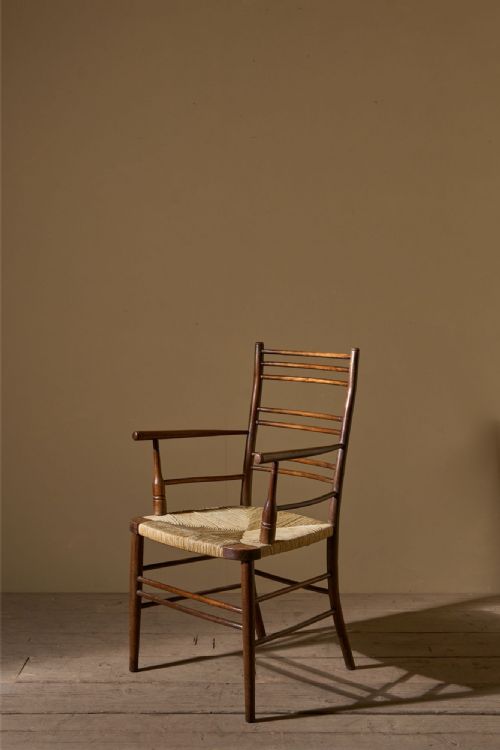
- A chair style characterised by horizontal curved slats between the upright rear posts. This regional form provides ergonomic support through multiple shaped rails.
- Spindleback
- A seating design utilising numerous thin, turned vertical wooden rods in the backrest. These slender members distribute pressure evenly while reducing the overall weight of the armchair.
- Rush
- A marshland plant material twisted into cords and hand-plaited to form resilient chair seats. This traditional seating medium offers natural flexibility and long-term durability.
- Vernacular
- Everyday furniture built by local tradesmen using regional traditions rather than high-style metropolitan designs. These objects reflect local timber availability and domestic utility.
- Corner chair
- An armchair designed with a diagonal orientation to fit snugly into room angles. The curved backrail rests upon turned pillars arranged around a square or trapezoidal seat.
Woven Rush Seat Armchair: Frequently Asked Questions
How do I care for a rush seat?
Keep the woven material away from excessive moisture and direct heat sources to prevent the natural fibres from becoming brittle.
Occasional gentle dusting with a soft brush helps maintain the texture of the plaiting without damaging the organic strands.
Are these armchairs suitable for daily sitting?
Most surviving examples were built for robust domestic use, making them well-suited for everyday seating in living spaces or studies.
Evaluating the tension of the woven seat and the stability of the timber joints ensures the chair can safely support regular weight.
How do I identify an Arts and Crafts chair?
Arts and Crafts pieces typically display visible construction methods, honest material use, and simplified structural lines influenced by workshop traditions.
Designers associated with this movement favoured straightforward ladderback forms and unadorned native timbers over heavy Victorian ornamentation.
What is an Orkney chair?
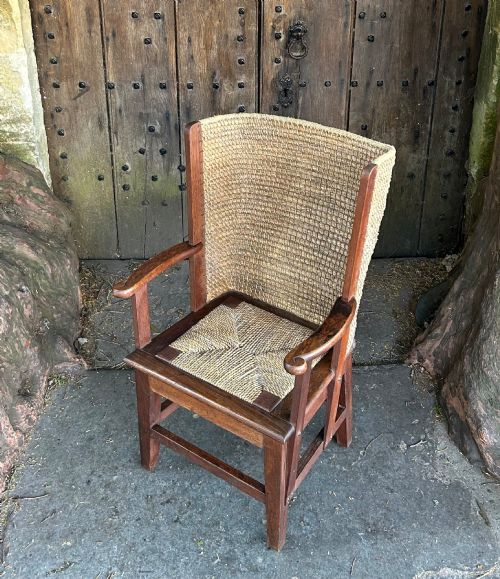
An Orkney chair is a distinct regional seating form featuring a high woven straw back supported by a wooden frame.
This traditional design protected sitters from draughts in coastal cottages using locally gathered oat straw and rush.