

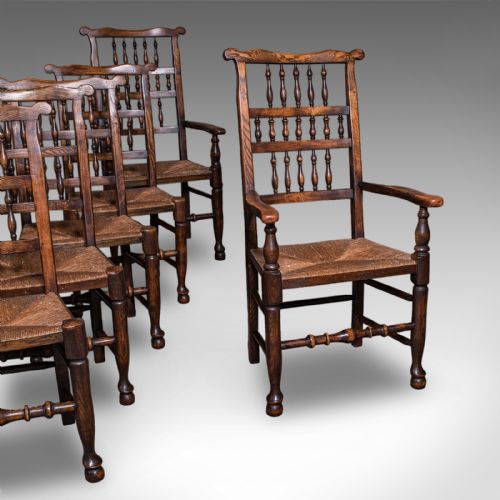


Vintage Rush Seat Carvers
Vintage rush seat carvers bring robust country craftsmanship and woven natural seats directly to the dining table or fireside.

Vintage Rush Seat Carvers
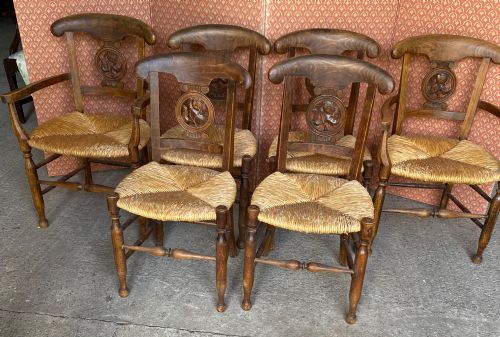
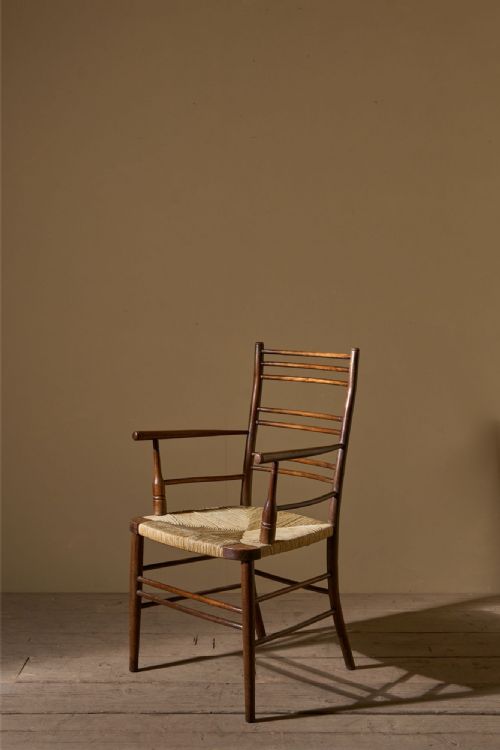
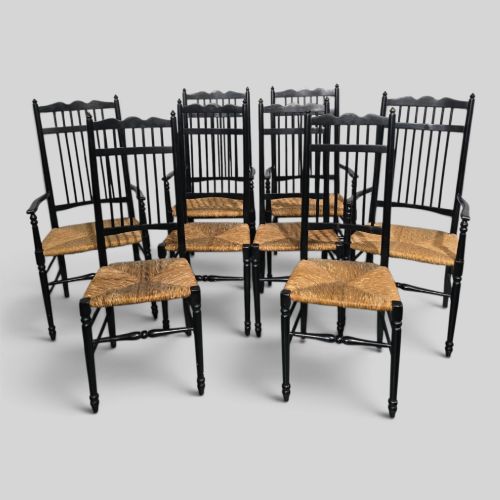
These armchairs and carvers combine sturdy wooden frames with woven rush seating, emerging across the nineteenth and early twentieth centuries in various vernacular traditions. You will encounter English country, Arts and Crafts, and French provincial styles most frequently on this page, often built as single armchairs or matched with sets of dining chairs.
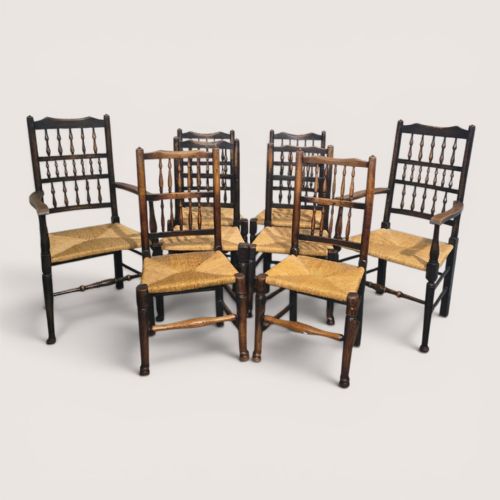
The forms span low ladder-backed designs, spindle-backed farmhouse seats, and taller carvers produced during the Georgian, Victorian, and Edwardian periods. Makers utilised regional timbers like oak, elm, ash, and beech to construct these robust frames for everyday domestic utility.
Makers such as Liberty & Co, Morris & Co, and studio workshops like St Ives also produced distinctive versions during the late nineteenth and early twentieth centuries. These pieces reflect both vernacular utility and the deliberate handcraft revival of the Arts and Crafts movement.
How they were made
Joiners and country chairmakers shaped solid local hardwoods including oak, elm, ash, beech, and fruitwood to build the structural frames of these carvers. Frameworks often feature turned spindles, curved ladder backs, and pegged joints to withstand daily use in kitchens and dining rooms.
Natural rush was tightly hand-woven around seat rails to form a durable, textured platform that flexes with use. Some pieces also incorporate ebonised wood or teak framing, reflecting varied regional tastes and colonial influences.
The listings here feature timbers including oak, elm, ash, beech, and teak across periods spanning the Georgian era to the 1930s.
What varies in quality
The integrity of the timber framing and the tightness of the woven rush distinguish standard provincial seating from finer maker-attributed examples. Frames constructed from dense hardwoods like oak and elm with well-turned spindle backs show superior structural longevity.
Attribution to documented workshops, such as Liberty or Morris & Co, elevates certain pieces beyond standard vernacular workshop production. The balance of proportions, comfort of the armrests, and original surface patination on the turned wood further separate notable examples from standard kitchen chairs.
Liberty & Co·Morris & Co·St. Ives Studio
The Vintage Rush Seat Carvers Glossary
- Carver
- An armchair designed specifically for the head of a dining table, featuring supportive armrests. These pieces match or complement standard side chairs in a set.
- Ladder back
- A chair back constructed with horizontal slats or rails positioned between two vertical uprights. This traditional form appears frequently in English and French country seating.
- Rush
- A marsh plant woven into cord and used to create durable, textured chair seats. Natural rush yields a supportive surface that develops a mellow tone through age and use.
- Spindle back
- A chair design incorporating numerous thin, turned wooden uprights along the backrest. This construction method provides light, flexible support.
- Arts and Crafts
- A design movement of the late nineteenth and early twentieth centuries emphasising handcraft methods and traditional materials. Pieces from this tradition often celebrate exposed joinery and honest construction.
Vintage Rush Seat Carvers: Frequently Asked Questions
What is a rush seat carver?
A rush seat carver is an armchair featuring a woven natural rush seat, typically positioned at the head of a dining table.
These chairs combine sturdy wooden frames with flexible woven seating designed for everyday domestic utility.
How do I date an antique carver?
Dating relies on examining the timber species, turning styles, and construction methods characteristic of periods like the Georgian era, Victorian period, or Arts and Crafts movement.
Changes in joinery and regional vernacular designs help narrow the likely decade of manufacture.
Can I use these chairs daily?
These robust hardwood frames and woven rush seats were originally built for practical kitchen and dining room use.
Properly maintained timber and sound woven rush handle regular domestic seating comfortably.