



Country House Storage Coffer
These country house storage coffer examples span utilitarian pine bins to robust eighteenth century oak box settles, offering honest domestic history.
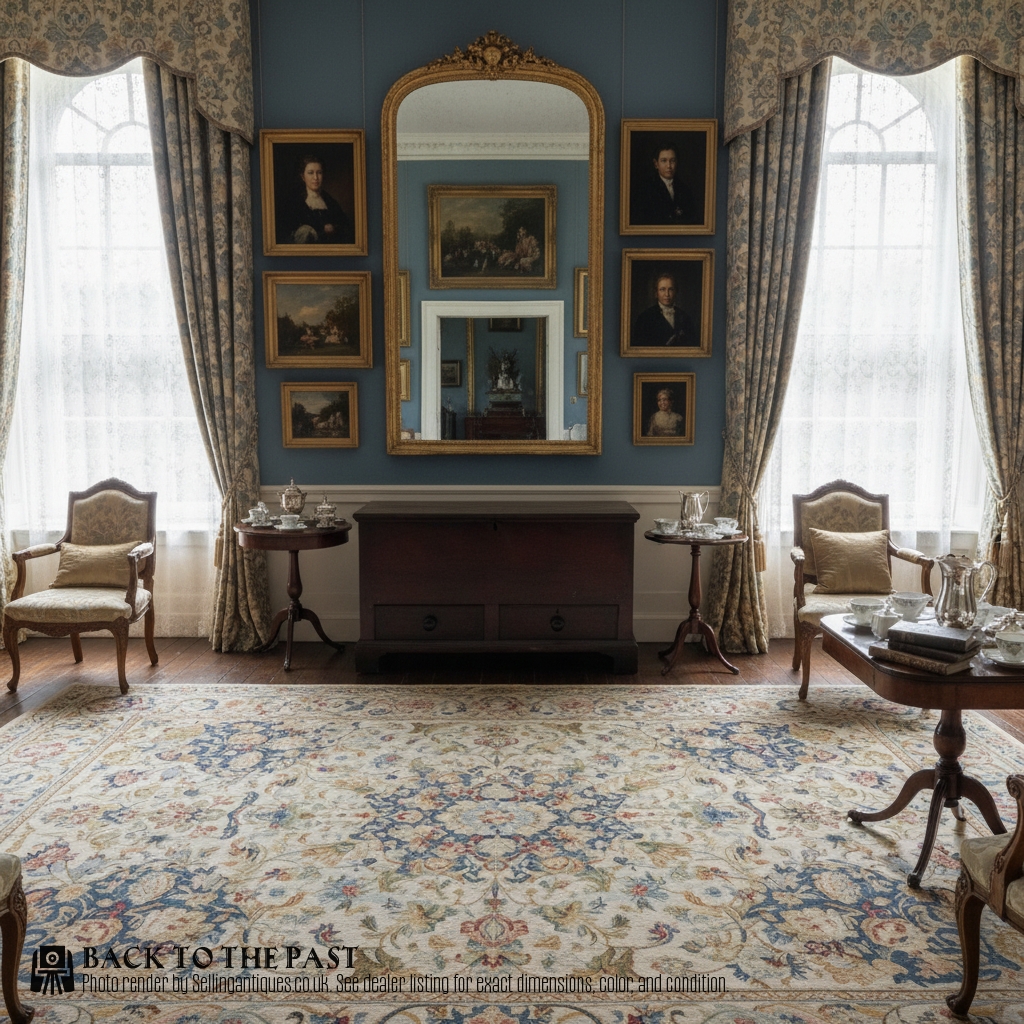
Country House Storage Coffer
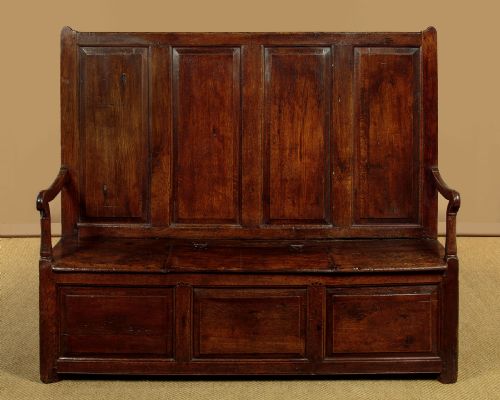
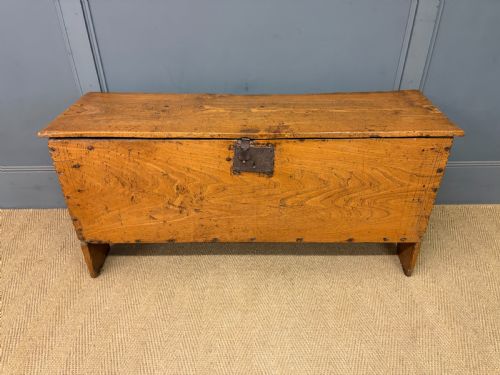
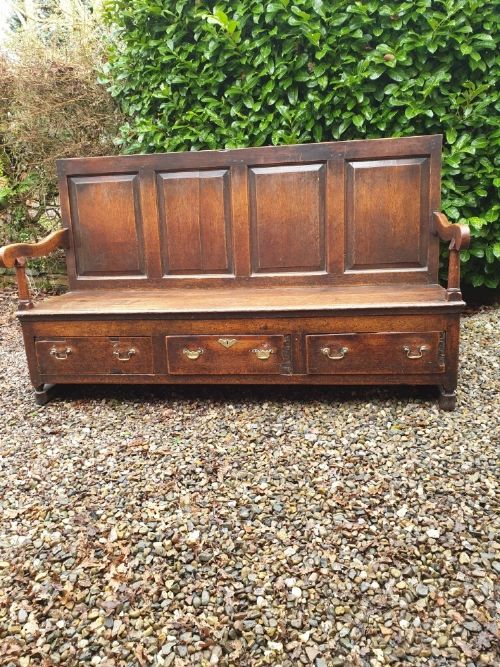
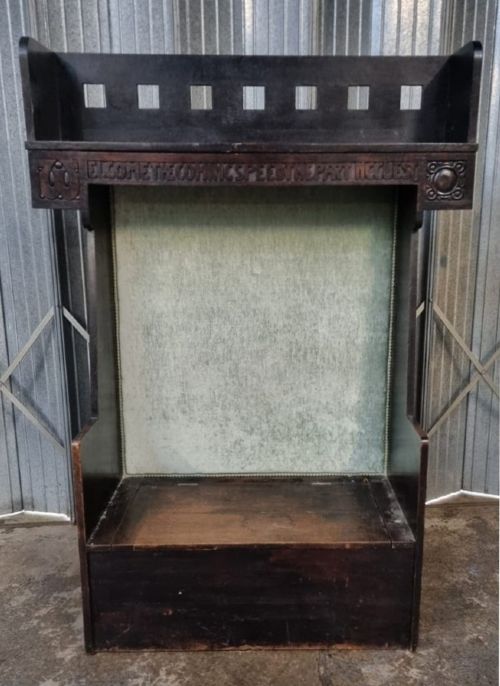
A country house storage coffer serves as a utilitarian vessel for household goods, evolving from early plank construction into compartmentalised mule chests and hall seats. The pieces seen here encompass eighteenth century elm and oak examples alongside later Victorian painted pine boxes and log bins.
Buyers seeking a country house storage coffer will encounter robust vernacular forms shaped by regional British joinery. Oak, elm, and pine predominate, often fitted with iron hardware or lined with fabric and leather for domestic utility.
How they were made
Joiners constructed these pieces using solid native timbers such as oak, elm, and pine, frequently employing panelled construction to accommodate seasonal wood movement. Iron hinges, brass handles, and heavy banding reinforced lids and corners for heavy domestic service.
Surface finishes range from unadorned waxed timber to hand painted lead-based colours and estate-applied decoration. Dough bins and box settles utilised simpler peg and tenon joints suited to regional workshops.
Listings feature pieces spanning the Georgian and Victorian periods, constructed from oak, elm, pine, and iron.
What varies in quality
Quality rests upon the selection of primary timbers and the integrity of the original construction rather than decorative excess. Substantial oak panels and well-pitted elm boards indicate higher grade domestic commissions.
The survival of original ironwork, untouched hinges, and authentic painted surfaces separates utilitarian utility pieces from later alterations. Secondary woods and replaced internal partitions reflect the practical repairs common to working estate furniture.
The Country House Storage Coffer Glossary
- Coffer
- A large wooden chest used for storing valuables, linen, or provisions. These domestic receptacles often feature hinged lids and sturdy boarded construction.
- Mule chest
- A storage chest fitted with one or more drawers beneath the main compartment. This hybrid form bridges the traditional coffer and the modern chest of drawers.
- Box settle
- A high-backed wooden bench with a storage compartment concealed beneath the seat. They stood near hearths to block draughts while securing household items.
- Dough bin
- A trough-like container traditionally used for kneading bread dough, raised on legs and fitted with a lid. Vernacular examples utilise solid elm or pine.
- Log bin
- A heavy receptacle designed for storing firewood near a fireplace, frequently reinforced with iron banding. They utilise durable timbers like pine or oak to withstand heavy loads.
Country House Storage Coffer: Frequently Asked Questions
What is a country house storage coffer?
A country house storage coffer is a robust wooden chest utilised in large estates for holding linens, documents, or household provisions. These pieces range from plain eighteenth century oak boxes to painted Victorian estate chests.
They reflect practical domestic needs rather than formal court furniture, relying on solid native hardwoods and straightforward joinery.
How were box settles used?
Box settles served as dual-purpose seating and storage furniture placed in kitchens or halls. The high wooden back protected occupants from cold draughts while the enclosed seat housed daily items.
This form combines the function of a storage coffer with a sturdy bench.
What woods were used for these coffers?
English makers relied on native hardwoods and softwoods available near their workshops. Oak and elm provided strength for eighteenth century pieces, while pine served widely for painted Victorian boxes.
Iron and brass hardware reinforced lids, corners, and carrying handles against heavy domestic use.
How do I distinguish pine from oak pieces?
Oak exhibits a dense grain with distinct medullary rays, yielding a heavy, durable structure favoured in earlier periods. Pine presents a softer, lighter material that readily accepts paint finishes.
Painted pine examples frequently date to the Victorian era, whereas unpainted oak constructions more commonly trace back to Georgian and earlier workshops.
Were these coffers made for estate staff?
Many items reflect utilitarian production for large country house estates, including silver chests, log bins, and housekeepers' cupboards. Estate-made pieces prioritised functional durability over refined decorative carving.
Their simple construction suited the back-of-house service areas where they stood.