


Painted Timber Coffer
A painted timber coffer brings immediate colour and honest storage to a room, offering sturdy utility shaped by centuries of regional craft.
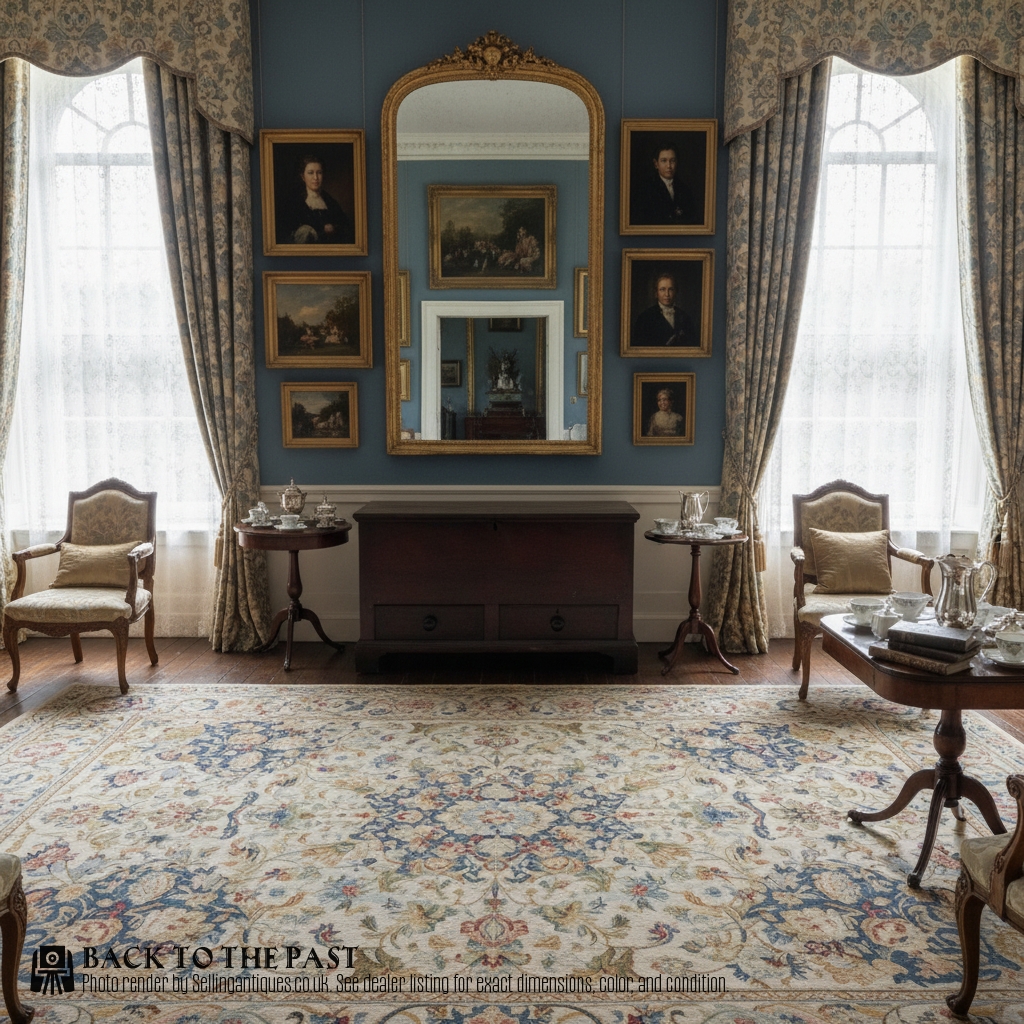
Painted Timber Coffer
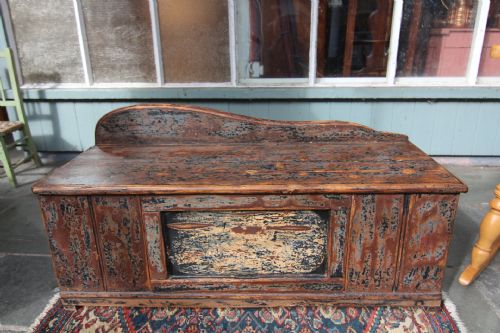
A painted timber coffer encompasses heavy storage boxes, blanket chests, mule chests, and bench seats shaped from solid woods and finished with pigment or lacquer. When you search for a painted timber coffer, you uncover pieces designed to hold textiles, dowries, or household goods while serving practical everyday functions.
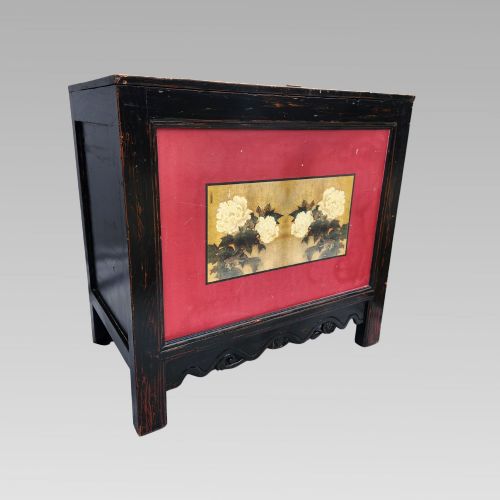
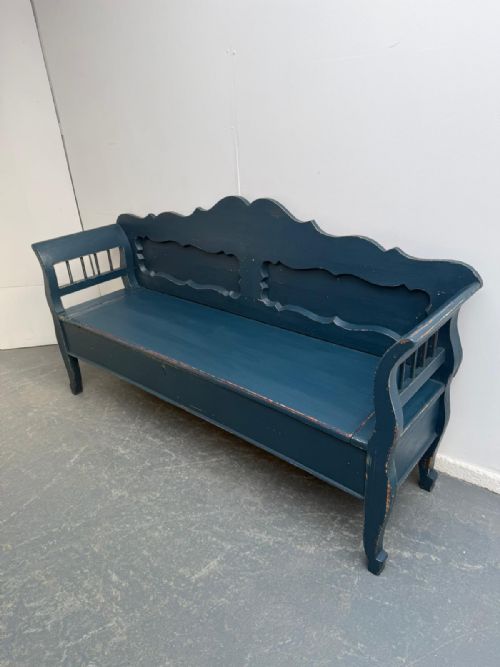
The versions most likely to meet you on this page span the Georgian era through to the early twentieth century, drawing on diverse traditions including Scandinavian country, European folk art, and traditional Chinese craftsmanship. Forms range from compact travel trunks and log bins to generous three-seater benches with integrated box seats.
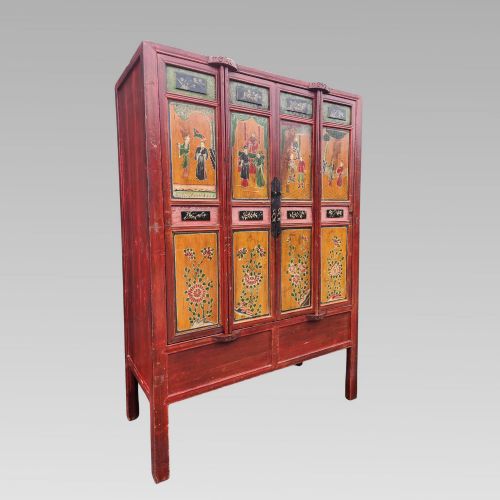
Makers utilised humble softwoods like pine alongside specialist lacquers, applying polychrome schemes, grained finishes, or floral chinoiserie directly onto the timber. Each surviving example reflects the utilitarian needs of its original domestic or nautical setting, preserved through generations of careful use.
How they were made
Construction relies upon solid timber foundations, predominantly pine or other regional woods, joined to withstand heavy daily demands for storage and seating. Iron and brass hardware, including strap hinges and carrying handles, reinforce the heavy board construction of strong boxes and travel trunks.
Surface decoration involves direct application of paint, pigment, or lacquer onto the prepared wooden substrate. Artisans applied polychrome folk motifs, simulated wood graining, or intricate oriental floral designs by hand, sealing the timber underneath against wear.
The selection spans European folk art, Scandinavian country traditions, and traditional Chinese craftsmanship.
What varies in quality
The integrity of the original surface finish separates standard vernacular pieces from exceptional survivals, as surviving early paintwork or undisturbed lacquer dictates the character of the object. Depth of colour, the survival of secondary decorative layers, and the crispness of hand-painted folk or chinoiserie motifs define the visual hierarchy.
Structural honesty and the retention of original iron or brass fittings, such as strapwork and locks, distinguish superior examples. Pieces that maintain their original proportions, uncompromised timber boards, and unaltered interior compartments hold greater integrity within traditional furniture traditions.
The Painted Timber Coffer Glossary
- Mule chest
- A traditional storage chest featuring one or more drawers beneath the main lift-top compartment. This form bridges the evolution between the simple coffer and the modern chest of drawers.
- Chinoiserie
- European interpretations and imitations of Chinese and East Asian artistic traditions, popular in decorative painting and lacquerwork. It frequently incorporates floral motifs and figures against dark grounds.
- Polychrome
- Decorated in multiple colours. The term describes painted surfaces employing a varied palette of pigments.
- Dowry chest
- A traditional trunk prepared for a bride to hold household linen and personal possessions for her marriage. These pieces often bear specific regional painted decoration or dates.
Painted Timber Coffer: Frequently Asked Questions
What is a painted timber coffer used for?
These pieces served historically to store heavy textiles, family valuables, and personal belongings securely within domestic spaces. They functioned interchangeably as storage receptacles, travel luggage, and household seating.
Today, they adapt readily to modern interiors for concealing bulky items like blankets or shoes while functioning as coffee tables or window benches.
How do I tell different regional styles apart?
Regional styles reveal themselves through timber selection, construction methods, and specific decorative palettes. Scandinavian and European folk traditions often display bright pigments and chip-carved or hand-painted botanical motifs on pine.
In contrast, oriental examples utilise dark lacquer grounds with gilded or coloured floral chinoiserie, while British pieces from the Georgian era lean towards architectural mouldings and grained finishes.
Are these chests suitable for daily seating?
Many examples, particularly bench seats and box benches built during the Georgian period, were constructed specifically to combine seating with bulk storage. Their robust pine frames easily support regular use.
Lighter travel boxes or delicate lacquer trunks are better suited for static display and surface storage rather than active everyday sitting.
How should I care for painted timber surfaces?
Historic painted and lacquered surfaces require gentle maintenance to preserve the original pigment layers. Keep them out of direct sunlight to prevent fading and away from extreme temperature shifts that cause wood movement.
Dust gently with a dry, soft cloth and avoid chemical polishes or modern cleaning solvents that might strip fragile historic finishes.