






Country Estate Wall Art
Country estate wall art brings the historic houses, grand stables, and landscaped parks of Britain and Europe directly into your rooms.
Country Estate Wall Art
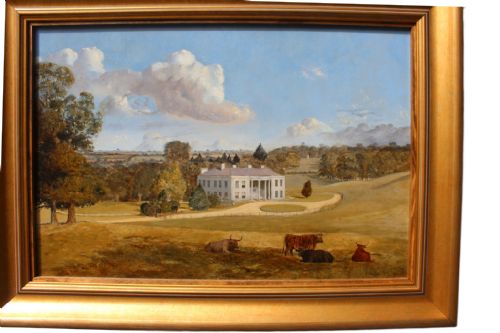
Country estate wall art comprises paintings, engravings, and framed prints depicting historic houses, castles, castles, and their surrounding grounds. These works record landed seats such as Trentham Hall, Arundel Castle, and Newstead Abbey through the eyes of artists working from the eighteenth century into the early twentieth century.
The pieces you meet on this page span several distinct periods, with Victorian and Edwardian works sitting alongside Regency views and eighteenth-century French engravings. Forms range from large oil paintings on canvas to monochrome ink and watercolour prints, often framed in wood or gilt wood.
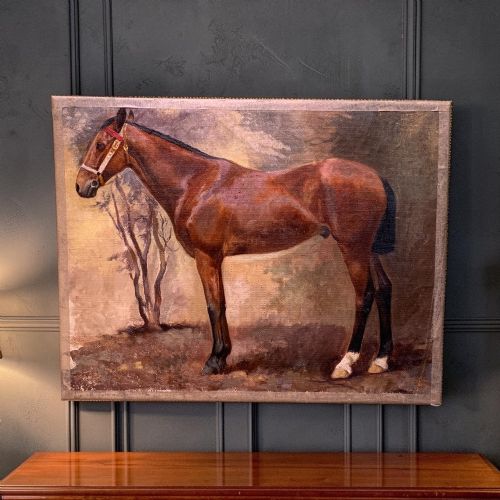
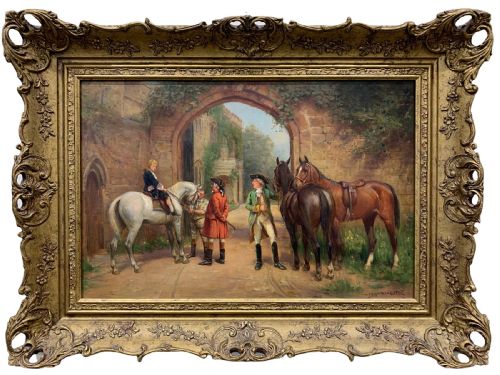
Subjects frequently celebrate the rural pursuits and architecture associated with the landed gentry, including equestrian scenes, hunting parties, and formal gardens. Whether capturing a specific stately home or a grand landscape, each piece preserves a tangible record of country house life.
How they were made
Artists painted primarily in oil on canvas or applied watercolour and ink to paper, utilising traditional pigments to capture the light and detail of country houses and parks. Engravings from the eighteenth century relied on precise plate printing techniques on paper to reproduce detailed landscape scenes.
Frames play a structural and decorative role, constructed from wood and often finished with gilded surfaces or gilt wood moulding. These original or period frames were designed to complement the scale and status of the oil paintings and prints they enclosed.
Listings feature works spanning the eighteenth century, Regency period, Victorian era, Edwardian period, and 1920.
What varies in quality
Quality rests in the precision of the draughtsmanship and the artist's ability to render architectural detail and atmosphere within the landscape. Works by documented painters command attention through confident brushwork and accurate topographical recording of historic estates.
The preservation of the canvas, paper, and pigment dictates the visual strength of the piece, alongside the integrity of the original wooden or gilt frame. Superior examples maintain their original surface depth and clarity without heavy restoration obscuring the hand of the artist.
Clifton Tomson·Samuel Sidley·James Canter·C de Falens·John Sanderson Wells·Robert Thomas Buttery·Fred Merriman·Martin Pierre Denis·Henri Harpignies
The Country Estate Wall Art Glossary
- Oil on Canvas
- Pigment mixed with drying oil applied to a woven fabric stretched across a wooden frame. This medium allowed artists to build rich textures and deep tones for large estate scenes.
- Gilded Wood
- Wood covered with a thin layer of gold leaf or metallic powder. It provided a brilliant, reflective border for important paintings and engravings.
- Monochrome Ink
- A single-colour drawing medium used to establish sharp lines and tonal shadows. It often appeared in architectural studies and early topographical views before the application of watercolour.
- Barbizon School
- A nineteenth-century French movement focused on direct observation of nature and landscape realism. Painters in this circle influenced how rural scenery and estate grounds were captured on canvas.
Country Estate Wall Art: Frequently Asked Questions
What periods do these pieces cover?
The selection spans from the eighteenth century through the Regency and Victorian eras into the Edwardian period and the early twentieth century.
This broad chronological range allows you to find works that reflect changing artistic tastes in landscape and architectural depiction across several hundred years.
Are all the artworks original paintings?
No, while the majority are oil paintings on canvas, the selection also includes framed prints, watercolours, and period engravings on paper.
Each medium offers a different texture and visual approach to the representation of historic houses and rural scenes.
How do I identify a named estate?
Many pieces include specific titles or inscriptions referencing real locations, such as Arundel Castle, Newstead Abbey, or Warlies House.
Checking these against historical records helps confirm the exact provenance and architectural history of the property depicted.
How should I hang and light these works?
Because many of these pieces feature traditional oil paint or delicate paper under glass, they benefit from indirect natural light to prevent fading.
Ensure they are mounted securely on walls away from direct heat sources to protect both the canvas or paper and the wooden or gilt frames.