



Antique Equine Canvas Art
These oil paintings capture the strength and spirit of horses through centuries of fine British portraiture.
Antique Equine Canvas Art
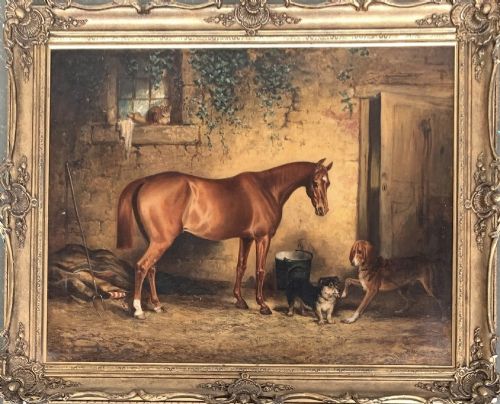
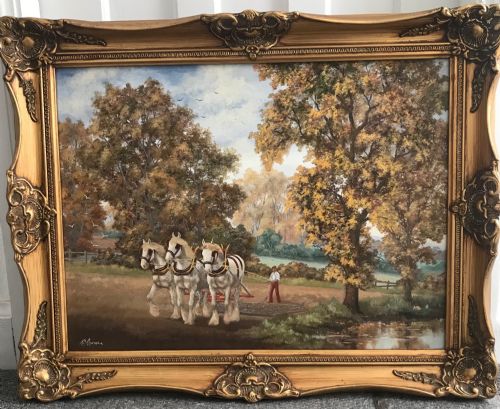
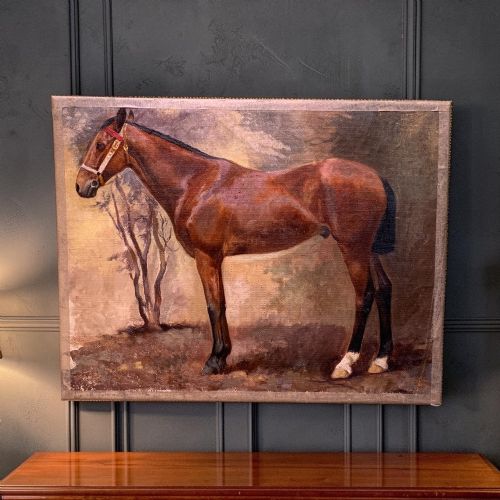
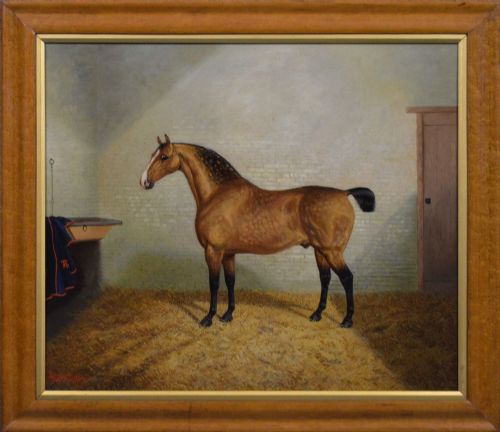
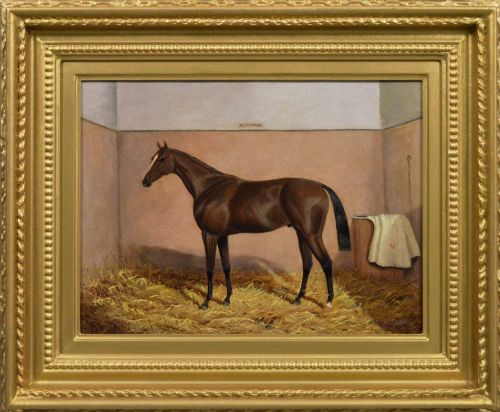
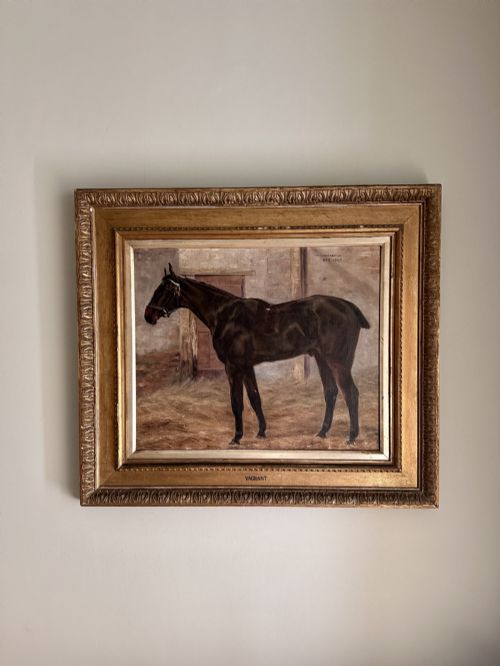
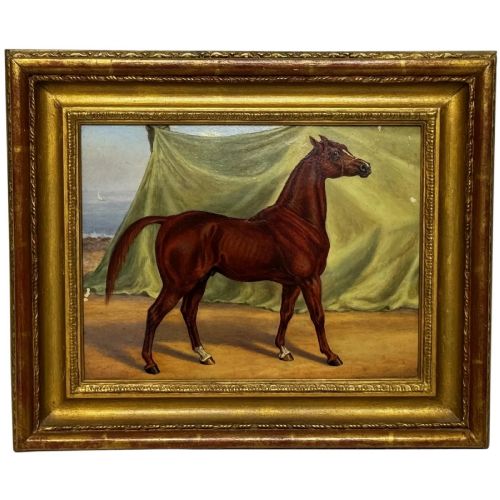
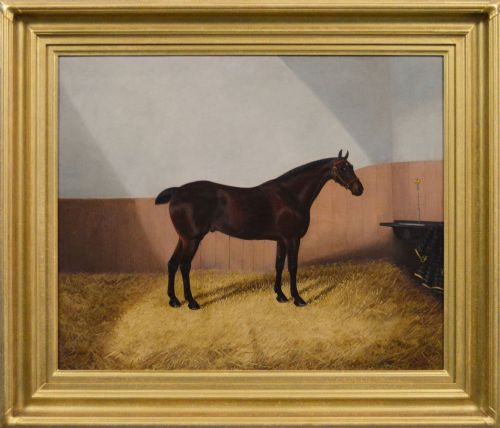
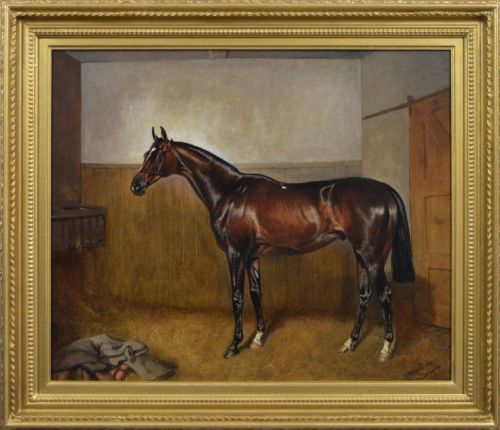
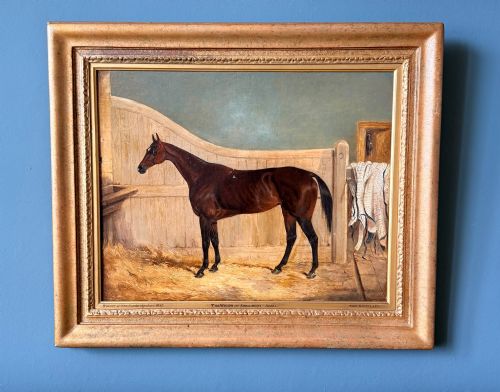
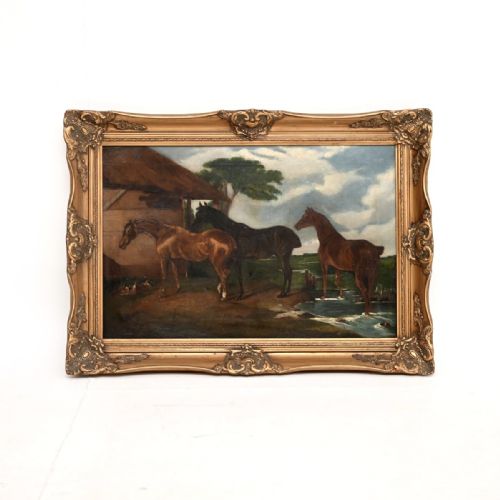
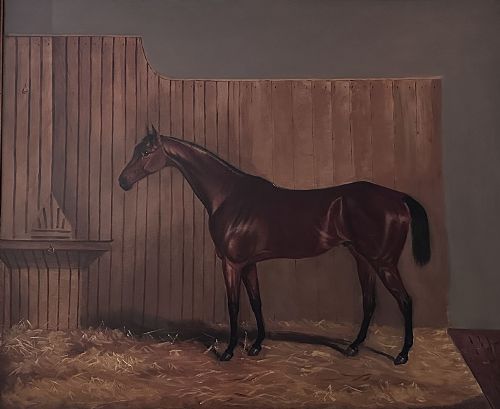
When you search for antique equine canvas art, you look at historical oil paintings dedicated to horses, racers, hunters, and rural working animals. These works record prized thoroughbreds, stable scenes, and landscape views spanning the Victorian, Edwardian, and Georgian periods.
You will most frequently meet nineteenth-century oil paintings on canvas depicting named racehorses or individual hunters, often housed in heavy giltwood frames. Many pieces capture specific animals with named jockeys, owners, or distinct rural backdrops.
Materials and methods
Artists painted these works using oil paint applied directly onto woven canvas supports stretched over wooden frames. The resulting surface allows for subtle blending of coat textures, muscle definition, and atmospheric light.
Many of these works remain enclosed in original or period giltwood and gold leaf frames that complement the depth of the oil pigments. The combination of durable linen canvas and oil media has ensured the survival of these detailed animal portraits.
Several canvases immortalise champion racehorses with wonderfully grand names alongside their jockeys, preserving nineteenth-century racing glory in oil paint.
Judging quality in equine art
Quality rests primarily on the anatomical accuracy of the horse, the finesse in rendering muscle and coat sheen, and the artist's ability to capture the individual character of the animal. Superior works display confident brushwork in the depiction of movement and posture rather than stiff, generic forms.
The sophistication of the background landscape and the inclusion of detailed provenance, such as named owners, historical races, or documented artists, elevate certain portraits above standard commercial animal paintings.
Henry Barraud·Albert Clark·John Alfred Wheeler·John Ferneley Senior·John Frederick Herring·Clifton Tomson·Abraham Cooper·George Goodwin Kilburne
The Antique Equine Canvas Art Glossary
- Canvas
- A heavy woven fabric, usually linen or cotton, used as the primary support surface for oil paintings. It is stretched tightly over a wooden framework before the artist applies paint.
- Giltwood
- Wood that has been coated with a thin layer of gold leaf or gold paint. Frames finished in this manner were widely used for fine art portraits throughout the Victorian and Georgian eras.
- Thoroughbred
- A breed of horse developed for horse racing, frequently documented in nineteenth-century sporting art. These animals are often identified by name and pedigree in the titles of the paintings.
- Provenance
- The chronological history of the ownership of a painting, establishing its authenticity and origin. Documentation often links specific pieces to historical estates, galleries, or notable collections.
Antique Equine Canvas Art: Frequently Asked Questions
How do I care for antique oil paintings?
Keep the canvas away from direct sunlight and high humidity to prevent the oil paint from cracking or fading. Dust the surface and the frame gently with a dry, soft brush without using liquid cleaners.
Ensure the painting hangs on an interior wall where temperature fluctuations remain minimal. If the canvas slackens over time, consult a professional restorer rather than attempting to adjust the wooden stretcher bars yourself.
How can I tell the period of a horse painting?
Examine the style of the canvas preparation, the framing materials, and the clothing styles of any human figures or jockeys depicted. Victorian and Georgian works often use specific types of hand-carved giltwood frames and distinct lettering on the canvas or plaque.
Cross-reference the named horse, owner, or race with historical records if the title provides them. Artists' signatures and recorded exhibition dates also offer a reliable guide to the decade of creation.
Where were these equine paintings originally displayed?
Wealthy patrons, estate owners, and racing enthusiasts commissioned these portraits to hang in country houses, stables, and estate offices. They served as proud records of valuable livestock, successful racehorses, and beloved hunting companions.
Many pieces originated in country residences across Britain and Ireland before entering the broader art market. Today, they transition easily into domestic living spaces, libraries, or studies.
What distinguishes sporting art from a standard portrait?
Sporting art focuses specifically on horses, hounds, and rural field sports, often placing the animal within an expansive landscape or stable interior. The emphasis lies on anatomical precision and the traditions of equestrian culture.
Standard portraits, by contrast, concentrate primarily on human subjects with animals appearing merely as accessories. Equine canvas art elevates the horse itself to the central subject of the composition.