
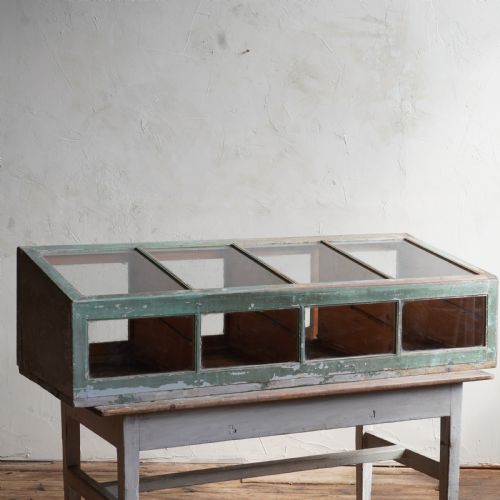


Countertop Shop Cabinet
A countertop shop cabinet sits ready to hold small wares, bringing authentic mercantile character right onto a surface in your room.
Countertop Shop Cabinet
A countertop shop cabinet is a compact mercantile display unit designed to sit upon a retail counter, allowing customers to view small goods close at hand. These pieces serve domestic collectors today as tabletop display cases, bijouterie boxes, or specialised haberdashery and sweet shop organisers.
The versions most commonly met span from the Victorian and Edwardian eras through to the interwar period of the 1920s and 1930s. Oak and mahogany frames predominate, frequently fitted with glazed panels and hinged doors to protect contents while maintaining visibility.
Specialist retail adaptations appear frequently, including branded confectionery cases bearing advertising for makers like Fry's or Rowntree's. Haberdashery and needle drawer variants also surface, offering shallow compartments originally intended for threads or small notions.
Materials and Construction
Cabinet makers constructed the primary carcases of these units from dense hardwoods such as mahogany and oak, occasionally utilising ebonised finishes or walnut. Brass hardware, including hinges, pulls, and small handles, secures the doors and framing.
Glazing forms the primary visual element, enclosing the display area with transparent glass panels. Interiors occasionally incorporate fitted elements like mirrors or felt linings to enhance the presentation of jewellery and small collectables.
Sweet shop cabinets occasionally still carry the faint, cheerful ghost of cocoa advertising on their glass.
Assessing Quality
Quality reveals itself in the joinery of the timber frame and the clarity of the original glass panels. Crisp moulding details and robust brass fittings separate standard commercial pieces from finer examples produced for high-end jewellers or bespoke outfitters.
The presence of authentic trade branding or original sign-written advertising directly influences the character of a piece. Cleanly executed lettering from period makers holds distinct appeal compared to later or coarser decorative additions.
John Stow Ltd of Bradford·Manoah Rhodes & Sons Ltd·F. Sage & Co. London·J.C. King Ltd London
The Countertop Shop Cabinet Glossary
- Haberdashery cabinet
- A small multi-drawer unit designed for storing sewing supplies, ribbons, and fastenings. These pieces typically feature pull-out trays with glass fronts or glazed tops.
- Bijouterie case
- A shallow glass-topped display box intended for jewellery and small precious trinkets. They often incorporate internal velvet or felt pads to cushion delicate items.
- Ebonised
- Wood treated with a chemical stain or finish to imitate expensive ebony. This technique was popular for achieving a dark, formal appearance on Victorian and Edwardian display furniture.
- Sign-written
- Lettering applied by hand to glass or timber surfaces for commercial advertising. Period examples feature painted trade names or product promotions directly associated with the original retail use.
Countertop Shop Cabinet: Frequently Asked Questions
What were countertop shop cabinets used for?
Merchants placed these glazed units on sales counters to showcase small valuable goods while keeping them secure from handling. Common contents included sewing threads, chocolates, cigars, and jewellery.
Today, the same enclosed shelving suits the display of modern collections, small antiques, and curiosities within a home setting.
How do I date a countertop shop cabinet?
Dating relies on observing timber choices, hardware styles, and construction methods used in the frame. Mahogany and heavy brass fittings often point to Victorian origins, while lighter oak builds and specific branding align with the 1920s and 1930s.
Makers' plates or original hand-painted trade advertising also provide reliable clues to the active decade of commercial use.
Can I use these cabinets for jewellery?
Many countertop units, particularly bijouterie cases and shallow drawer formats, were originally built specifically for jewellery and small retail items. Their glass lids and enclosed spaces protect delicate pieces from dust.
Adding modern conservation-grade felt or velvet to the base helps secure loose rings and brooches safely inside.
How should I clean the glass and wood?
General maintenance requires gentle dusting of the timber frame using a dry, soft cloth to protect the finish. Avoid harsh chemical polishes that can degrade older surface patinas.
Glass panels respond best to standard glass cleaner applied sparingly to a cloth rather than sprayed directly, preventing liquid from seeping into old wooden joints.