
Corner Wall Cupboard
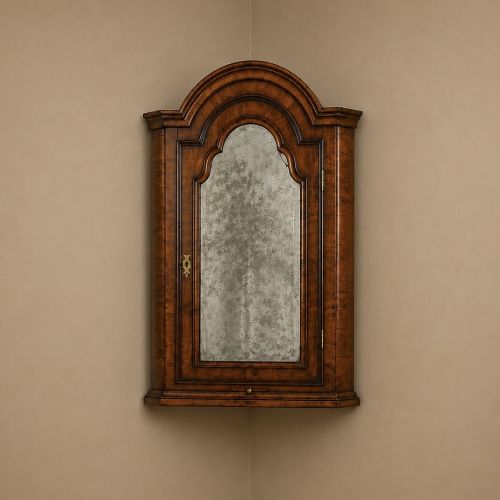
A corner wall cupboard turns wasted angles into useful storage, bringing character to plain rooms with fitted Georgian mahogany and rustic pine.
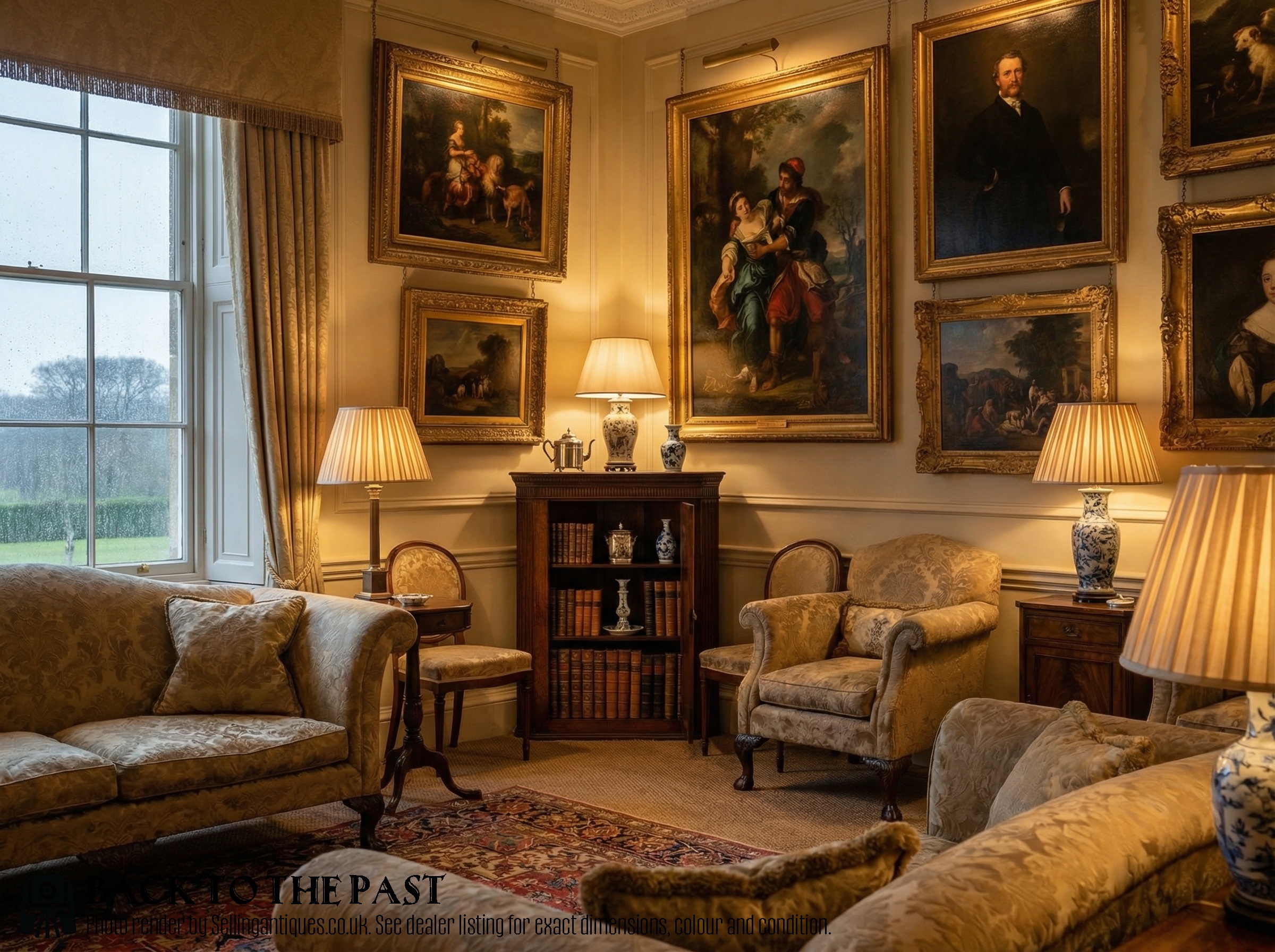
Corner Wall Cupboard
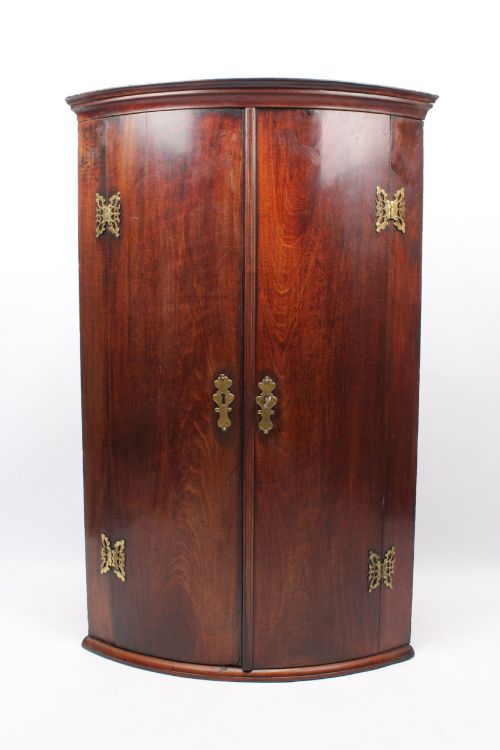
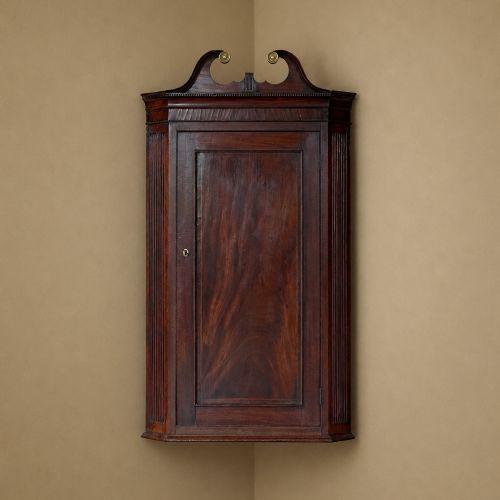
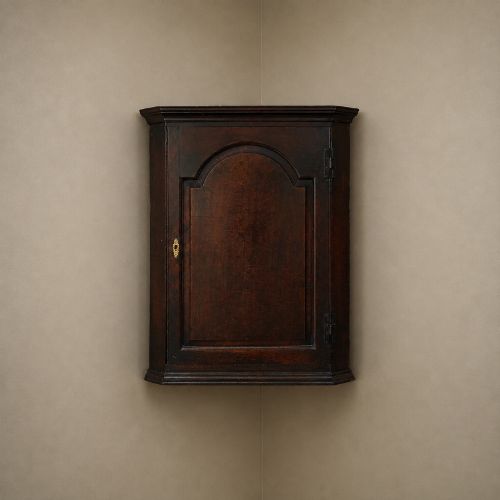
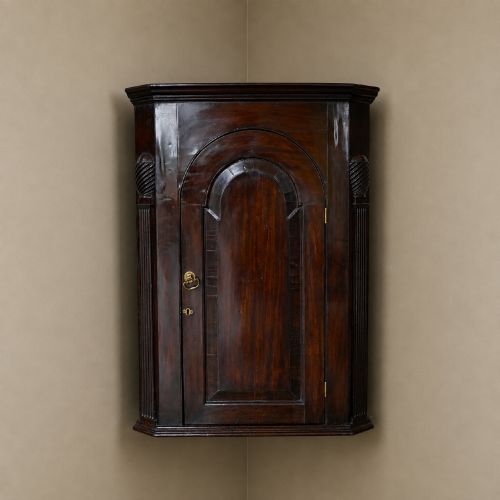
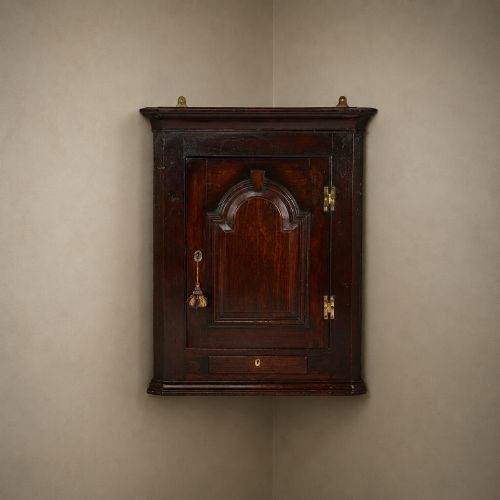
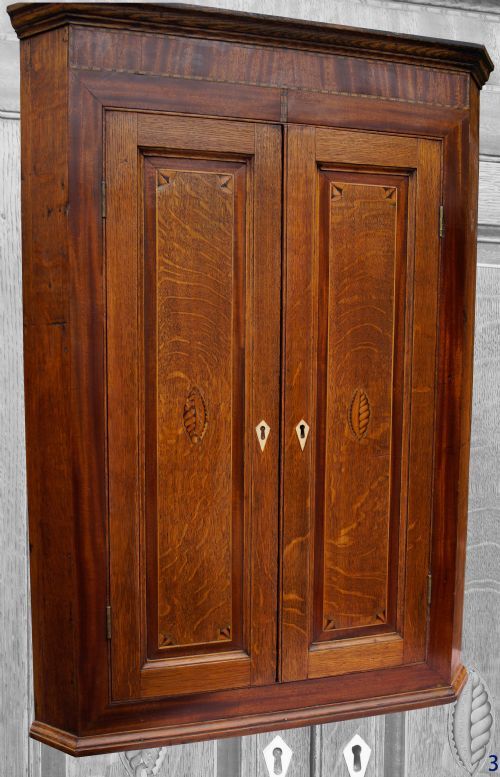
A corner wall cupboard is a specialised storage unit designed to fit neatly into the ninety-degree angle of a room, maximising space that standard rectangular furniture leaves empty. You will find that mahogany and oak examples from the Georgian period dominate the selection, offering panelled doors and shelved interiors built to hang securely on walls.
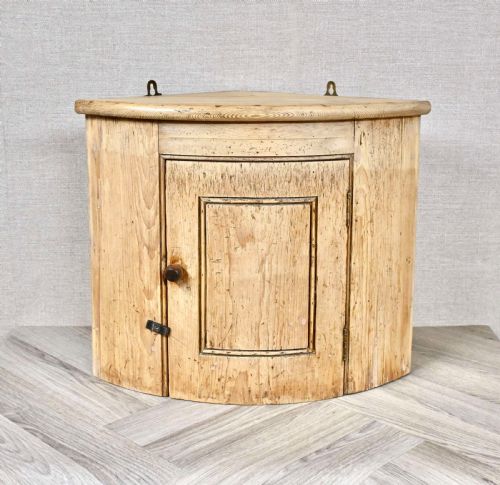
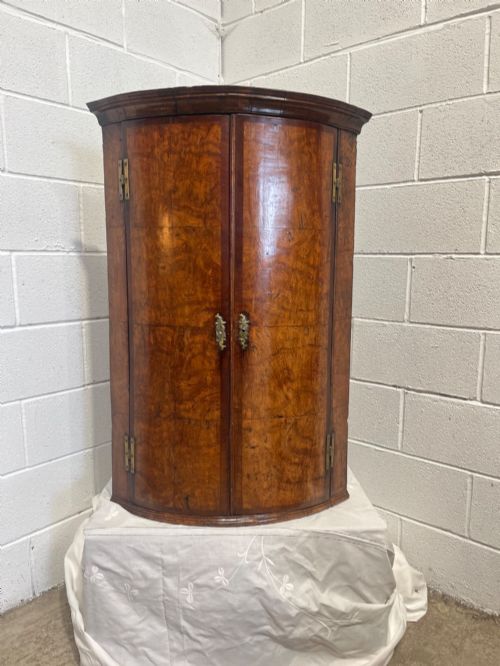
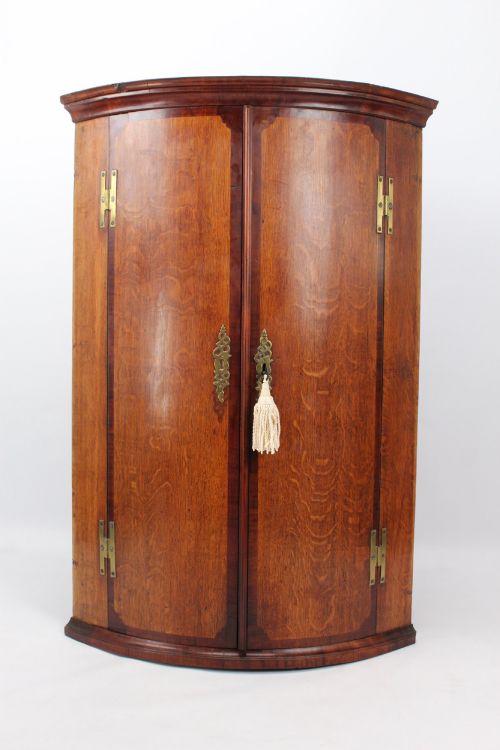
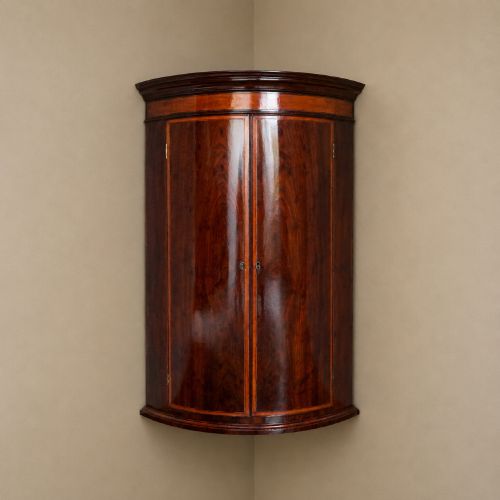
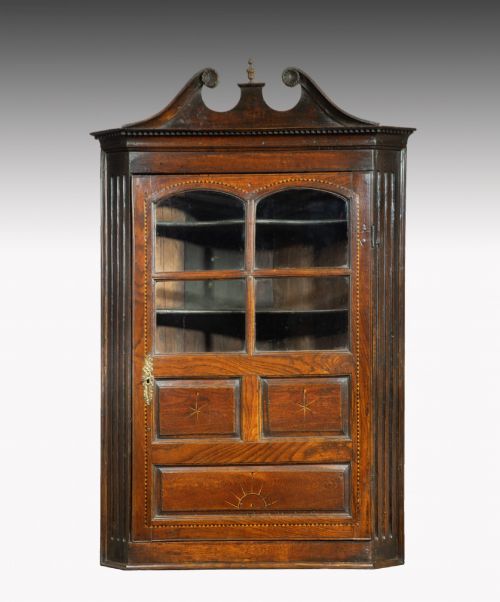
The assortment spans straightforward country pieces in stripped pine alongside more formal urban cabinets featuring bow fronts, glazed doors, and inlaid veneers. While walnut and lacquer finishes appear occasionally, sturdy oak and rich mahogany remain the primary woods defining these practical items across multiple centuries.
How they were made
Cabinetmakers constructed these triangular carcases predominantly from native timbers like oak and pine, frequently applying figured mahogany veneers or crossbanding to the exterior faces of finer examples. Brass hinges and working locks secure the panelled or glazed doors, while internal configurations typically incorporate fixed wooden shelving shaped to match the angular footprint.
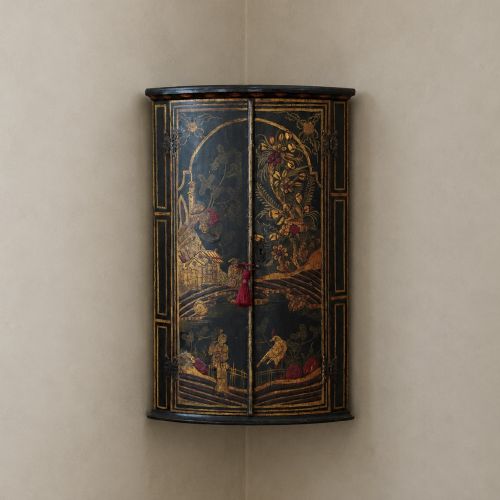
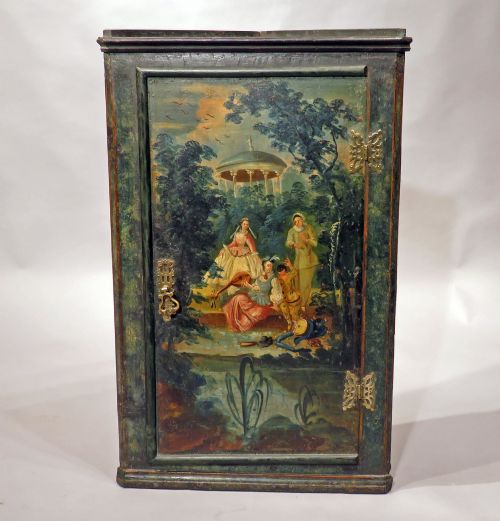
Surface treatments range from clear wax finishes highlighting natural grain to decorative japanning and painted interiors on period Chinoiserie pieces. Traditional joinery techniques such as dovetailed joints and pegged frames ensure the structural integrity required for hanging heavy timber units on domestic walls.
Several eighteenth-century examples include miniature candle slides positioned beneath the doors to illuminate the room while the owner selected evening provisions.
What varies in quality
The standard of timber selection largely dictates a piece's tier, moving from plain utility pine through to figured plum pudding mahogany and burr oak with high grain contrast. Cabinetry finesse shows in the crispness of inlaid stringing, the alignment of crossbanded borders, and the survival of original brass hardware and working keys.
The Corner Wall Cupboard Glossary
- Bow Front
- A convex curved cabinet front that projects outward from the corner walls. This curved profile requires skilled joinery to shape solid timber or bent veneers.
- Astragal
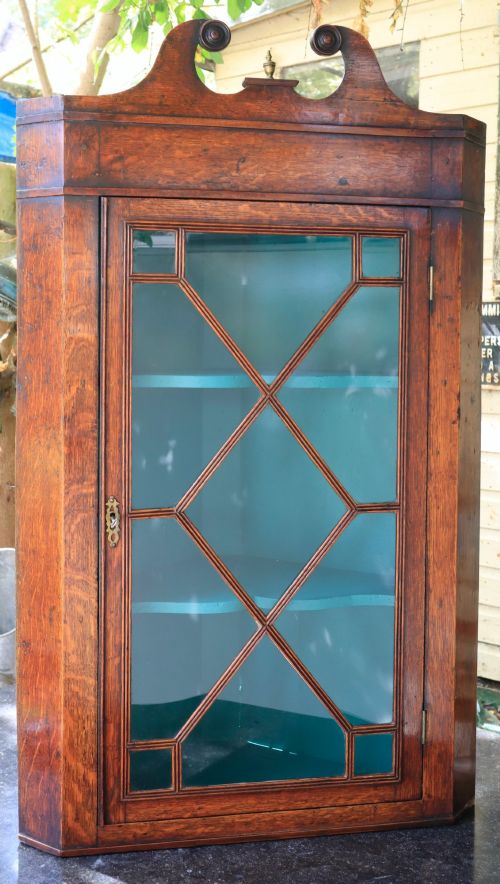
- A narrow moulding used to divide glass panes within a glazed cabinet door. Fine astragal bars indicate higher-quality workshop production.
- Crossbanding
- A border veneer applied perpendicularly to the surrounding grain direction. This decorative framing technique enhances the visual depth of mahogany and oak doors.
- Japanning
- A European imitation of East Asian lacquerwork using layered varnishes and metallic dust. It creates a dark, glossy surface often decorated with raised motifs.
- Plum Pudding Mahogany
- A richly figured tropical hardwood showing circular markings resembling Christmas pudding. Cabinetmakers reserved this dense grain for high-status furniture fronts.
Corner Wall Cupboard: Frequently Asked Questions
Where should I hang a corner wall cupboard?
These units suit dining rooms, kitchens, or hallways where empty wall junctions require functional storage without occupying floor space. Positioning them at eye level allows easy access to the internal shelves.
Because original hanging fixings can be fragile, ensure the unit is secured directly into solid wall studs or masonry using appropriate modern load-bearing brackets.
How do I identify a Georgian corner cupboard?
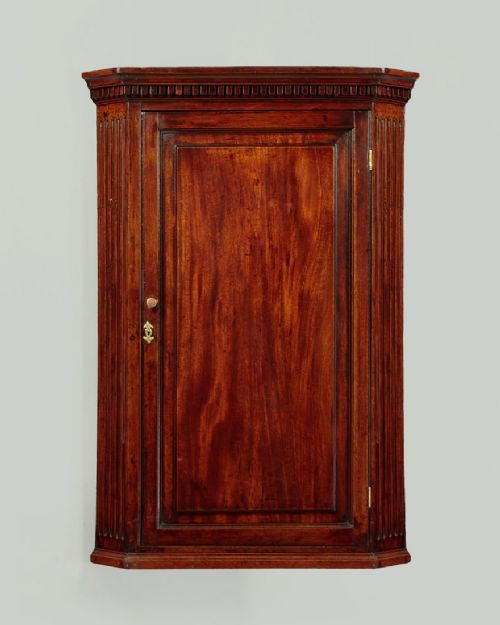
Georgian examples typically display pegged oak frames, fielded panel doors, or mahogany surfaces with hand-cut dovetails visible inside the carcase. Cabinet proportions tend to follow classical architectural rules of balance.
Later Victorian and Edwardian reproductions often utilise machine-cut joints, standard brass screws, or softer internal secondary woods that differ from eighteenth-century workshop practices.
Can these cabinets hold heavy items?
Period wall cupboards were originally built to store ceramic tableware, glassware, or bottled provisions securely behind locked doors. The fixed internal shelving handles standard decorative objects and kitchenware easily.
Weight capacity depends entirely on the strength of the wall fixings and the condition of the timber backboards rather than the outer frame itself.
What is the difference between glazed and panelled doors?
Panelled wooden doors conceal contents entirely while offering a robust timber facade suited to rustic or formal period interiors. Glazed doors transform the cupboard into a display cabinet for showing ceramics.
Many surviving eighteenth-century examples feature wooden panels, whereas nineteenth-century pieces frequently incorporate glass panes to suit changing domestic tastes.