

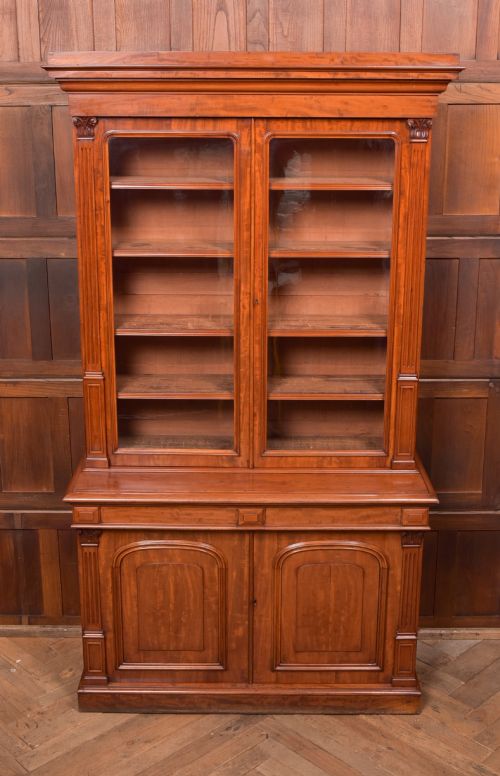


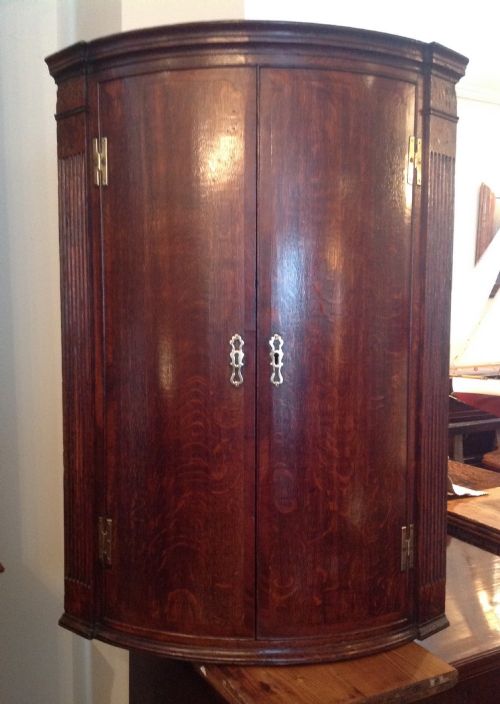
Fluted Pilaster Cabinet
A fluted pilaster cabinet brings architectural discipline to furniture, offering structured storage built from figured timbers like mahogany and walnut.
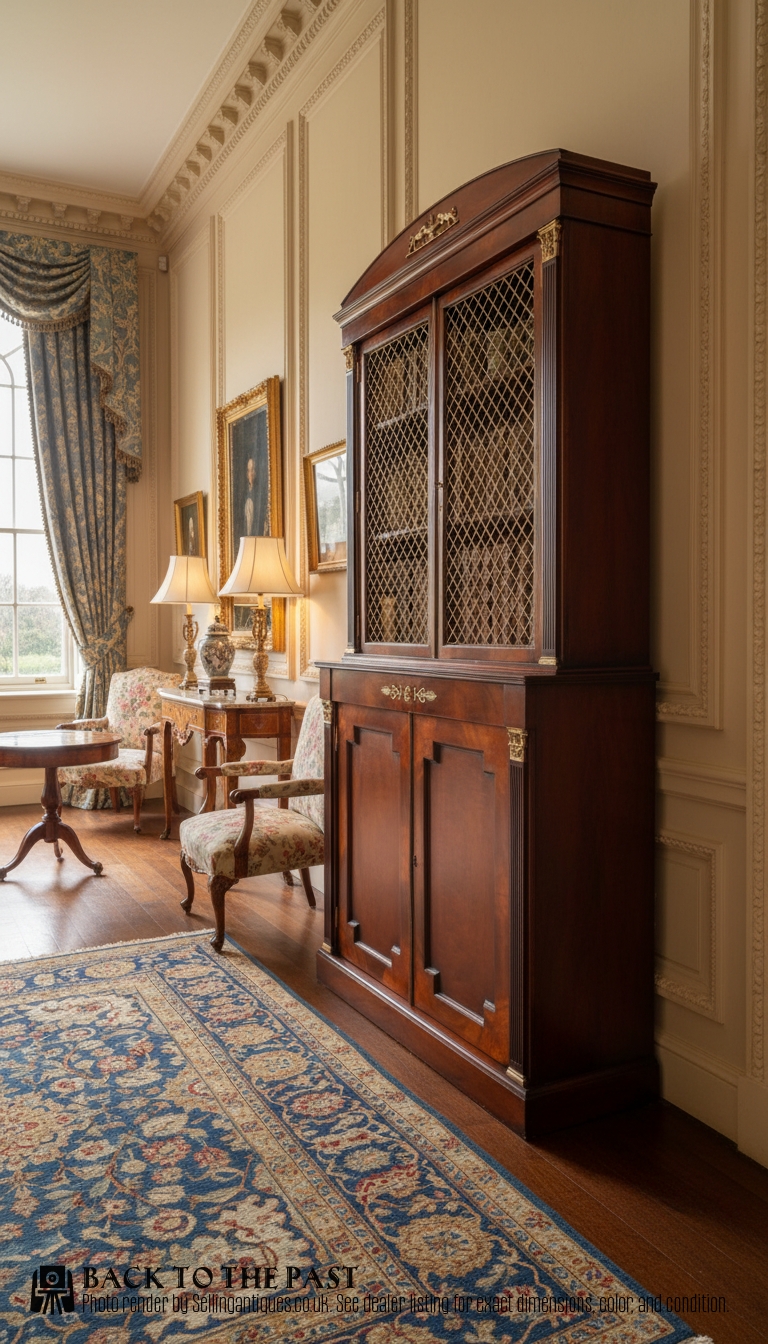
Fluted Pilaster Cabinet
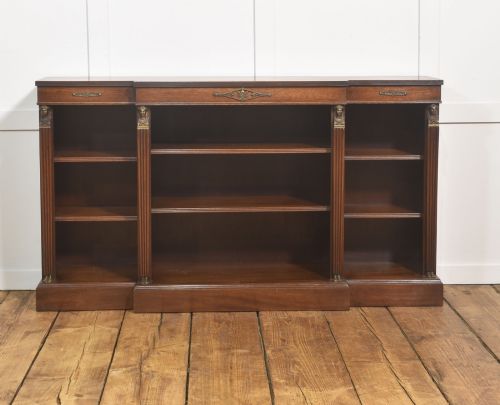
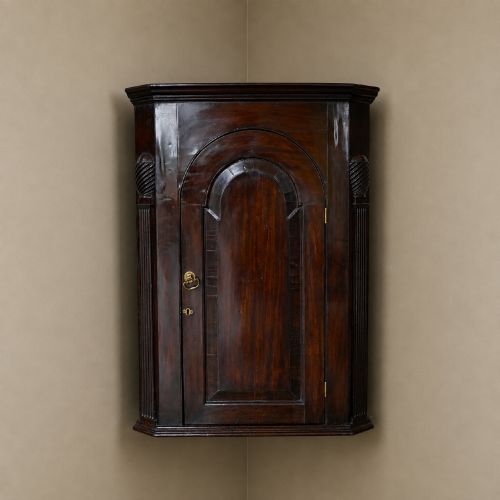
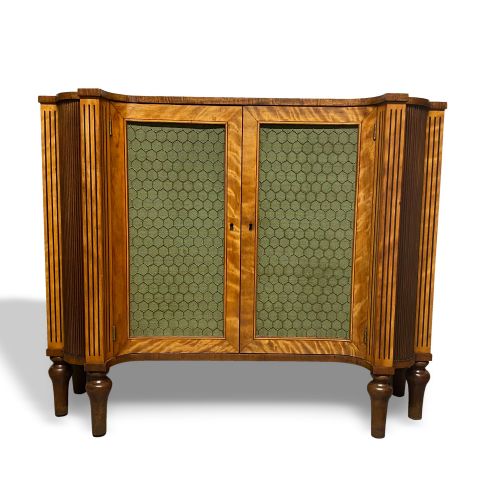
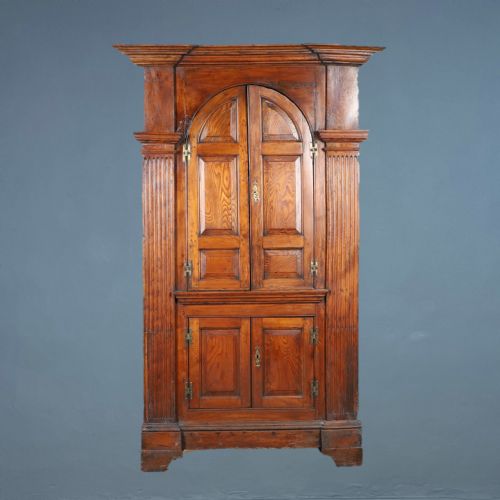
A fluted pilaster cabinet draws upon architectural vocabulary, incorporating vertical fluted columns flanking doors or shelving units. These pieces range from tall breakfront bookcases and side cabinets to corner cupboards designed to utilise awkward interior angles.
The versions most commonly met on this page span the eighteenth century and the Victorian era, executed in dense timbers like mahogany and walnut alongside occasional elm, satinwood, and painted or gilded surfaces.
Makers adapted classical column details for domestic storage, producing standing bookcases, wall-hanging corner cupboards, and sideboards that combine display capability with enclosed lower shelving.
How they were made
Cabinet makers constructed the carcases of these pieces using solid mahogany, walnut, and elm, often applying finer satinwood veneers to prominent surfaces. Carved fluting on the pilasters required precise hand-chiselling to achieve uniform vertical grooves.
Glass doors on bookcases were assembled using timber glazing bars to hold individual panes in place, while larger breakfront forms balanced symmetry with functional interior shelving.
Listings span the eighteenth century to the twentieth century, featuring mahogany, walnut, satinwood, and elm across bookcases and corner cupboards.
What varies in quality
The distinction between standard and superior pieces rests on the crispness of the carved fluting and the selection of timber grain. Finely figured mahogany and walnut matched across cabinet doors elevate a piece significantly above plain utility work.
Proportion and architectural fidelity separate fine examples from simpler regional output. Well-executed corner cupboards and breakfront bookcases maintain balanced classical proportions regardless of their overall scale.
The Fluted Pilaster Cabinet Glossary
- Pilaster
- A rectangular column that projects slightly from a wall or cabinet face, usually featuring vertical fluting to mimic classical architectural orders. It provides structural framing for doors and bookcase sections.
- Breakfront
- A cabinet design where the central section projects forward from the flanking wings. This creates depth and visual variety across large bookcases and sideboards.
- Glazed Top
- The upper section of a bookcase fitted with glass-panelled doors to display books while protecting them from dust. These are held together with wooden framing bars.
- Standing Corner Cupboard
- A floor-standing storage unit constructed with a triangular footprint designed to fit snugly into a room angle. It utilises space that standard rectangular furniture leaves empty.
Fluted Pilaster Cabinet: Frequently Asked Questions
What is a fluted pilaster cabinet?
A fluted pilaster cabinet is a storage piece defined by vertical carved column details flanking its doors or open shelving. These forms incorporate classical architectural elements into domestic furniture.
They appear across various periods, including eighteenth-century Georgian designs and nineteenth-century Victorian interpretations, utilising timbers such as mahogany, walnut, and elm.
How were these cabinets used historically?
These cabinets served primarily to store and display valuable books, porcelain, and household goods in formal reception rooms and parlours. Corner cupboards made efficient use of neglected room angles for supplementary storage.
Larger breakfront bookcases combined open display shelving with enclosed lower cupboards to house extensive private libraries and collections.
Where should I place a corner cupboard?
A corner cupboard belongs in the intersection of two walls where its triangular footprint can sit flush against the room boundaries. This placement preserves central floor space while activating empty corners.
These pieces function effectively in dining rooms, studies, and hallways where standard rectangular furniture would block circulation routes.
How do I identify a Regency style piece?
Regency style furniture draws inspiration from classical antiquity, featuring clean architectural lines, symmetry, and dark timbers like mahogany. Pilasters and column details often reflect Greek and Roman architectural motifs.
Pieces from this tradition prioritise restrained ornamentation and balanced proportions over heavy carving.