




Copper Measure Jug
These copper measure jug examples combine heavy-duty utilitarian function with warm metallic character, making them essential for traditional kitchen displays.
Copper Measure Jug
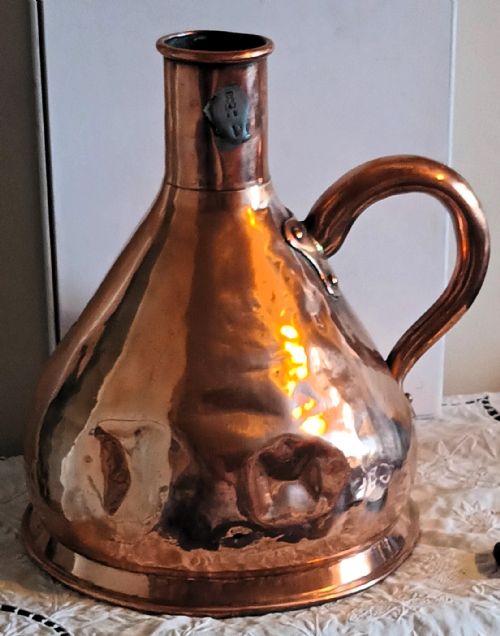
A copper measure jug is a functional vessel designed for liquid capacity, appearing in forms such as tavern measures, harvest jugs, and haystack measures. You encounter pieces spanning the Georgian and Victorian eras, alongside Arts and Crafts designs.
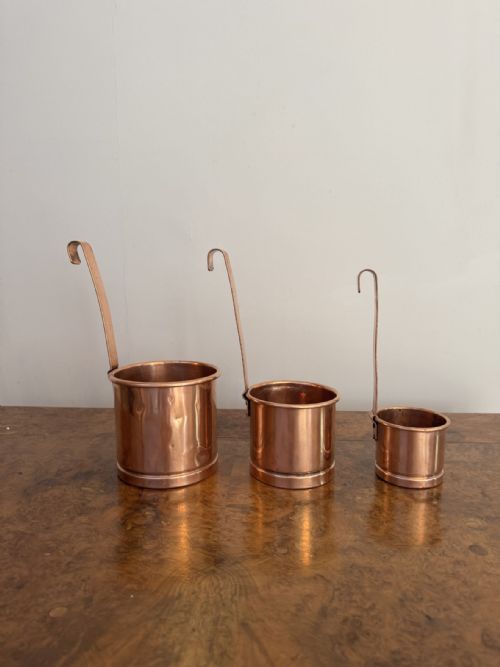
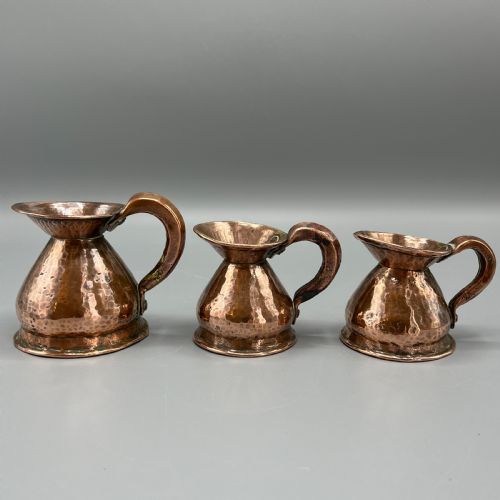
The inventory includes graduated sets, miniature apprentice pieces, and large capacity vessels holding up to four gallons. These items originate from English, Scottish, and regional provincial workshops.
Buyers look for these utilitarian objects to anchor rustic farmhouse schemes or to collect historic kitchen metalware. Most specimens reflect a working past within domestic kitchens, trade premises, or public houses.
Materials and construction
Lead and tin appear as solder or interior linings, ensuring the vessels remained watertight and safe for measuring provisions. Makers hammered and formed the metal sheets into distinct conical, cylindrical, or haystack profiles.
Listings feature items spanning the Georgian, Victorian, and Arts and Crafts periods, constructed primarily from copper with brass and tin elements.
Markers of quality
Quality rests upon the crispness of capacity verification stamps, the integrity of original seams, and the retention of a pleasing surface patina without excessive thinning. Superior pieces maintain balanced proportions across graduated sets and display maker or capacity inscriptions clearly.
Lighter utilitarian vessels made for basic service differ substantially from heavy tavern measures bearing official ownership or crown verification marks. The presence of documented maker details or regional styling elevates individual examples above standard kitchenware.
Joseph Sankey·J Bower·Loftus of Oxford Street London·S Hancock
The Copper Measure Jug Glossary
- Haystack measure
- A distinct regional liquid measure featuring a bulbous body tapering toward the top, resembling a traditional stacked hay rick. These items are typically cast with brass rims and sturdy handles.
- Tavern measure
- A heavy utilitarian jug utilised in public houses for serving and measuring ale or spirits. They frequently display official capacity stamps or ownership verification marks.
- Graduated set
- A group of vessels scaling down proportionally in size, designed to nest or sit neatly together on a shelf. Complete surviving sets command strong interest from collectors.
- Apprentice piece
- A miniature scale model created by a metalworker in training to demonstrate technical proficiency to a guild or master. These small items mirror the exact proportions of full-sized working vessels.
- Harvest jug
- A large vessel traditionally taken into the fields during seasonal agricultural labour to supply workers with ale or cider. They are built robustly to endure outdoor conditions.
Copper Measure Jug: Frequently Asked Questions
How do I clean antique copper?
Remove dust with a soft cloth and avoid abrasive commercial dips that strip away historic surface tones. Most collectors prefer preserving the dark brown or mellow oxidation built up over generations rather than polishing the metal to a bright shine.
Applying a microcrystalline wax can protect the surface from further tarnishing without damaging the original copper skin. Gentle maintenance ensures the historical character and handling marks remain visible.
Were these jugs used for cooking?
These vessels served primarily for measuring and dispensing liquids like ale, milk, or grain rather than heating over an open fire. Their soldered seams and internal tin linings meant direct heat could compromise the structural integrity of the jug.
Their main role belonged to the tavern counter or the pantry shelf as standard units of volume. This utilitarian background explains the heavy gauges of copper used in their production.
How can I tell Georgian from Victorian pieces?
Georgian examples often display simpler hand-beaten construction lines and heavier gauge metal associated with earlier tavern and household provisioning. Their forms tend to be more austere compared to later Victorian manufacturing.
Victorian pieces frequently incorporate standardised verification stamps, such as VR marks, alongside more refined finishing techniques. Graduated sets and decorative Arts and Crafts interpretations also become more prevalent in the later nineteenth century.
What do capacity marks mean?
Capacity marks indicate the official volume the vessel was legally certified to hold under trade regulations. Inspectors punched these verification stamps into the metal to guarantee honest measures for commerce.
Finding clear touchmarks or crown ciphers adds historical context to how the jug functioned in daily trade. These stamps help verify the authenticity of tavern and market metalware.