
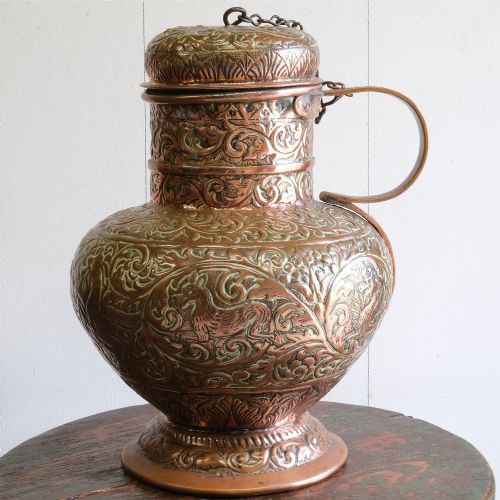


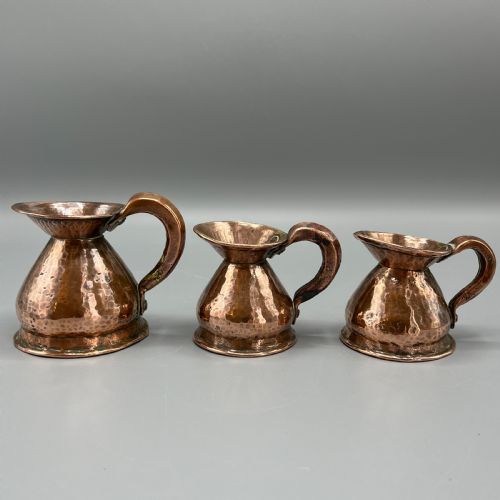


Hammered Copper Jug
These hammered copper jug examples combine utility and craftsmanship, offering enduring appeal for collectors of antique metalware.

Hammered Copper Jug
A hammered copper jug brings functional kitchen metalware and decorative vessels from various periods into modern spaces. When you search for hammered copper jug, you encounter forms ranging from Georgian water jugs to Arts and Crafts flagons and breakfast collections.
Georgian examples sit alongside late nineteenth-century Arts and Crafts items, demonstrating how domestic vessels evolved from utilitarian kitchen equipment into decorative household items. Most pieces on this page reflect British domestic use alongside distinct regional Middle Eastern styles.
How they were made
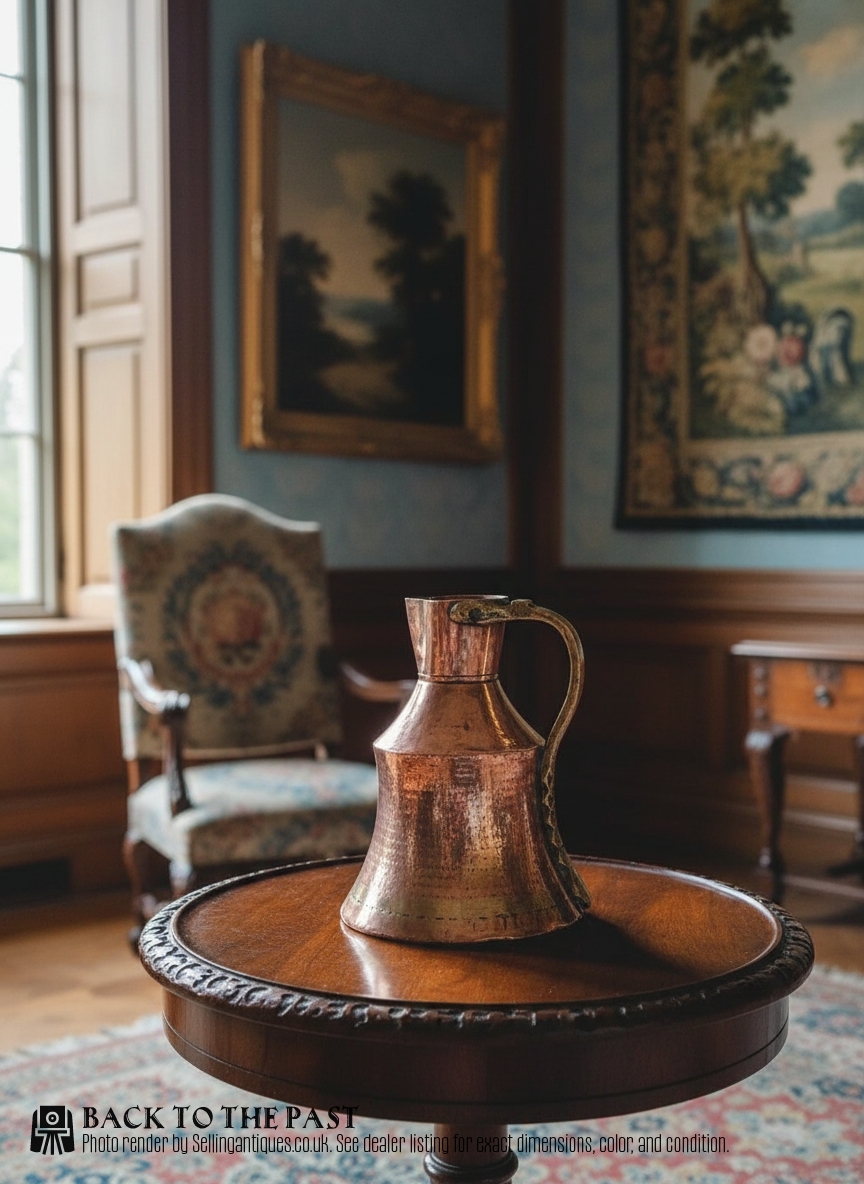
Makers shaped these vessels primarily from sheet copper, often incorporating brass for handles, rims, or decorative mounts. Some domestic utility pieces feature interior tin linings to make the copper safe for holding liquids and food.
Surface texture is achieved through manual hammering, leaving distinct facet marks across the copper body that demonstrate hand-wrought execution. Joints and spouts are typically joined with traditional metal seams, riveted or brazed depending on the period and style.
Hammered Copper Jug Retail Price Guide 2026
Typical asking prices for hammered copper jug among the pieces listed under this phrase on Sellingantiques today, from the lower quarter to the upper quarter. They describe what is for sale here now, not the wider market.
Apprentice pieces allowed young trainees to prove their metalworking skill by shrinking massive kitchen flagons down to the size of an eggcup.
What varies in quality
Quality rests upon the weight of the copper sheet and the control evident in the hammering pattern across the body. Superior examples maintain structural integrity and balanced proportions, whether executed as a large two-gallon Georgian vessel or a delicate miniature apprentice piece.
Finer items display careful attention to handle attachment and spout formation, integrating brass or copper mounts seamlessly. The crispness of the hand-beaten surface texture distinguishes workshop production from simpler commercial output.
The Hammered Copper Jug Glossary
- Arts and Crafts
- A design movement valuing hand-craftsmanship and simple forms over mass production. This style produced many of the textured copper flagons and breakfast collections seen in the nineteenth and early twentieth centuries.
- Apprentice piece
- A miniature version of a standard vessel created by a trainee to demonstrate mastery of a craft. These small items retain the same construction methods and materials as their full-sized counterparts.
- Flagon
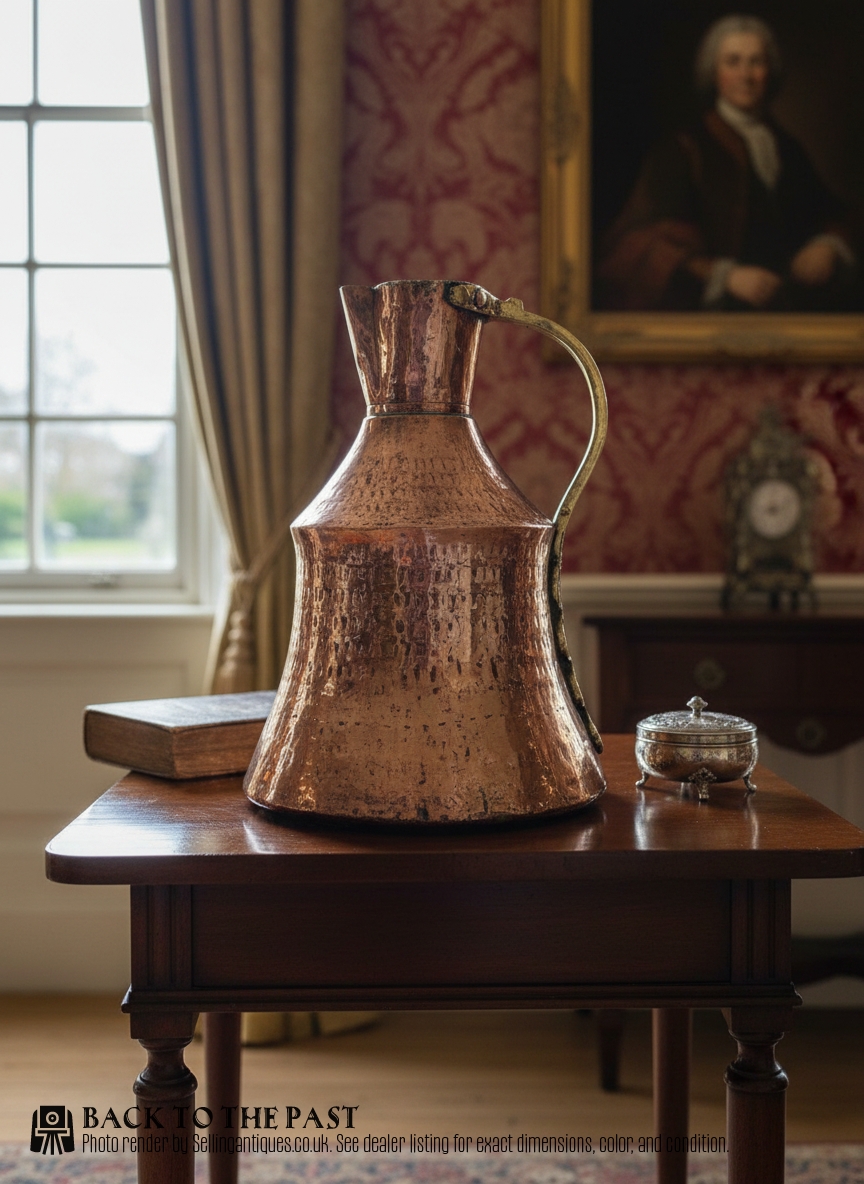
- A large drinking vessel with a handle and spout, often fitted with a lid. In metalware, these pieces frequently served communal dining or storage roles.
- Ewer
- A large jug with a flared spout, historically used for pouring water for washing or serving drinks. These forms often appear in Middle Eastern and Indo-Persian metalware traditions.
- Tin lining
- A protective metallic coating applied to the interior of copper vessels. This layer prevents copper from reacting with acidic liquids.
Hammered Copper Jug: Frequently Asked Questions
How were hammered copper jugs used historically?
These vessels served diverse roles in domestic kitchens, dining rooms, and service areas. They transported water, heated milk, stored harvest ales, or functioned as everyday serving pitchers.
Larger two-gallon examples handled heavy kitchen tasks, while smaller breakfast collections and miniature apprentice pieces catered to table service or trade demonstrations.
How do I date an antique copper jug?
Dating relies on stylistic markers, construction methods, and period-specific forms. Georgian and George III items often display simpler, heavier utility shapes, whereas Victorian examples introduce varied decorative flourishes.
Arts and Crafts pieces from the late nineteenth and early twentieth centuries are distinguished by visible hand-hammered textures and characteristic brass detailing.
How do I care for antique copper?
Maintenance involves preserving the natural patina that develops over decades of age. Excessive polishing removes the historic surface character built up through handling and oxidation.
Keep pieces in stable environmental conditions away from dampness to prevent active corrosion or spotting on the raw copper and brass elements.