







Antique Metalwork Pitcher
These antique metalwork pitcher pieces combine functional vessel forms with decorative metal craft across centuries of domestic and ritual use.
Antique Metalwork Pitcher
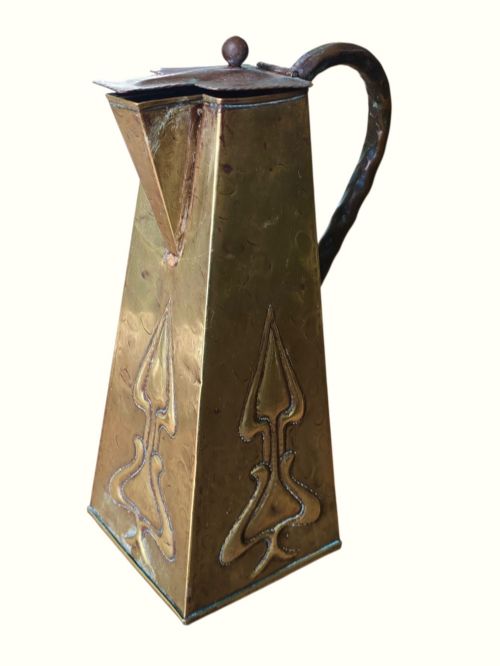
An antique metalwork pitcher encompasses utilitarian flagons, domestic water jugs, and decorative ewers spanning the Georgian, Victorian, and Arts and Crafts periods. Buyers encounter forms ranging from heavy Georgian copper vessels to delicate Art Nouveau copper and brass designs.
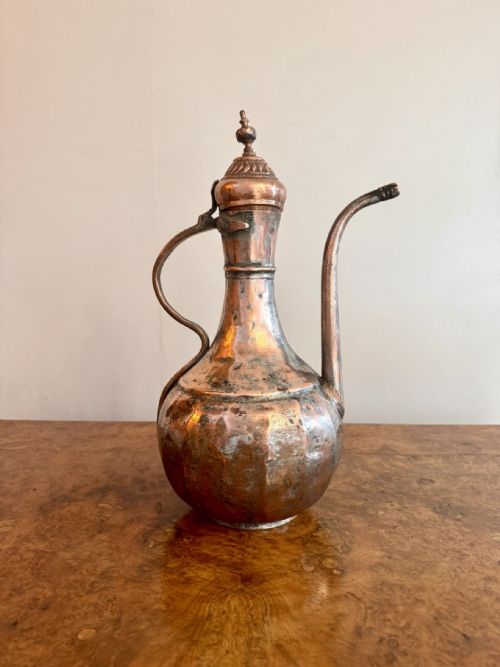
Regional variations appear frequently among the listings, particularly Middle Eastern copper coffee pots, Persian inlaid bronze ewers, and Indian bronze aftaba forms. European examples bridge domestic measures in pewter and Old Sheffield plate with sculptural silvered pewter decanters.
The material vocabulary spans base metals like copper, brass, bronze, and tin alongside precious Old Sheffield plate and combined glass elements. These vessels serve both practical pouring functions and purely decorative display roles.
Materials and construction methods
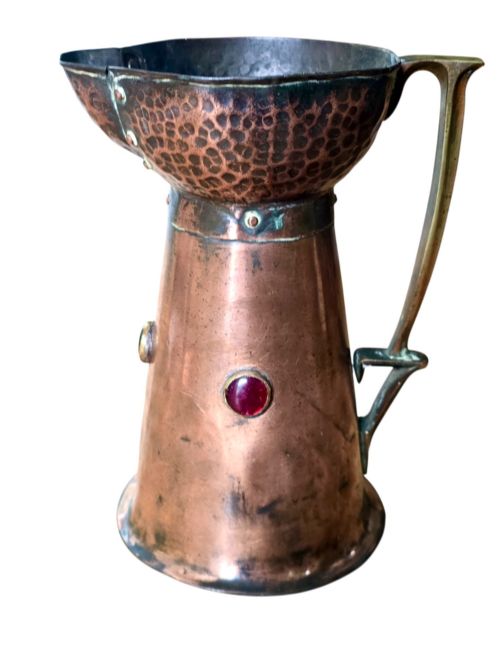
Makers shaped the majority of these domestic and decorative vessels from sheet copper, brass, and bronze utilising traditional raising and hammering techniques. Surface treatment often involved applied cabochons, silvering, or intricate metal inlay.
Pewter and Old Sheffield plate examples demonstrate specialised casting and plating methods suited to table service and ecclesiastical use. Glass inserts and bodies appear in combination with metal mounts, particularly in continental European works.
Antique Metalwork Pitcher Retail Price Guide 2026
Typical asking prices for metalwork pitcher among the pieces listed under this phrase on Sellingantiques today, from the lower quarter to the upper quarter. They describe what is for sale here now, not the wider market.
Listings feature metalwork pitchers spanning pre-sixteenth century Persian pieces through Georgian domestic copper up to Art Nouveau and Arts and Crafts creations.
Judging metalwork quality
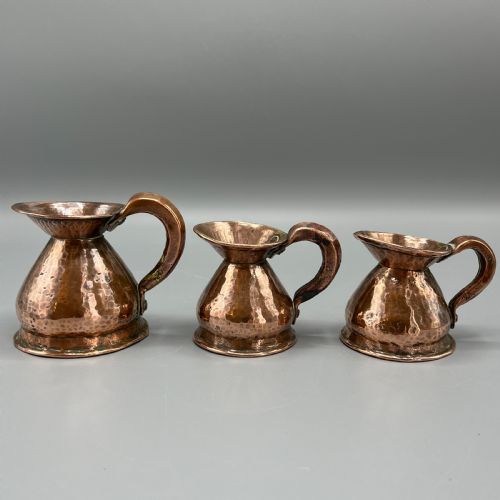
Quality rests upon the crispness of form, the integrity of construction at seams and handles, and the sophistication of surface ornament such as metal inlay or cabochons. Early handmade examples display individual hammer marks and balanced proportions that distinguish them from mass production.
The distinction between utilitarian workshop pieces and signed studio or factory work lies in sculptural detail and finishing precision. Maker involvement and regional decorative traditions determine the standing of each vessel within its period.
William Soutter And Sons·WMF
The Antique Metalwork Pitcher Glossary
- Ewer
- A large jug with a wide spout and curved handle, traditionally used for holding water or wine.
- Flagon
- A large vessel with a handle and spout or lid used for holding drinks, often associated with ecclesiastical or domestic table service.
- Old Sheffield Plate
- A composite material formed by fusing a thin sheet of silver to a thicker copper base, common before modern electroplating.
- Aftaba
- An oriental or Indo-Persian long-necked ewer traditionally used for ritual washing or serving water.
- Cabochon
- A polished gemstone or rounded metal cabochon applied as a decorative boss upon the surface of Arts and Crafts metalwork.
Antique Metalwork Pitcher: Frequently Asked Questions
How do I clean an antique copper pitcher?
Copper vessels develop a natural dark patina over decades of exposure to air and handling. Many collectors prefer to leave this surface untouched rather than polishing the metal to a bright finish.
Wash the interior only with warm water and mild soap if needed, avoiding abrasive pads that scratch the historic metal surface.
Were these pitchers used for serving water?
Many metal pitchers served practical everyday roles in the household, carrying water for washing or table service. Larger two gallon examples functioned as measuring or storage vessels in domestic and commercial settings.
Ritual ewers and decorative jugs from Middle Eastern and Indian traditions fulfilled ceremonial functions alongside practical pouring tasks.
How do I date a brass jug?
Dating relies upon examining manufacturing marks, stylistic details such as Art Nouveau floral motifs or Georgian proportions, and construction seams. Hand-hammered surfaces often indicate earlier artisan production or specific revival movements.
Comparing the base metal and handle attachment methods against known period examples helps narrow down the decade of manufacture.
What is Old Sheffield plate?
Old Sheffield plate is an early fusion material created by melting a thin layer of silver onto a copper ingot before rolling them into sheets. This technique predates modern electroplating and produces a warm tone where the underlying copper occasionally shows through areas of wear.
Items made this way require gentle handling to preserve the remaining silver layer.