



Arts Crafts Metal Jug
These arts crafts metal jug examples combine honest construction with expressive form, offering a functional centrepiece for any table.
Arts Crafts Metal Jug
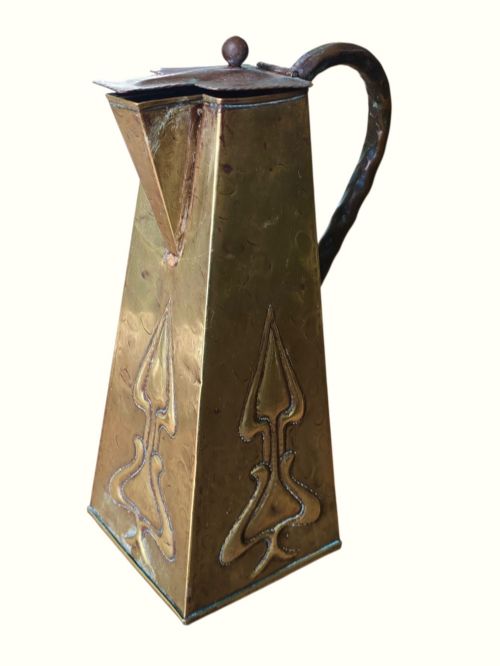
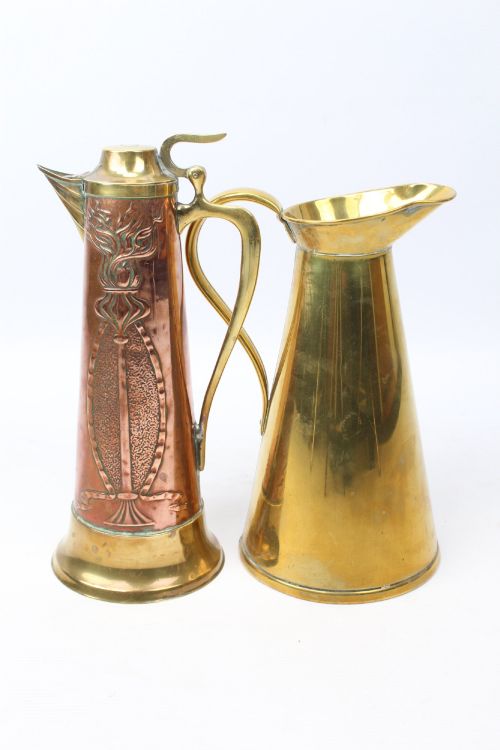
When you search for an arts crafts metal jug, you encounter vessels that bridge the gap between utilitarian kitchenware and expressive decorative art. The forms range from tall lidded water pitchers to stout serving tankards and coffee pots, reflecting domestic routines at the turn of the twentieth century. These items emerge primarily from the Victorian period through the early decades of the 1900s.
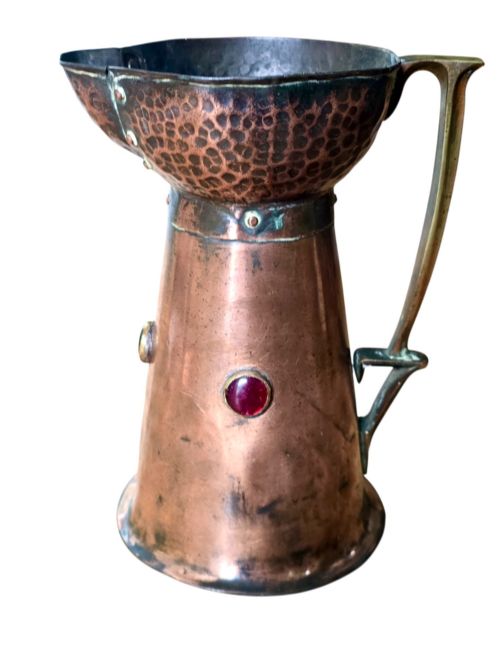
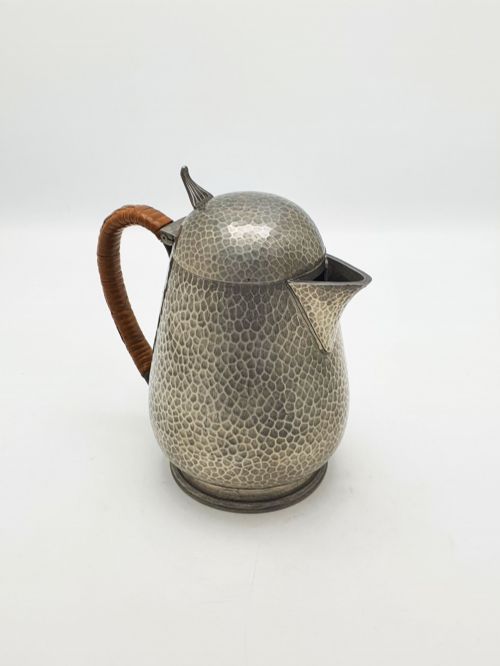
On this page, the copper and pewter versions dominate alongside traditional brass designs. You will frequently find pieces carrying the unmistakable aesthetic of the Arts and Crafts movement or the sinuous lines of Art Nouveau. Many of these vessels incorporate organic handles made from woven cane or highlight their construction through visible rivets and hammered surfaces.
Materials and construction methods
The makers of an arts crafts metal jug relied heavily on copper, brass, and pewter as their primary mediums. Craftsmen often hammered these metals by hand, leaving deliberate surface textures that celebrate the process of manual fabrication rather than industrial polish. Copper and brass pieces frequently showcase warm tones that develop a rich patina over decades of handling.
Pewter was often cast and finished with applied details such as enamel cabochons or woven cane insulation on handles. Some designs integrated mixed materials like glass or tin, combining durability with visual contrast. These construction choices ensured that each vessel remained robust enough for daily service while displaying thoughtful artistic intent.
Arts Crafts Metal Jug Retail Price Guide 2026
Typical asking prices for arts crafts metal jug among the pieces listed under this phrase on Sellingantiques today, from the lower quarter to the upper quarter. They describe what is for sale here now, not the wider market.
Some copper jugs wear their tea-making scars proudly, whispering tales of Victorian breakfast tables long past.
Distinctions in quality
The hierarchy of quality in an arts crafts metal jug rests upon the integration of design, material weight, and maker attribution. Finer examples display balanced proportions, confident hammer work, and deliberate decorative elements such as inset cabochons or enamel accents. Heavier gauge metals and secure, well-fitted handles distinguish superior vessels from simpler, mass-produced counterparts.
The presence of a recognised maker or designer elevates a piece significantly within this category. Work associated with known figures or prominent metalwork studios demonstrates a higher level of artistic ambition and execution. The clarity of the relief work and the thoughtful placement of riveted seams further separate standard domestic items from exceptional studio pieces.
William Soutter And Sons·Joseph Sankey·Archibald Knox·Liberty And Co·H F Fearncombe And Co
The Arts Crafts Metal Jug Glossary
- Cabochon
- A polished, convex gem or enamel inlay without facets. These decorative stones are frequently set into metalwork to add spots of vibrant colour.
- Tudric
- The trade name used by Liberty and Co for their range of pewter ware. It denotes high-quality alloy objects often designed by prominent artists.
- Flagon
- A large vessel with a handle and spout used for holding liquids. They are typically heavier and more capacious than standard drinking jugs.
- Patina
- The natural sheen and surface coloration acquired by metal over years of oxidation and handling. It serves as an indicator of age and genuine use.
Arts Crafts Metal Jug: Frequently Asked Questions
What is an arts crafts metal jug?
These pieces are functional domestic vessels created during the late nineteenth and early twentieth centuries, influenced by design reforms that valued honest craftsmanship over machine production. They include water pitchers, coffee pots, and serving tankards made from metals like copper, brass, and pewter.
Buyers are drawn to them for their tactile surfaces, sculptural forms, and historical connection to the Arts and Crafts and Art Nouveau movements. They serve as both decorative accents and usable serving pieces in contemporary homes.
How were these metal jugs used?
Historically, these vessels served practical roles in domestic settings for carrying and pouring water, coffee, or other beverages at the dining table. Pewter and copper pots were common in both formal dining rooms and country breakfast collections.
Today, many people continue to use them for serving drinks or displaying dried botanicals and fresh flowers. Their robust construction allows them to function reliably while adding historic character to an interior.
How do I care for copper and pewter?
Maintaining these metals involves gentle cleaning with appropriate non-abrasive polishes to remove dirt without stripping the historic surface. Avoid harsh chemical agents that can damage applied finishes or destroy the natural patina accumulated over generations.
Storing them in stable indoor environments protects them from excessive moisture and prevents active corrosion. Regular dusting and occasional waxing help preserve the tactile warmth of the metal surfaces.
How can I tell different periods apart?
Victorian examples often favour heavier brass forms and traditional silhouettes, sometimes reflecting eclectic revival styles. Pieces from around nineteen hundred increasingly incorporate the organic curves of Art Nouveau or the restrained, functional aesthetic of the Arts and Crafts movement.
Later items from the nineteen twenties frequently feature stylised pewter designs with clean geometric lines or integrated cane handles. Examining the overall silhouette, decorative motifs, and any maker stamps helps clarify the likely era of manufacture.