



Copper Flower Vessel
A copper flower vessel brings warmth and texture to a room, holding cut stems or heavy foliage with quiet authority.
Copper Flower Vessel
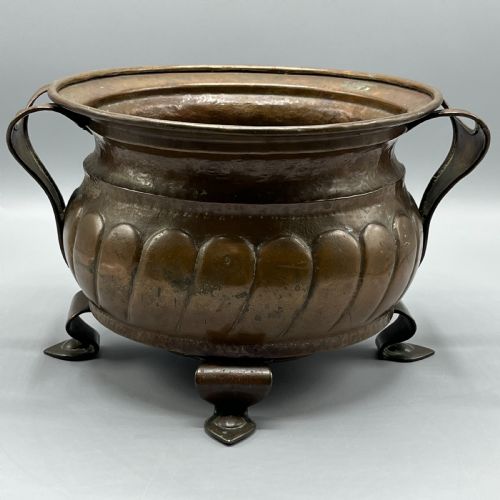
A copper flower vessel most often appears here as an Arts and Crafts jardiniere, planter, or rose bowl dating around nineteen hundred. These pieces were made to hold plants and flowers in domestic interiors, ranging from simple domestic buckets to elaborate handled vases.
You will also find Victorian and late nineteenth-century examples alongside continental Art Nouveau pieces and items from the Showa and Qing periods. The forms span from sturdy indoor planters to slender vases and decorative twin-handled vessels.
The selection includes hammered British items from notable workshops as well as imported enamel and cloisonné pieces. Each object serves either to display stems directly or to conceal a potted plant within a metal container.
Materials and construction
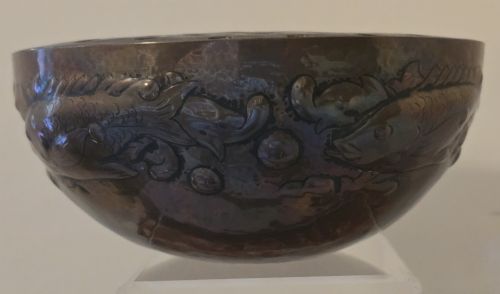
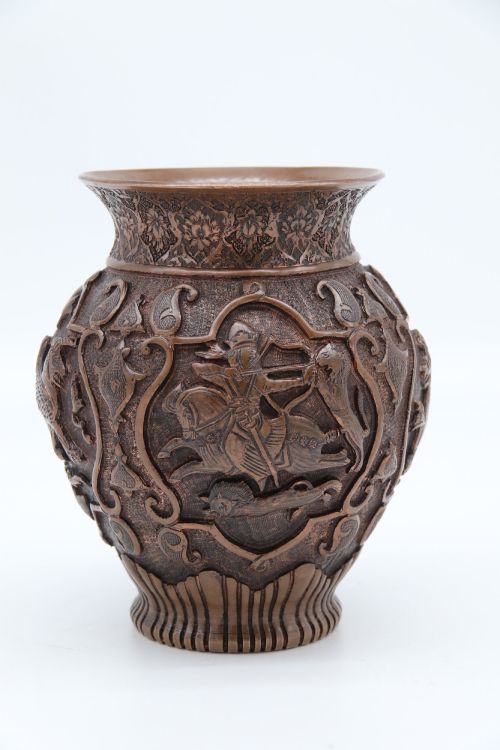
These vessels rely primarily on solid copper, often shaped by hand and combined with brass elements, iron fittings, or wooden bases. Many British Arts and Crafts examples employ repoussé techniques, where artisans hammered the metal from behind to raise floral and geometric patterns.
Enamel work appears on select pieces, including cloisonné and Canton enamel surfaces that introduce bright colour alongside the natural metal tone. Pierced brass lids and twin handles supplement the heavy copper bodies to create functional vessels for water and stems.
The design styles represented range from Victorian and Late Victorian to Art Nouveau, Arts and Crafts, and the Showa and Qing periods.
Judging the work
Quality reveals itself in the weight of the metal and the crispness of the hand-hammered surface. Stronger examples show deliberate, uniform tool marks rather than mechanical stamping, reflecting the hand of the maker.
The integrity of the construction distinguishes standard domestic items from superior studio pieces. Well-formed rims, secure riveted or soldered handles, and intact original liners or pierced lids separate standard utility items from finer decorative work.
Newlyn Copper·Keswick Arts and Crafts·Tamura Yukio
The Copper Flower Vessel Glossary
- Repoussé
- A metalworking technique where the artisan hammers the design from the reverse side to form a raised relief on the front. This method defines many decorative surfaces on nineteenth-century vessels.
- Jardiniere
- An ornamental pot or stand designed to hold indoor plants or flowers. These items sit on tables or floors and often feature a wide opening.
- Rose bowl
- A low, wide vessel traditionally fitted with a pierced metal lid to support individual flower stems. The grid keeps blooms arranged neatly across the bowl.
- Cloisonné
- An ancient technique for decorating metalwork objects with coloured enamel separated by strips of metal. Cells are soldered to the base metal before filling and firing.
- Arts and Crafts
- A design movement valuing traditional craftsmanship, simple forms, and visible maker marks over mass production. It produced much of the metalwork found in this category.
Copper Flower Vessel: Frequently Asked Questions
How do I clean a copper vessel?
Wash the metal gently with warm soapy water and a soft cloth to remove surface dust. Avoid harsh abrasives that strip away the aged surface.
Dry the vessel thoroughly immediately after washing to prevent water spotting. Many collectors prefer to leave the natural darkening intact rather than polishing it bright.
Can I put water directly inside?
Check the interior carefully for historical repairs, solder joints, or thin spots before filling with water. Some older vessels were designed purely as cachepots to hold a hidden plastic or ceramic pot.
If the bottom shows corrosion or old patches, use a separate waterproof container inside the vessel. This protects the historic metal from further moisture damage.
How do I date an Arts and Crafts piece?
Look for hand-hammered tool marks, workshop stamps, and riveted construction methods typical of the late nineteenth and early twentieth centuries. Stylistic cues include stylized plant motifs and dragonflies.
Compare the weight and thickness of the copper with documented examples from known guilds. Unmarked items often rely on specific fastening styles and patination to indicate their era.
Where should I place my vessel?
Position the piece on a sturdy wooden table or sideboard where the warm metal tone contrasts with the surrounding room. Keep it away from constant direct moisture to protect the finish.
Pair a large jardiniere with heavy foliage plants or tall dried stems to balance its visual weight. Smaller rose bowls suit windowsills and occasional tables.