


Copper Fireside Storage Bucket
These copper fireside storage bucket items combine metalwork and utility, offering practical storage for hearth fuel while anchoring a room's period decorative scheme.

Copper Fireside Storage Bucket
A copper fireside storage bucket serves the traditional hearth as a receptacle for coal, logs, or peat. When you search for copper fireside storage bucket, you encounter heavy metal containers designed to sit beside the fireplace in domestic interiors.
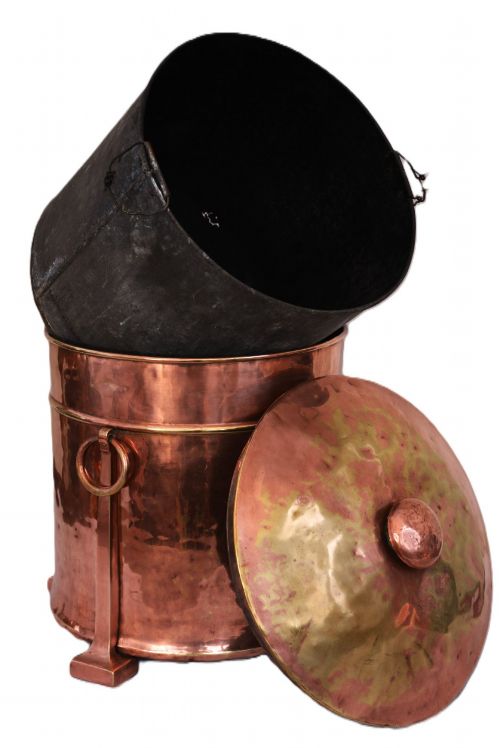
The selections span the Victorian era, the Arts and Crafts movement, and the early twentieth century, incorporating forms such as log bins, coal scuttles, and purdoniums. Most examples rely on heavy metal construction, frequently paired with brass or iron details.
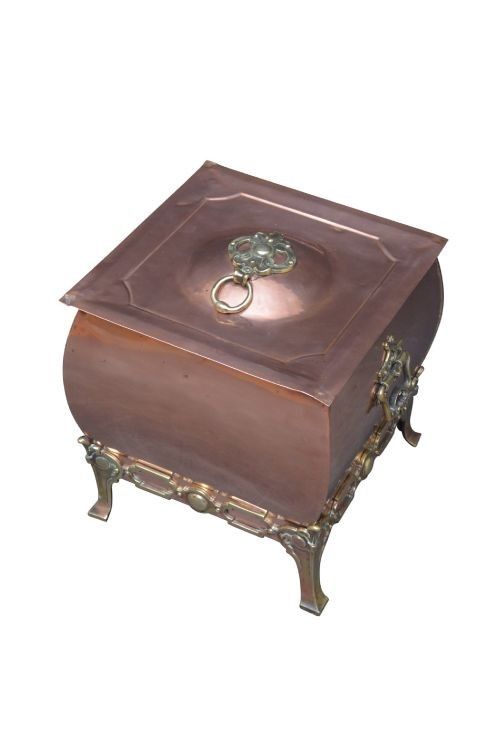
Makers shaped these containers to be both functional and decorative, utilising warm metallic tones to reflect hearth flames. The surviving pieces show diverse configurations, from straightforward cylindrical buckets to lidded boxes and helmet-shaped scuttles.
How they were made
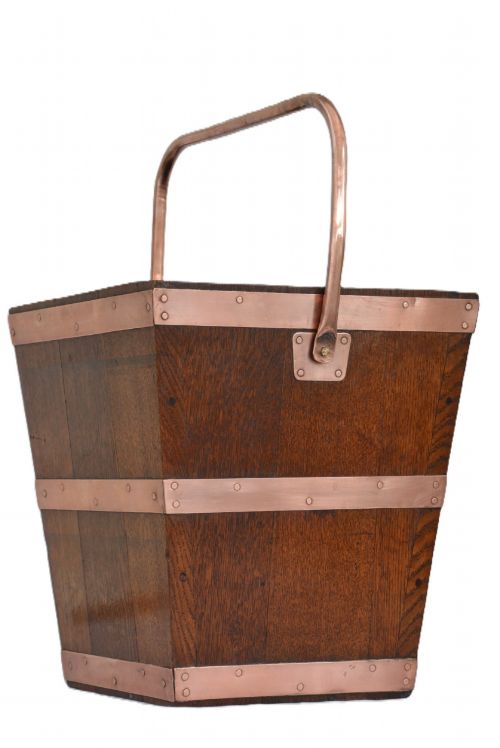
Workshops formed these vessels predominantly from sheet copper, often attaching brass handles, rims, or feet to reinforce the structure. Wrought iron and oak appear in supporting frames and stave-built bodies, adding structural strength to heavy log bins.
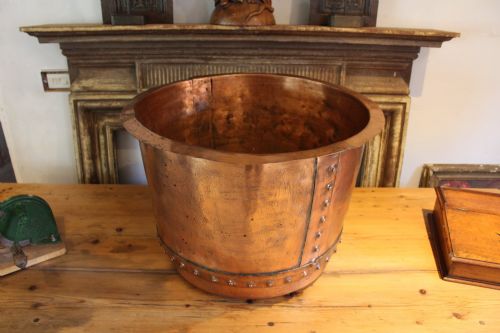
Artisans employed hand-finishing techniques and embossing to decorate the metal surfaces, creating relief patterns and pictorial motifs like galleons. Riveted seams and heavy iron banding secured the joints, ensuring the containers could withstand the weight of coal and logs.
A solitary galleon sails across a twentieth-century coal box, proving that even coal dust deserves maritime ambition.
What varies in quality
The calibre of a piece rests on the thickness of the copper sheet and the robustness of its mountings. Heavier gauge metal and secure joinery distinguish superior vessels from lighter, purely decorative items.
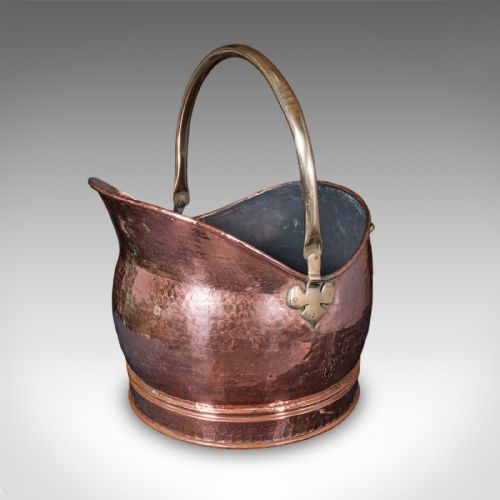
Design complexity also separates examples, with hand-hammered Arts and Crafts surfaces and detailed embossing representing more ambitious craftsmanship than plain domestic containers.
The Copper Fireside Storage Bucket Glossary
- Coal scuttle
- A bucket or helmet-shaped vessel designed for carrying coal to the fire. These often feature a swinging handle and a flat base or tilted lip for easy pouring.
- Purdonium
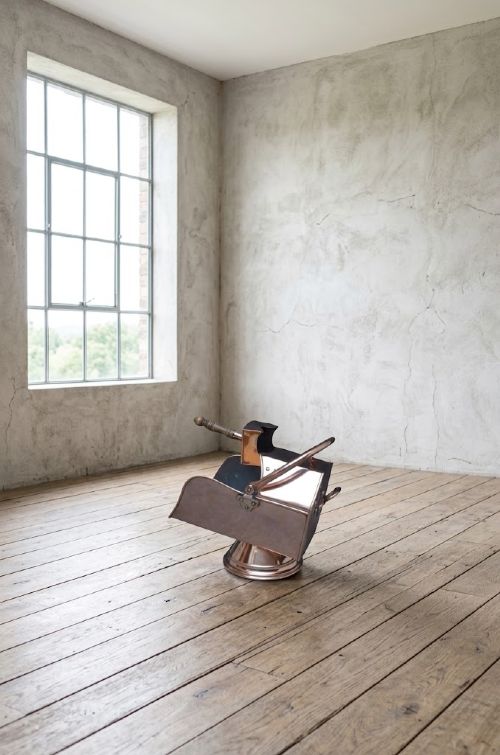
- A specialised coal box featuring a sloping front flap and an internal shovel or liner. This term denotes a more formal enclosed receptacle used in Victorian drawing rooms.
- Log bin
- A large cylindrical or tub-like container built to hold firewood rather than small fuel. They frequently incorporate iron frames, wooden staves, or carrying handles.
- Embossing
- A technique where metal is raised from the reverse side using hammers and punches to form decorative relief patterns. It defines the ornamentation on many Victorian and Arts and Crafts surfaces.
- Arts and Crafts
- A design movement emphasising handcraftsmanship, simple forms, and visible construction methods. Objects from this tradition often display honest joinery and hammered copper textures.
Copper Fireside Storage Bucket: Frequently Asked Questions
What is a copper fireside storage bucket used for?
These vessels were originally manufactured to hold solid fuel such as coal, logs, or peat beside the domestic fireplace. They kept the hearth tidy while ensuring fuel remained within arm's reach of the fire.
Today, modern interiors utilise them for similar functional purposes, or alternatively as planters, umbrella stands, or decorative focal points in living spaces.
How do I date a copper fireside bucket?
Dating relies on observing stylistic markers, manufacturing techniques, and material combinations recorded across different eras. Victorian pieces often feature heavy embossing and brass mounts, while Arts and Crafts examples lean toward hammered surfaces and simpler geometric lines.
Later pieces from the twentieth century introduce distinct decorative motifs, such as galleon designs, alongside machine-formed elements that differentiate them from nineteenth-century hand-finished work.
Can I use these buckets for real logs?
Most of these metal containers are structurally robust enough to hold firewood, particularly those reinforced with iron frames or wooden staves. Their original purpose demanded durability against heavy loads of coal or timber.
Owners should inspect the interior and base to ensure the metal remains sound and capable of supporting abrasive materials without scratching or leaking debris onto the floor.
What is the difference between a coal scuttle and a log bin?
Coal scuttles generally feature a tapered helmet shape or a scoop design intended for pouring small fuel directly onto flames. They often incorporate a pivoting handle for carrying.
Log bins are typically wider, straighter cylinders designed to accommodate larger lengths of firewood. They frequently incorporate structural frames made of iron or oak staves rather than relying on thin sheet metal alone.