
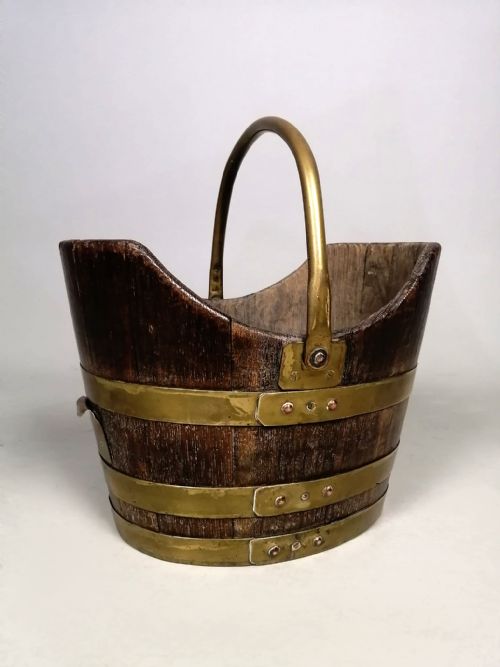


Copper Hearth Log Basket
A copper hearth log basket brings warmth and texture beside a fireplace, offering a practical way to store firewood.

Copper Hearth Log Basket
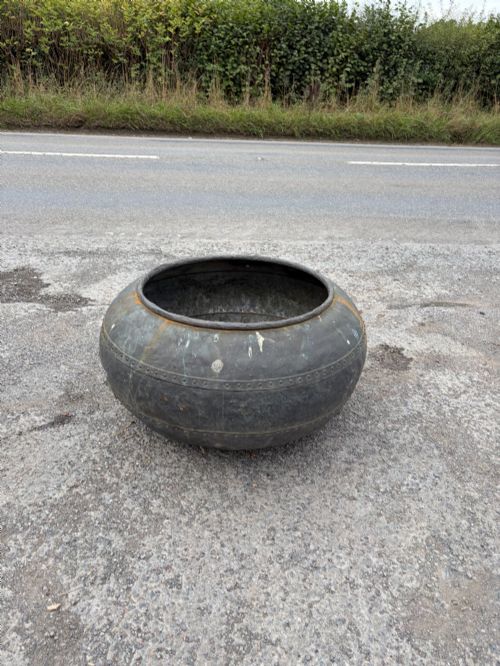
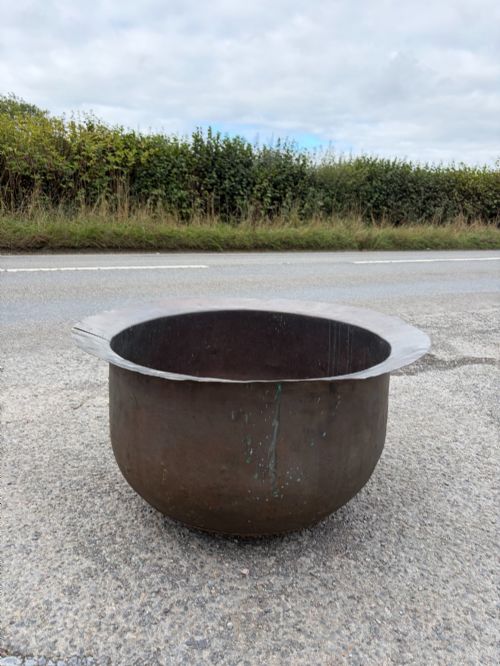
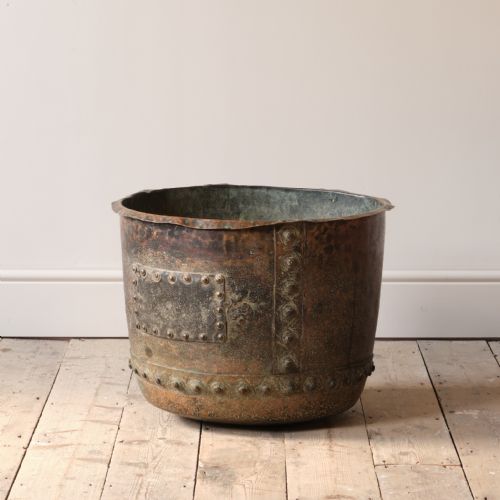
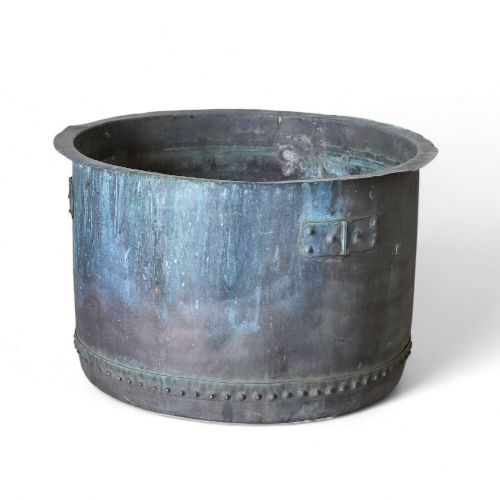
When searching for a copper hearth log basket, collectors encounter robust metal vessels originally built for utility around the fireplace or kitchen. The selections on this page span the Georgian, Victorian, and Arts and Crafts periods, featuring forms ranging from large riveted cauldrons and coal buckets to shaped log bins.
Buyers most frequently meet nineteenth-century English copper vessels, often reinforced with brass bands or iron frames. Many pieces began life as cooking pots, dairy pans, or coal scuttles before finding a second purpose holding logs beside the hearth.
Materials and Construction
These vessels rely heavily on sheet copper combined with iron and brass fixings. Makers joined heavy copper sheets using hand-riveting techniques, often securing the rims and bases with iron bands for structural strength.
Swung handles forged from wrought iron or fitted with brass attachments provide the primary lift for these heavy containers. Artisans shaped the metal by hand, leaving visible hammer marks and patinated surfaces that reflect decades of exposure to hearth fires.
The listings span multiple eras, encompassing Georgian, Victorian, and Arts and Crafts periods, constructed from copper, brass, iron, and oak.
Assessing Quality
Quality rests in the weight of the metal and the integrity of the original construction rather than decorative flourish. Heavy-gauge copper and secure hand-riveting distinguish superior utility vessels from lighter decorative items.
The character of the surface metal, including a rich natural patina developed through age and use, elevates certain examples above standard utilitarian counterparts.
The Copper Hearth Log Basket Glossary
- Patina
- The surface sheen and colour developed by copper through age, oxidation, and handling near the fire. This natural layer provides protection and historical depth to antique metalwork.
- Cauldron
- A large round metal pot with a wide opening and a swing handle, originally used for boiling over an open fire. These deep vessels frequently serve as log holders today.
- Coal Scuttle
- A bucket or helmet-shaped vessel designed for carrying and storing coal for a fireplace. Many feature hinged lids or angled mouths for easy pouring.
- Riveted
- Joined together with metal pins hammered flat to secure overlapping sheets of copper. This method ensured durability in heavy kitchen and fireside vessels.
Copper Hearth Log Basket: Frequently Asked Questions
Are these baskets waterproof?
Many of these vessels were originally manufactured as cooking pots, dairy pans, or coal containers, meaning their seams and riveted joints may hold water. However, old rivets and soldered joints can loosen over time.
Buyers wishing to use them as indoor plant holders or garden planters should test the vessel for leaks or line the interior to protect surfaces.
How do I clean copper log baskets?
Maintenance depends entirely on the finish you prefer for your interior space. Most collectors choose to preserve the dark, natural patina that centuries of use have created on the metal.
Applying harsh metal polishes strips away this historic surface. A simple wipe with a soft, dry cloth is sufficient to remove dust.
Can I burn wood directly inside them?
These vessels are designed to hold logs for storage beside the hearth, not to contain active fires. Lighting a fire inside a copper bucket will warp the metal and ruin the historic structure.
Keep them strictly for stacking logs and kindling away from the flame.
How do I date an antique copper vessel?
Dating relies on observing construction techniques such as the style of the rivets, the presence of hand-beaten hammer marks, and the overall form of the vessel. Georgian and early nineteenth-century pieces often feature heavier hand-riveting and simpler, utilitarian shapes.
Later Victorian and Arts and Crafts examples introduce more decorative brass banding or stylized handles.