
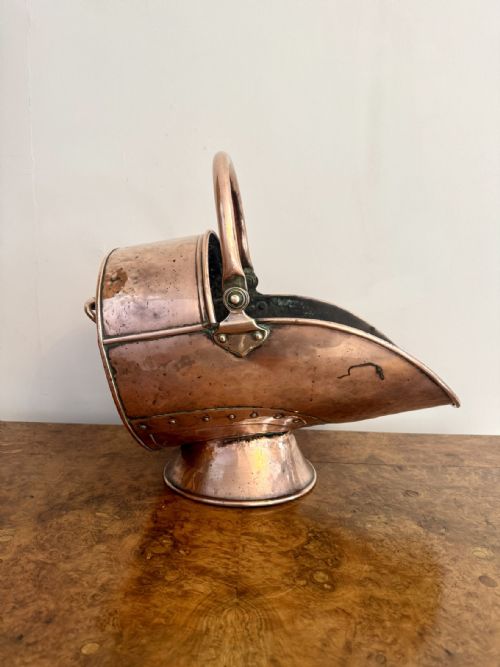


Georgian Copper Helmet Scuttle
A georgian copper helmet scuttle stands ready beside the hearth, shaped to hold coal with practical elegance.

Georgian Copper Helmet Scuttle
A georgian copper helmet scuttle is a fireside accessory designed for holding and pouring coal into the hearth fire. These pieces take the form of helmet coal scuttles, featuring a flared opening and a raised back resembling a classical headpiece.
The examples found here date from the georgian period, specifically around the year 1800 and the wider nineteenth century under the george iii style. They serve as functional fireplace accessories that double as decorative metalware for the reception room.
Most items on this page match the standard helmet shape, though variations appear simply as coal scuttles without the distinct brim. Buyers will encounter authentic period pieces that show the traditional silhouette used in British homes during the early nineteenth century.
How they were made
These vessels are constructed primarily from sheet copper, beaten and joined to form the distinctive helmet body. Coppersmiths shaped the metal by hand, hammering the sheets over stakes to achieve the smooth curves and flared rims.
Fittings such as handles and feet incorporate brass components, providing a bright contrast to the warm tone of the copper body. Wooden elements often form the grips on the carrying handles, shaped for comfort and secured with metal pins.
Listings on this page combine copper, brass, and wood across pieces dated to the nineteenth century and the georgian period.
What varies in quality
The standard of a george iii coal scuttle depends upon the crispness of its hand-hammered form and the proportion of the helmet silhouette. Finer examples display clean joints and balanced weight, where the brass and copper components integrate seamlessly without clumsy repairs.
Quality also shows in the finish of the metal surfaces and the turning of any wooden handle grips. Better pieces retain a strong material presence and tactile honesty that mark superior metalworking from the period.
The Georgian Copper Helmet Scuttle Glossary
- Copper
- A reddish-brown ductile metal used to form the main body of the scuttle. It provides durability and a warm reflective surface beside the fireplace.
- Brass
- A yellow alloy utilised for handles, feet, and decorative accents on the scuttle. It offers a bright contrast against the darker copper body.
- Helmet scuttle
- A coal container featuring a high back and a flared front resembling a classical helmet. This shape allowed coal to be poured cleanly onto the fire.
- George III
- The period of British history spanning from 1760 to 1820, defining the style of design seen in these fireplace accessories. Pieces from this era reflect classical proportions and restrained ornament.
Georgian Copper Helmet Scuttle: Frequently Asked Questions
What is a helmet scuttle used for?
A helmet scuttle holds coal near the fireplace for easy refilling of the grate. The flared spout allows the fuel to be poured out smoothly without spilling onto the hearth.
In the georgian interior, these vessels sat openly beside the fireplace as both useful tools and decorative metalware. They kept fuel close at hand while maintaining the tidy appearance of the room.
How do I clean a copper scuttle?
Cleaning requires a mild metal cleaner suitable for copper to remove dust and tarnish without stripping the historic surface. Harsh abrasives should be avoided to preserve the natural character of the metal.
Regular dusting with a soft cloth keeps the copper and brass components looking bright. Many collectors prefer to leave a gentle patina that shows the age of the piece.
Where did these pieces sit in the room?
These scuttles rested on the floor directly beside the fireplace surround or hearth. Their placement made them instantly accessible for anyone tending the fire.
Because they were designed to be seen, makers gave attention to the silhouette and the contrast between copper and brass. They remained permanent fixtures in the nineteenth-century reception room.
Are all these scuttles from the same period?
The pieces on this page date from the georgian era around eighteen hundred and the nineteenth century. They share the george iii style characteristics seen in British fireside accessories.
While sharing a common form, individual examples vary slightly in their proportions and handle construction. Each piece reflects the hand methods of the period smiths who made them.