


Traditional Copper Coal Scuttle
These traditional copper coal scuttle pieces combine functional hearth utility with striking metallic warmth, and every collector wants one for an authentic fireside display.

Traditional Copper Coal Scuttle
When you search for a traditional copper coal scuttle, you encounter hearth vessels designed to hold and transport solid fuel to an open fire. These items originate primarily from the Victorian and Georgian periods, spanning the eighteenth and nineteenth centuries.
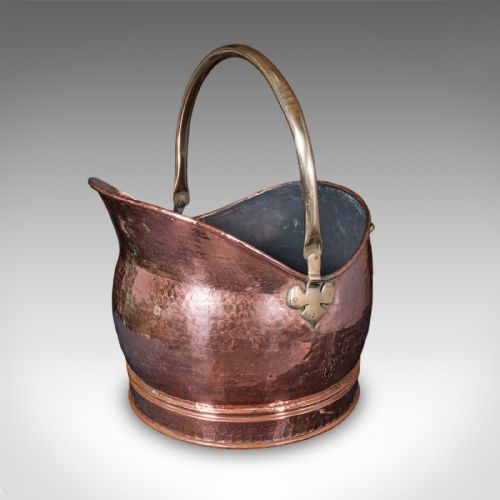
Victorian helmet scuttles dominate the selection, often accompanied by matching shovels. Earlier Georgian examples and later Edwardian variations also appear, offering distinct handle arrangements and footed bases.
How they were made
Maker construction relies heavily on sheet metal manipulation, joining beaten copper panels with secure seams and rivets. Artisans integrated brass elements such as swing handles, feet, and decorative banding to reinforce the structure.
Wood components, particularly oak, appear in handles and internal structures to provide insulated grips. Iron and galvanised steel sometimes form internal liners or structural reinforcements within the buckets and bins.
Materials recorded across the inventory include copper, brass, oak, iron, and galvanised steel.
What varies in quality
Quality rests in the weight of the metal gauge and the crispness of hand-finished details. Heavier copper sheets and robust brass mounts indicate superior craftsmanship designed to withstand daily domestic service.
Proportion and decorative restraint separate standard production items from finer Georgian and Victorian specimens. Well-formed spouts, secure riveting, and harmonious brass detailing elevate the visual presence beside the fireplace.
The Traditional Copper Coal Scuttle Glossary
- Helmet scuttle
- A coal container featuring a flared, sloped rim resembling a classical helmet, designed for pouring fuel cleanly. This shape is characteristic of nineteenth-century fireside accessories.
- Brass banded
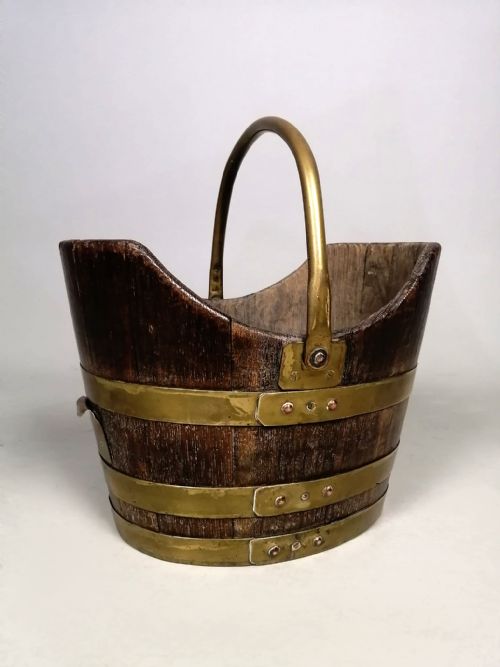
- Decorated with applied strips of brass that encircle the body of the bucket or bin. These bands often secure the wooden stave construction or reinforce copper seams.
- Log bin
- A larger cylindrical or rectangular container used for storing firewood rather than smaller pieces of coal. These vessels frequently feature drop handles for lifting.
- Fireside accessories
- The collective category for functional metalwork items kept around the hearth. This includes coal scuttles, shovels, buckets, and log bins.
Traditional Copper Coal Scuttle: Frequently Asked Questions
How do I clean a copper scuttle?
Maintenance involves gentle wiping to preserve the aged surface character.
Avoid abrasive cleaners that remove the historic patina accumulated over decades of use.
Are these scuttles still usable for coal?
Many sturdy examples can hold solid fuel beside a working fireplace.
Check the interior for secure liners and sound base construction before daily service.
How do I date a copper scuttle?
Examine the method of sheet metal construction, handle fixings, and overall silhouette.
Georgian pieces often display simpler hand-beaten forms while Victorian versions favour ornate brass mounts.
What is the difference between a bucket and a helmet?
Buckets offer straight vertical sides with dual swing handles for general fuel storage.
Helmet scuttles feature a pointed pouring lip and a fixed raised handle for controlled tipping.